Fascinating Graces ~ Authenticity as the New Casting Paradigm
To put the world in order, we must first put the nation in order; to put the nation in order, we must first put the family in order; to put the family in order; we must first cultivate our personal life; we must first set our hearts right. ― Confucius
There’s an argument that’s been raging for ever and it’s surfaced again here in Aotearoa New Zealand.
The argument relates to who can play what characters on the stage or in film or television and the debate relates to authenticity and honour.
Before I shoot my mouth off and endanger my feet, or open myself up to the usual vitriol, let me outline the credentials I have for writing this opinion piece.
I became involved in amateur theatre in 1970, became a professional actor/director/writer in 1975 and worked consistently in one or all of those roles until the phone stopped ringing off the wall in 1998. Like most professional actors I worked in film, television, radio and on the stage and I was fortunate enough never to be out of work. I worked throughout Aotearoa New Zealand and studied abroad and was successful as a voice artist for documentaries and promotional videos. I’ve now review the performing arts while I wait for my next big break.
I’m not holding my breath.
There may be significance in the dual facts that my performing arts career ended in 1998 and I began my transsexual transition from male to female in the same year.
So I guess it could be argued that I know a bit about this debate because it predates even me in my role as the Ms Methuselah of New Zealand queer theatre commentary.
A friend posted the following on my Facebook page during a discussion about whether or not cis-gendered actors should be cast in transgender roles: ‘how comfortable would the world be if Jared Leto (or any other white actor) played Nelson Mandela in a movie? I mean it’s just putting on make-up like he did in this movie…right? … transformational acting is one thing but there are aspects of people that cannot be ‘acted’.

Jared Leto as Raymond/Rayon in ‘Dallas Buyers Club’. Leto won the Oscar for Best Supporting Male Actor at the 2014 Academy Awards.
Cards on the table, I totally agree.
Well, almost totally.
As you know, there’s always a ‘but’.
More cards on the table.
I appreciate that casting a play, a movie or a television series has a wide range of implications. Some of these are commercial and it’s impossible to sidestepnthe fact that millions of dollars are invested in mainstream movies and that investors demand a return on their investment in in a business that is fraught with risks if for no other reason than the end product results from an attempt to make art.
How’s that for a couple of apposite opposites?
Then there’s all the relationship stuff. Which director wants to work with what actor, what was the audition chemistry like, who’s the most marketable piece of meat to be positioned on the red carpet between J Lo and J Law?
Then, of course, there’s all that sexist, ageist, genderist, racist politics that whirls around in the tangled web that is the ‘star-maker machinery’ of Hollywood, a convoluted and often discriminatory process that invariably results in a straight white dude being cast in most of the starring roles.
Proof?
There’s truckloads of it, and not all of it is from the distant past.
When I began working professionally the debate raged primarily around ‘black-face’ and a popular television production called ‘The Black and White Minstrel Show’ where white performers were made up in ‘black face’ and performed stereotypical musical numbers that quite quickly determined to be racist and the show was discontinued following a public outcry and petition on 1967 but not before satiric shows like ‘The Two Ronnies’ who recorded their own parody of the original with their classic ‘The Short and Fat Minstrel Show’.
Over time similar issues have been canvassed, more particularly ‘redface’ which sees European actors play native American characters and ‘yellowface’ of which Avatar: The Last Airbender and 47 Ronin are examples.
The point wasn’t lost on me.
‘Racebending’ is an issue that’s been around for a long time, since the beginning of film and certainly predates the arrival of television. ‘Racebending’ occurs when a movie studio or a publisher changes the race or ethnicity of a character. It’s a hoary old Hollywood practice used to – intentionally or otherwise – discriminate against people of colour and which frequently – usually, in fact – has a discriminatory effect on underrepresented communities and the performers from those communities. Think ‘Dallas Buyers Club’ (2013) and you’ll start to catch on to where I’m going with this.
Please don’t think that ‘racebending’ is an outmoded idea that stopped when Sir Alec Guinness was cast as the Arab leader Feisal in ‘Lawrence of Arabia’ (1962) or as the Indian mystic Professor Godbole in ‘A Passage to India’ (1984) – I guess we can forgive his Obi-Wan Kenobi in ‘Star Wars’ (1977) because it’s never stated just exactly which star system he came from – think instead of Keanu Reeves as Kai in ’47 Ronin’ (2013), Mike Myers in ‘The Love Guru’ (2008), Mena Suvari in ‘Stuck’ (2007), and Nicola Peltz as Katara in ‘Avatar: The Last Airbender’ (2010) and you’ll get the point that ‘racebending’ is alive and well and happening in a studio near you (if you live in LA).
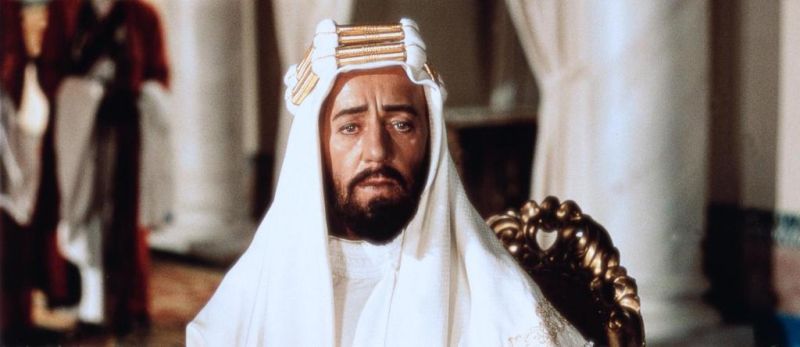
Sir Alec Guinness as the Arab leader Feisal in ‘Lawrence of Arabia’ (1962)
Avatar: The Last Airbender, a wonderful kids cartoon with all Asian characters, was cast with all white European actors except for the villain who is played by Dev Patel, an Indian actor who replaced the original cast member who was – you guessed it – a white European. The lead role of Aang was played by American actor Noah Ringer.

Noah Ringer who played Aang in Avatar: The Last Airbender
Guy Aoki, founding President of Media Action Network for Asian Americans said of the movie ‘except for a few lines from some victimized Asian villagers, every minority character with a speaking role is a bad guy, and every white character with a speaking role is good!’

Dev Patel as the villain Zuko in The Last Airbender.
A Racebending.com staffer added ‘the biggest crime, for me at least, is how completely disempowered the female characters Katara and Yue are. Instead of the strong, caring motherly-type of personality we see in the series, Katara is this whiny little girl almost always on the verge of tears in the film. We don’t get to see her fight her way through gender discrimination to train in waterbending in the Northern Water tribe. We don’t get to see Yue conflicted about her true love for Sokka even though she’s a princess engaged to another young man.’
Film critic for The Stranger, Lindy West wrote ‘the people of the noble, peaceful water nation are lily-white hippies. The people of the dirty earth nation are exotically grubby Chinese peasants. The people of the villainous, imperialistic, world-ruining fire nation are dark-skinned Indian jerks. The people of the air nation are extinct, so whatever. It’s so transparent you can see all the way to China.’
Closer to today even than Avatar: The Last Airbender is Keanu Reeves bastardisation of the traditional Japanese narrative of the forty-seven ronin which bears only slight resemblance at its centre to the accepted version of the early 18th century (Sakoku era) story. Reeves plays Kai, an entirely fictional half Japanese-half English gaijin who becomes the centrepiece of the film when, in fact, the character of Oishi Kuranusuke should be. It is extremely unlikely that such a person would have existed in the Sakoku era despite the extremely popular novels of Chris Bradford (Young Samurai) who places a young gaijin at the centre of his fictionalised work.
Marissa Lee, a co-founders of Racebending.com, writes ’47 Ronin provides an opportunity for actors of Japanese descent to be featured in a film that will be distributed in America even if most of the actors are not Asian American and many Asian American actors are still locked out of their home industry.’
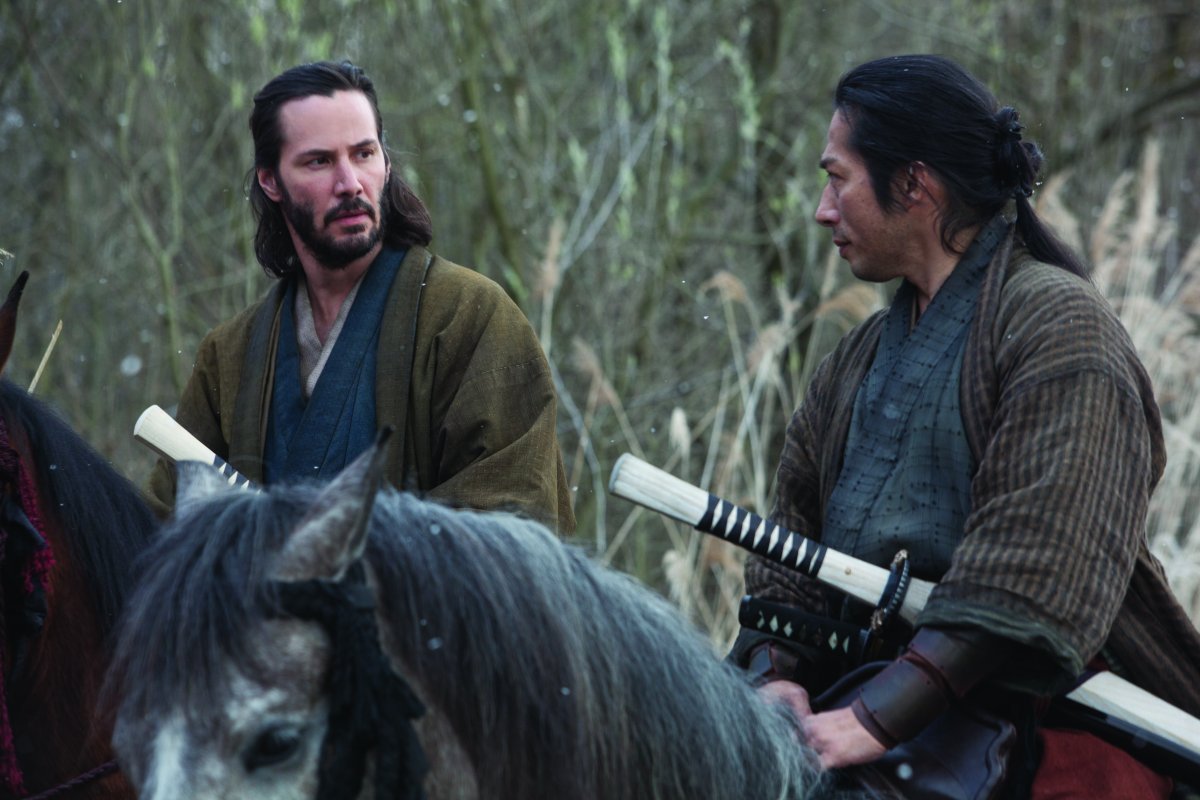
Keanu Reeves as Kai in 47 Ronin
One question remains, of course. With Reeves fictionalised character placing a European American actor at the centre of the story does he then take the place of one of the original 47 or is he the 48th?
If your curiosity about the 47 Ronin is aroused, I’ve written extensively about the mythos of the forty seven, about Chūshingura, Asano Naganori and Oishi Kuranusuke on my karate blog and the links are below.
Chūshingura ~ fictionalised accounts of the Forty-seven Ronin – http://translesbian.wordpress.com/2013/10/03/chushingura-fictionalised-accounts-of-the-forty-seven-ronin/
The Revenge of the Forty-seven Ronin – http://translesbian.wordpress.com/2013/09/30/the-revenge-of-the-forty-seven-ronin/
Asano Naganori – http://translesbian.wordpress.com/2013/09/25/asano-naganori/
Now translate that to what we might call ‘transgenderbending’ and the casting of exclusively cis-gendered male or female actors as transgendered characters and you effectively have the same discriminatory practice being sanctioned by the studios and yet another vulnerable and marginalised community is exploited.
Exploited is a pretty heavy word but when you consider that not one actor identifying as trans has taken a leading role in any major film or television series featuring a trans character since Chris Sarandon played Leon Shermer, Sonny’s (Al Pacino) pre-operative transsexual wife in in ‘Dog Day Afternoon’ (1975) then you’ll start to get the picture. You’d be correct if you said there hadn’t been that many films made during that time that feature a trans character in a leading role and you’d, of course, be correct again. Buzzfeed.com – hardly the oracle but interesting nonetheless – has identified 21 such movies and TV series for us and here they are:

Chris Sarandon in Dog Day Afternoon (1975) ©Warner Bros/Courtesy Everett Collection

Veronica Redd as Edie Stokes on The Jeffersons (1977) Courtesy of Sony Pictures Television

William Finlay as Bobbi/Bobby & Michael Caine as Dr. Elliott in Dressed to Kill (1980) ©Orion Pictures Corp/Courtesy Everett Collection
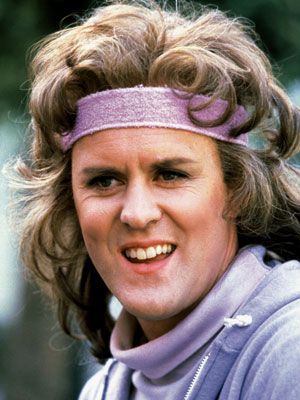
John Lithgow as Roberta Muldoon in The World According to Garp (1982) ©Warner Brothers/Courtesy Everett Collection

Karen Black in Come Back to the Five and Dime Jimmy Dean, Jimmy Dean (1982) ©Cinecom Pictures/Courtesy Everett Collection

John Shuck as Gil Kessler in The Golden Girls (1982) Courtesy of NBC

Jaye Davidson as Dil in The Crying Game (1992) Mary Evans/Ronald Grant/Everett Collection
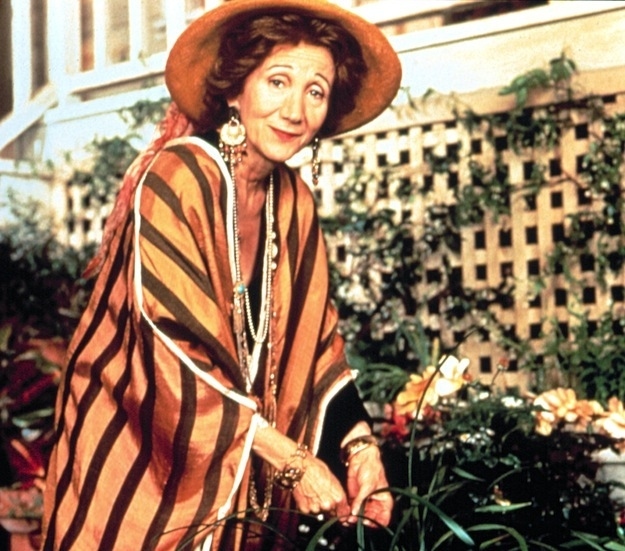
Olympia Dukakis as Mrs. Madrigal in Tales of the City (1993) Courtesy Everett Collection

Terence Stamp as Bernadette, in The Adventures of Priscilla, Queen of the Desert (1994) ©Gramercy Pictures/Courtesy Everett Collection
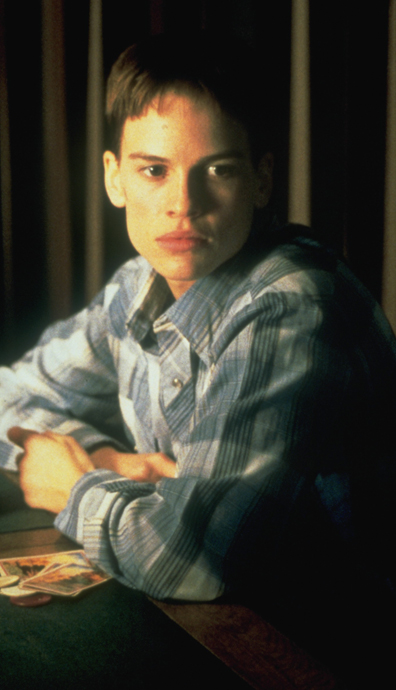
Hilary Swank as Brandon Teena in Boys Don’t Cry (1999) ©20th Century Fox/Courtesy Everett Collection

John Cameron Mitchell in Hedwig and the Angry Inch (2001) ©Fine Line Features/Courtesy Everett Collection
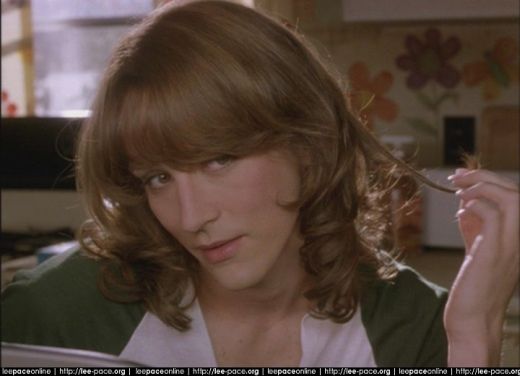
Lee Pace as Calpernia Addams in Soldier’s Girl (2003) ©Bachrach/Gottlieb Productions/Courtesy Everett Collection

Felicity Huffman in TransAmerica (2005) ©IFC Films/Courtesy Everett Collection
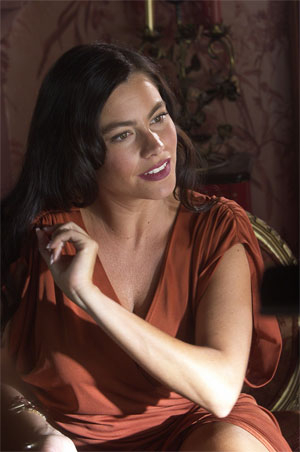
Sofia Vergara as Loridonna in Grilled (2006) ©New Line Cinema/Courtesy Everett Collection

Daniela Sea as Moira/Max on The L Word (2006-09), and as Blake on Law & Order: SVU (2009) Paul Michaud / © Showtime / Courtesy Everett Collection
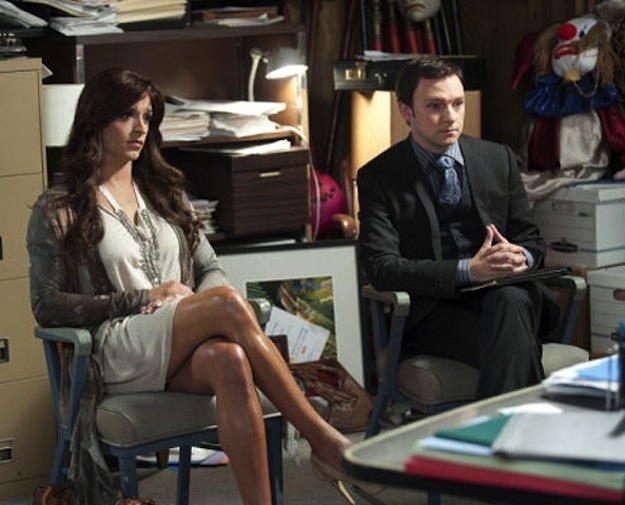
Jai Rodriguez as Amanda Knott in Harry’s Law (2012) Courtesy of Warner Brothers

Jeffrey Carlson as Zoe/Zarf on All My Children (2007) Courtesy of ABC

Walton Goggins as Venus van Damme in Sons of Anarchy (2012) Prashant Gupta/FX

Chloe Sevigny as Mia in Hit & Miss (2012) ©DirecTV/Courtesy Everett Collection

Alex Newell as Wade/Unique on Glee (2012-present) Mike Yarish / FOX
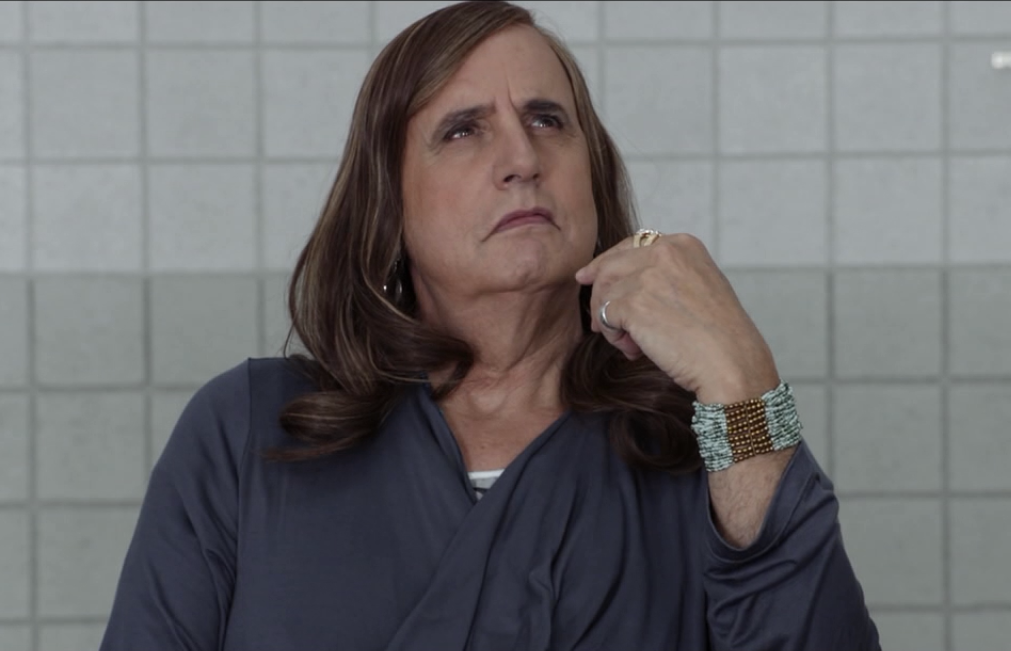
Jeffrey Tambor as Mort in Transparent (forthcoming from Amazon) Courtesy of 20th Century Fox
I guess, at a pinch, I could add Hori Ahipene who played the character of Garth Loader/Angel in our own ‘Outrageous Fortune’ but that was essentially a bit part and doesn’t really count. The role might have been a trifle outrageous but it certainly didn’t make a fortune for Ahipene – and even less for those of us who identify as transgender, have heaps of experience, auditioned, but weren’t cast in the role.
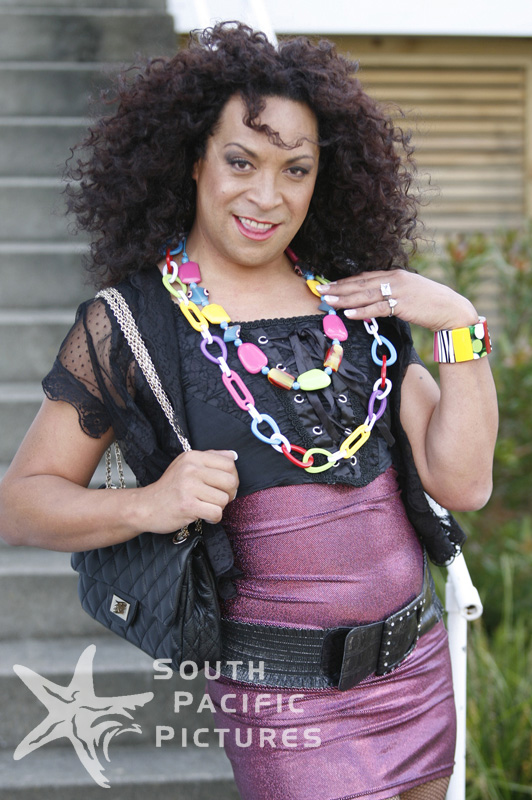
Hori Ahipene as Angel in South Pacific Pictures TV drama Outrageous Fortune.
Most recently, and not on Buzzfeed’s comprehensive list, is the American faux-biographical drama ‘Dallas Buyers Club’ which stars cis-gendered, heterosexual male actor Jared Leto as the ill-fated transgendered character Rayon/Raymond.
That most rare exception that highlights the rule is M2F transgendered actress Laverne Cox who plays Sophia, a transgender inmate, in ‘Orange is the New Black’. Cox, when asked about being a transgendered, black actress, responded with ‘It’s hard. The issue of not just being trans, but also being a woman, and it’s being black. And the industry historically doesn’t think that we are marketable, or they want to cast us in very limited ways. But I think that the wonderful lessons that Orange Is the New Black is teaching us is that it shows our industry — the entertainment industry — that you can cast women of different races, you can cast different ages and body types, and folks will tune in and be interested. And the public is craving that.’

Laverne Cox as Sophia Burset in “Orange Is the New Black” (Credit: Netflix)
I totally agree.
If the Auckland Pride Festival 2014 has taught me anything, it’s taught me that people are actually interested in transgendered people as people and not just as some sort of novelty or sexual freak. They care less about what’s between our legs than they do about what we think, what we do, what our values are and how we fit into their world. The answer is, of course, we fit easily because, while our lived experience is different to theres, in essence we’re just like them.
To be perfectly fair the occasional transgendered performer has been cast in TV and in independent film productions in recent times. Candis Cayne who, in ‘Dirty Sexy Money’ (2007-2009), played a recurring trans character, the first ever in a prime-time TV series, Calpernia Addams advised on ‘Soldiers Girl’, the biopic of her relationship with Barry Winchell, and also on ‘TransAmerica’, and Harmony Santana whose performance in ‘Gun Hill Road’ (2011) saw her nominated for an ‘Independent Spirit Award’ and as ‘Best Supporting Actress’ by the Film Independent Spirit Awards are examples but casting choices such as these are extremely rare.
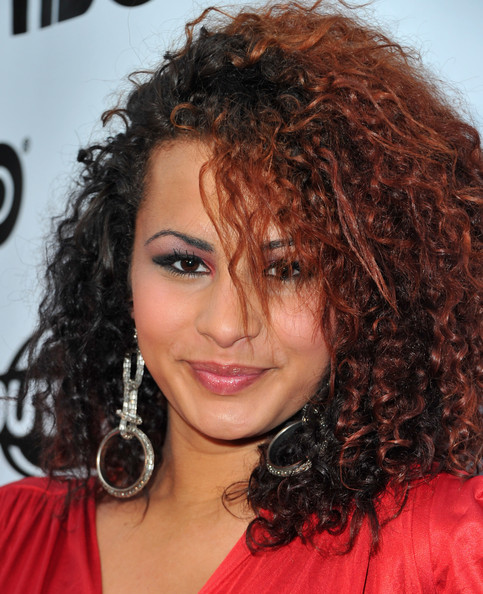
Harmony Santana
Sadly from an authenticity perspective, audiences invariably see cisgender men and women performing transgender roles that are often played for the comic potential perceived, rather like watching Paul Henry at his worst for 120 minutes or spending the evening in the public bar of the Empire Hotel leading up to closing time.
More often than not the depictions are of somewhat frenzied, over-feminised parodies of women with extravagant makeup, apparel, or behaviour and when it’s a cis-gendered male playing the role then parallels with drag queens and female impersonators are easily drawn and the hateful phrase ‘cock-in-a-frock’ gets bandied about.
I often get challenged, especially by actor friends, that this is all about acting and that transforming via research and behavioural study is what acting is about and that cis-gendered actors playing transgendered characters is just a division of this paradigm. The example often touted is the ‘straight men play gay men and gay men play straight men’ model but the point is consistently missed – it’s still a man playing a man or a woman playing a woman. Yes, there are times when playing across the genders can be effective to make a point – Shakespeare does it all the time, so does Genet – but a transwoman is a woman and, if not played by a trans woman, should at least be played by a woman. The same applies to transgendered men. This, I would suggest, is why the most credible transfeminine characters are played by Felicity Huffman and Olympia Dukakis and even they don’t really scratch the surface of the transgendered lived experience. Having a great script helps too, as does an empathic – preferably transgendered – director.
So, there’s the context, and the question is posed – why have no trans-identifying actors ever been cast in mainstream transgender roles? It’s generally accepted that the transgender lived experience is quite unique for a litany of reasons and it could be argued that this singular experience can best be conveyed by an actor who lives that experience 24/7.
In a perfect world, of course, each should be played by a trans actor and, don’t be misled, these people do exist and many are highly skilled practitioners. Trans actors should be cast because the trans experience is more than a case of accessing a parallel experience because, I would suggest, there is no parallel experience. This is why cis-gendered actors, no matter how well they research and prepare, can never bring the authenticity to a trans role that a trans actor can.
If no transgendered actor is available, at least cast an actor of the correct gender if the text is binary-based.
There’s no question that some extremely good – and marketable, let’s not forget that – actors have played transgender characters over the years. Chris Sarandon, John Lithgow, Karen Black, Olympia Dukakis, Terence Stamp, Hilary Swank and Felicity Huffman number amongst my favourites but, not unexpectedly, not for the trans roles they’ve played. A number have been nominated, as Jared Leto has been, for major awards and it’s my view that this reinforces the idea that it’s all OK.
It’s not.
I’ve seen most of the films listed in the 21 and they collectively and individually identify a number of stereotypes that are worth noting.
I’ve already documented that cis-gendered men playing transgendered women is a no-no. At best it reinforces the idea that femme gay cisgender man and transgendered woman are interchangeable identities. This is extremely unhelpful even when the character seems to present as having a desire to transition.
Next comes the ‘transwoman as raving mad serial murderer’ model.
Twenty years ago this was the almost exclusive domain of the gay man but since being male and homosexual has been liberated and shelved to the ‘chummy neighbour with the eccentric boyfriend’ genre transwomen have slipped effortlessly into that slot. Don’t believe me, think ‘Silence of the Lambs’ (1991). The reality is that the ranks of trans women are almost devoid of dangerous psychotics whereas film and television would have you believe that ever second transsexual is a mentally ill man in a dresses and a wig and is to be feared to the point of death.
Far too often there is an emphasis on body size and height and these characteristics are also often ‘hyper-feminised’ at the expense of any attempt at creating even a quasi-reality. Transgendered characters are often a focus for ‘humour’ and these laughs are often gained the expense of the person’s genitalia. A major failing of scriptwriters is to assume that trans people are obsessed with their genitals. The truth is, we’re not. Nor are we obsessed with anyone else’s private bits but it is fair to say that there are times when society gets a bit hung up on ours – hence the genitalia fixation in these films. It reflects a belief in cis-gendered society that our bodies are fair game and that, because society is preoccupied with what we have in our pants or under our skirts, we must be too. It’s just not the case at all. Perhaps the best example of this is ‘The Crying Game’ which, on first viewing seems like a compassionate enough picture but on subsequent visits it becomes immediately evident that the exposé of the genitals of the trans character constitute both the film’s shock value and its power to disgust.
Olympia Dukakis plays Anna Madrigal in ‘Tales of the City’ (1993) by Armistead Maupin and despite Dukakis being the consummate professional she falls foul of a gay man’s understanding of what it is to be a transgendered woman. I found hers to be an enigmatic portrayal that was driven at times by a somewhat unsympathetic script to be too flamboyant and gaudy.
As with Dukakis, I am usually an admirer of Hilary Swank but as Brandon Teena in ‘Boys Don’t Cry’ (2000) she allows the perimeters to become unclear as to whether or not Brandon was a man or alternatively a confused young lesbian. The graphic rape scene, Teena’s birth mother’s insistence that Brandon wasn’t a male and Swanks Oscar acceptance speech in which she refers to Teena constantly as he have further confused the matter.
Lee Pace plays Calpernia Addams in Addams biopic ‘Soldier’s Girl’ (2003) and was nominated for a number of awards including Best Male Lead despite the fact that he plays a trans woman in the film. It’s perhaps telling that Addams was a consultant on the film but turned down an onscreen appearance.
Felicity Huffman received an Oscar nomination for her depiction of Bree in ‘TransAmerica’ but the problem remains that she is a cis-gendered woman playing the role of a trans woman. The film perpetuates the ‘trans woman with deeply disturbed past’ model exemplified by the estranged relationship with her parents. Bree is the clichéd isolated transsexual and, while this clearly does happen in real life to many people, it’s not the norm. ‘TransAmerica’ also perpetuates the common perception that being transsexual is all about ‘penis and vagina’ as Frank Wedekind suggests. We’ve actually moved on from that.
Huffman has been made to look and sound masculine and the film has scenes showing her genitalia before and after surgery and there is seemingly endless comment on her. vaginoplasty.
Now seems like a good time to digress so, get yourself a cup of tea, get comfortable, and we’ll talk a bit of theory.
Second wave feminist film theory has a critical place in this debate because it’s through this lens that we can best capture a framework for the discussion. It can be argued that we can retreat all the way to Laura Mulvey’s seminal essay Visual Pleasure and Narrative Cinema (written in 1973 and published 1975) and ‘the gaze’ to explain, at least in part, why transgendered actors are never cast in mainstream films that feature the transgender experience.
First we need to look at who these films are made for, what is their imagined audience?
Oscar ‘Budd’ Boetticher Jr, a well-respected director of B grade Westerns during Hollywood’s ‘golden years’, encapsulates this view. He writes: ‘What counts is what the heroine provokes, or rather what she represents. She is the one, or rather the love or fear she inspires in the hero, or else the concern he feels for her, who makes him act the way he does. In herself the woman has not the slightest importance.’ (1)

Oscar ‘Budd’ Boetticher Jr
I would suggest that the role of the transwoman in the modern mainstream film is the same. Contrary to what we may want to think – that the film is about Bree or Rayon or even Brandon – it’s quite simply not. It’s still exclusively about Mulvey’s ‘male gaze’ even if we have grown slightly more egalitarian over the last 40 years.
I guess I’m saying that the casting of cis-gendered actors in transwomen roles – or men in the case of Brandon Teena – is more about audience expectation than it is about film-maker authenticity and that Felicity Huffman, Jared Leto and Hilary Swank best fulfil that expectation. ‘The gaze’, after all, is about titillation and to have a high profile actor play across the binary gender gap is sexually exciting in itself which is upsetting given that transgenderism isn’t about sex but about gender which is the polar opposite.
Erens goes on to reinforce Mulvey’s view that ‘in their traditional exhibitionist role women are simultaneously looked at and displayed, with their appearance coded for strong visual and erotic impact so that they can be said to connote to-be-looked-at-ness’ Women – and by association transwomen in particular become the ‘bearer of meaning, not maker of meaning.’
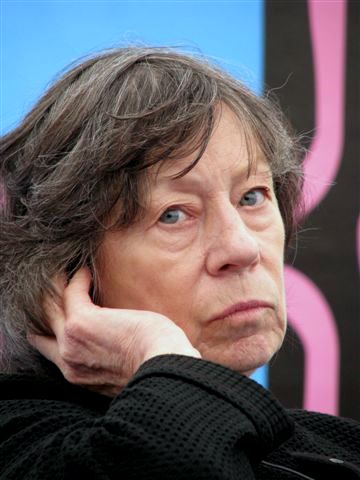
Laura Mulvey
Film itself – in this Mulvey supports controversial French psychoanalyst and psychiatrist Jacques Marie Émile Lacan’s analysis – creates a space for female sexual objectification and exploitation through a combination of the patriarchal order of society, and ‘looking’ as a pleasurable act of voyeurism, because ‘the cinema satisfies a primordial wish for pleasurable looking.’

Jacques Marie Émile Lacan
It’s probably worth noting that of the 15 mainstream films recording the transgender experience made since Dog Day Afternoon in 1975, fourteen have been directed by men. Only one major firm was directed by a woman – Boys Don’t Cry – and, ironically perhaps, it’s the only film about a transman. One of the writers is a man Associate Professor Andy Bienan, and a co-author of Dallas Buyers Club is writer Melisa Wallack. The remaining 24 writers are all men.
In summary, 15 films feature 14 male directors and one female director. The same 15 films feature 24 male writers and only 2 woman writers.
None of the films featured a transperson in any of the writer/director/leading actor roles.
It has to be said that, while it’s almost impossible to say whether any of those named is a stealth transperson, it is highly unlikely.
The television data since 2006 is slightly more complex in that series often have multiple directors, writers and characters and these often overlap.
Hit and Miss, Sons of Anarchy and the yet to be released Transparent each has woman directors but the issue of cis-gendered actors playing transgendered characters, whether they cross from one episode to another or one series to the next, is universal.
It‘s also ironic that Daniela Sea, the out lesbian actor actor/musician whose female character Moira transitions to the male Max Sweeney in Showtime’s The L Word, also plays a trans man (Blake) in Law and Order: SVU directed by Peter Leto.
Sea cross-dressed with other members of her punk rock band and, more recently, lived for eight months as man in India.
She says of her gender and sexuality ‘I don’t believe that gender is just binary, and I never have, so that’s what pulls me to sometimes politically identify as a lesbian, because I’m a feminist, and I feel like women are still so suppressed. I don’t feel like we’ve come that far. But I also feel like there are people all along the spectrum, so in that sense, I feel like I would be more bisexual or just, you know, open-ended’.
Sea, it would seem, comes closest of all the named actors to giving a sense of gender authenticity to her two characters but she still didn’t identify as transgendered and her performance as Max in The L Word sadly became riddled with stereotypes: hormones made him violent, he became unbearably moody, and eventually decided to become pregnant while living as a man.
While, at the same time, the latter issue was being played out in the real world through Thomas Beatie it seemed like a quirk too far in the already idiosyncratic world of Max Sweeney and disbelief could no longer be suspended.
Another irony is to be found in The L Word might be that of the three producers of this fabulous lesbian epic, two are men – Steve Golin & Larry Kennar – and only the third producer, Irene Chaiken, Leisha Hailey (Alice Piezcecki) and Alexandra Hedison (Dylan Moreland) are recognisably lesbian.
So it’s not just in transworld that controversy rages about casting!
Let’s be totally honest.
It’s not uncommon in films with transgendered characters, or even films with men who cross-dress, to find that they’ve been written in as someone to make fun of or to be disgusted by especially if the confusion has resulted in some manner of sexual or other intimate contact. Just such a film is Grilled where the characters of Maurice (Ray Romano) and Dave (Kevin James) take every opportunity to humiliate transsexual character Loridonna (Sophia Vergara) to the extent that it seems at times as though that is her only purpose in the piece. When Vergara was asked about Loridonna she said: ‘I look like a transsexual anyway. I’m a woman, but I’m super-exaggerated with my boobs, my ass, my makeup, and my accent. When I get ready for an event, I always look at myself in the mirror and say, ‘I look like a transvestite!’ I love it.’
Not what you’d call the most helpful of comments and, if you search judiciously, you’ll find doesn’t of comments from actors who have played transgendered characters speaking in a similar vein. Take Walton Goggins as Venus van Damme in Sons of Anarchy (2012) for example.
The descriptive rhetoric in the 2012 Mandi Brierly Entertainment Weekly interview is quite astonishing and the conversation is completely belittling in its ignorance of the lived transgender experience.
Brierly starts by describing Goggins’ appearance as ‘jawdropping’. Not his performance, mind you, just the actor’s appearance. Then she tells us that the transformation took a whole four hours.
I don’t think I’m alone in wishing she was right!
It transpires that, in earlier discussions with the director about how Goggins could be involved in Sons of Anarchy, it was felt that he was too recognisable until he suggested ‘I’ll do it if I can be a transgender. I would like to play a transgender. Oh yes, absolutely, I would. Let’s do it as a transgender.’
Goggins continues ‘And I just fell in love with her immediately. It was really important to both of us that we really go there, we make her a three-dimensional person with feelings. Sassy, sweet, smart, and beautiful. Try to make her as beautiful as I can be — it takes a lot of work for me as a straight man much less as a woman to be anything close to beautiful. We had such a good time. He had written her in a way that I would want to hang out with her. It’s a woman who I would want to be around.’
Brierly asks ‘and the breasts. What were they made of?’
Goggins replies ‘those are real. You just haven’t seen them on The Shield or on Justified. I wear a sports bra to push them down. No. We just wanted it to be as believable as possible. Doing a lot of research and speaking to a couple of transgenders down in New Orleans, where I was, it was looking at what makes them sexy, what makes them so taboo and sensuous and appealing. Breasts are a very big part of it. And Kurt really, really wanted to have that as a part of her experience. And I thought it was the best idea, because maybe you wouldn’t look at my wrists if you were looking at my breasts. [Laughs] But it seemed to really fit on my frame. It’s a [chest] plate, you know. But I don’t want to give away my trade secrets. As far as you’re concerned, they’re real.’
So there you have it.
Being transgendered is all about the boobs, the ‘chest plate.’
Brierly asks more about Goggins preparation.
‘How else did you prepare for the role?’
‘I went to the wig shop. Friday, I started shaving my whole body. Saturday, I went and got my mani-pedi. Sunday, I relaxed and took very long baths and put lotion all over my skin. Monday, we did a makeup test. And we filmed on Tuesday.’
Brierly, incredulous, repeats ‘it was filmed in one day?’
‘One day’ says Goggins. ‘I couldn’t be in those stilettos more than one day. There’s no way. And it was like 110 degrees in the Valley that day. So I almost melted, along with my breasts. [Laughs]
The boobs and the shoes?
‘You couldn’t help but be attracted to her. Like, I was attracted to her. And everyone wanted to touch my breasts. [Laughs] Everyone. I was lucky, because I got to touch them as much as I wanted.’
Just as I’m thinking that this is just so gross it mellows a bit:
‘Both Kurt and I, again, wanted to be so respectful of transgenders and to make her as real as possible and someone who is lovely and someone who makes you see past it. Once the shock is over, you say to yourself, “You know what, I get it. She’s really sexy. What a very cool lady.” I hope we’ve done that.’
Really sexy?
That’s all a transwoman – any woman – can aspire to, I guess.
Then Brierly goes into really hazardous, actor territory. She goes deeper ‘the fluttering of the hands when Venus was nervous — all you, I assume?’
‘Yeah’, says Groggins, ‘What you try to do as an actor is move past the point of making choices. If you spend enough time thinking about it, and you’re coming from a real pure place in your heart and you give yourself over to making believe, then all of those specific kind of moments just become second nature and they just happen. There were things that I asked women about — like little tricks for how you apply your makeup, ways to sit, and ways to get up from a chair. There was one trick that I couldn’t get in my head, because I’d never done it before, but the woman who was doing the hair, said, “Well, when you put your lipstick on, you put your finger in your mouth and you pull it out to make sure that none has gotten on the inside of your lips that could get on your teeth.” And it just made perfect sense! When she said that, it all clicked in. Honestly, right now, if you could see me, I’m standing like Venus. I’m walking like Venus and my hands are right where Venus would keep her hands because it’s so intoxicating.’
I’ll leave you to decide what you think of that interview.
Just remember, though: it’s the boobs, the shoes, being really sexy and making sure you’ve got no lipstick on your teeth.
Piece of cake, eh?
The stereotypes are rolled out again in Harry’s Law (2012) where Jai Rodriguez plays Amanda Knott as simplistic, depressed, crazy, a stalker, a real nut case. There’s talk about her penis, about how her affair with a straight guys is worse because she’s transgendered and, in the end, she’s ‘unsympathetic, disposable and a punchline.’ Rodriguez has often performed drag queen roles ‘generally in the men-dressing-as-women-for-laughs category, which further blurs the reality of transgender experience for viewers.’
Chloe Sevigny plays Mia in Hit & Miss (2012), Mia is a transsexual contract killer who discovers she has a child with a former lover and struggles between caring for her family, and maintaining her job as an assassin.
Sevigny, impressed by the script, was worried about the reaction from the transgender communityas well she might have been. When asked, executive producer Nicola Shindler told Vicky Frost of The Guardian that a transgender actor was considered for the role, but ‘in the end we wanted the best actor.
Sevigny also told The Guardian that to prepare for the role she had read ‘medical notes about surgical procedures, hormone treatments and read and autobiographies of people who had transitioned, while also perfecting an Irish accent.
Standard stuff, really.
Less standard was the need to wear a prosthetic penis, something which made her uncomfortable: ‘I cried every time they put it on me. I’ve always been very comfortable being a girl, so it was hard to wrap my head around the fact that someone could feel so uncomfortable in their own skin.’
Again we have a transgendered character defined solely by their genitals and an actor who seems to talk of nothing else.
To be continued …
Writers & Directors
FILM
Dog Day Afternoon (1975)
- Directed by Sidney Lumet,
- Written by PF Kluge, Thomas Moore & Leslie Waller
The Jeffersons (1977)
- Directed by Jack Shea
- Written by Don Nicholl, Michael Ross, Norman Lear, Paul M Belous, Robert Wolterstorff & Bernard West
Dressed to Kill (1980
- Directed by Brian De Palma
- Written by Brian De Palma
The World According to Garp (1982)
Come Back to the Five and Dime Jimmy Dean, Jimmy Dean (1982)
The Golden Girls (1982)
- Directed by Terry Hughes
The Crying Game (1992)
- Directed by Neil Jordan
- Written by Neil Jordan
Armistead Maupin’s Tales of the City (1993)
The Adventures of Priscilla, Queen of the Desert (1994)
- Directed by Stephan Elliott
- Written by Stephan Elliott
Boys Don’t Cry (1999)
- Directed by Kimberly Peirce
- Written by Kimberly Peirce & Andy Bienen
Hedwig and the Angry Inch (2001)
Soldier’s Girl (2003)
TransAmerica (2005)
Grilled (2006)
- Directed by Jason Ensler
- Written by William Tepper & Larry Hankin
Dallas Buyers Club (2013)
TELEVISION
The L Word (2006-09)
- Directed by various
- Produced by Ilene Chaiken, Steve Golin, & Larry Kennar
Law & Order: SVU (2009)
- Directed by Peter Leto (two male writers)
Harry’s Law (2012)
All My Children (2007)
- Directed by various
Sons of Anarchy (2012)
- Orca Shrugged (9 October, 2013) directed by Gwyneth Horder-Payton
- Salvage (15 October. 2013) directed by Adam Arkin
- Sweet and Vaded (22 October, 2013) directed by Paris Barclay
Hit & Miss (2012)
- Directed by Sheree Folkson (3 episodes)
- Directed by Hettie Macdonald (3 episodes)
Transparent (yet to be released)
Glee
- Directed by various.
 dykiegirl
This just-out comedy series has cast six transgender people in lead roles:
Trailer: http://www.youtube.com/watch?v=V9ghuIE2XGg
Series Website: http://www.welovetheswitch.com
Thanks Amy. Will check it out.
777Slay2023!