Maybe you knew this, maybe you didn’t, but you do now.
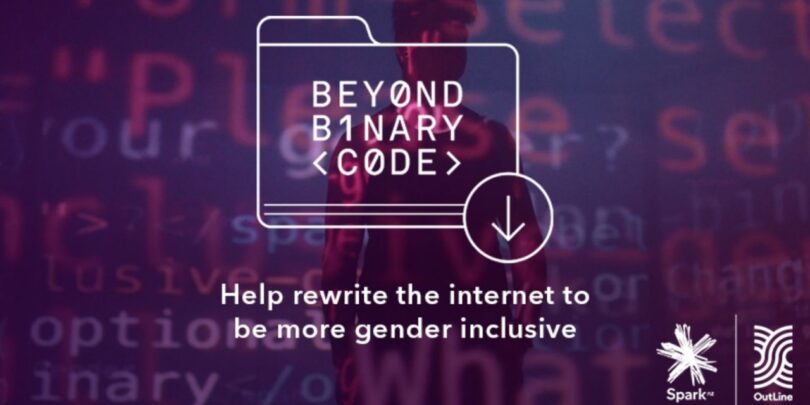
In February 2022 Spark launched ‘Beyond Binary Code’ which aimed to help make the internet more gender inclusive because most of it still only acknowledges two genders – male and female. We all know that this isn’t the case, nor has it ever been. We also know there’s much, much more to do because, currently, entire communities are left invisible online – and with invisibility comes danger, and we all need less of that.
Ask any queer from Tauranga!
Spark’s ‘Beyond Binary Code’ aims to make a dent in that invisibility – and you can help.
All the data tells us that being visible is a good thing – we like to know what we don’t know – and we like to be seen and acknowledged. The data also tells us that, in any situation, it’s affirming if we can see people who look like us, sound like us, live like us, are out like us.
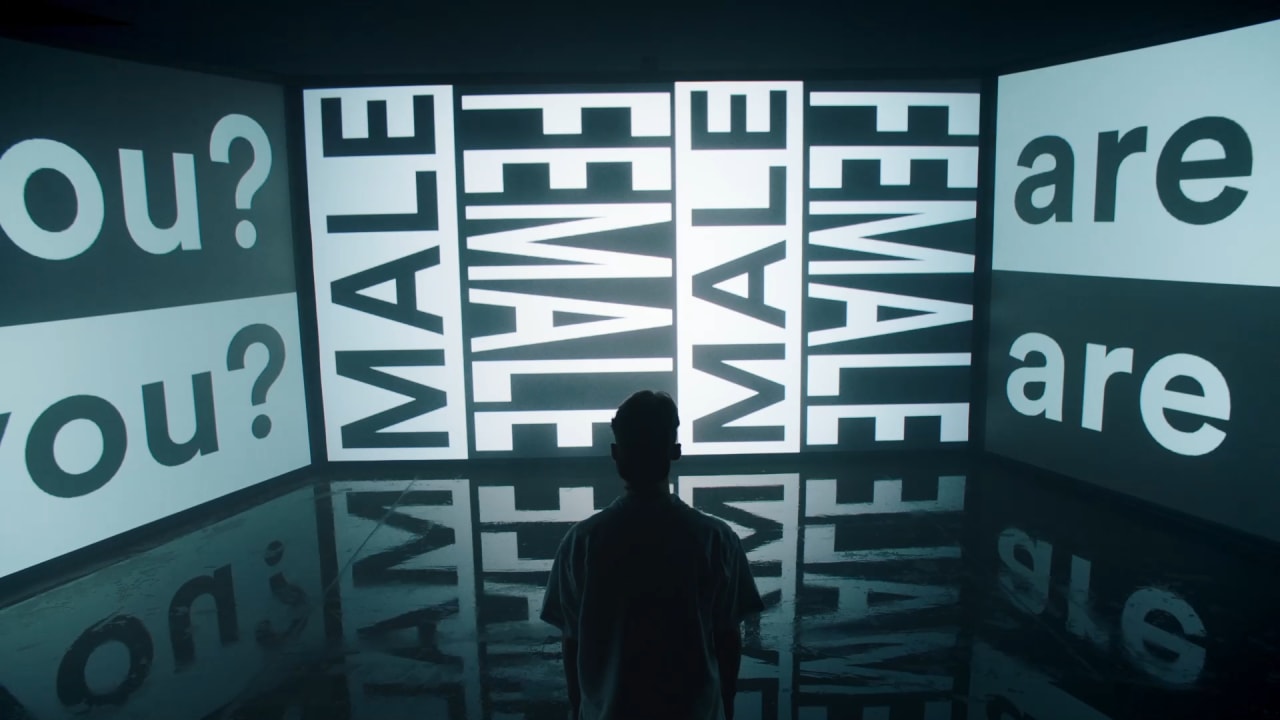
The same applies to the data we provide about ourselves to the stakeholders in our lives when that most personal of questions is asked: ‘what’s your gender identity?’ We need to see ourselves reflected in the options we are given. It’s feels good when we see ‘non-binary’ as an option. It makes us feel seen and affirmed, it makes us real.
The other side of that coin is it provides vital data for the stakeholder asking the question – your employer, your education provider, your health service, your sports club – because they can see and support you too. The data they collect enables them to provide for your unique needs, to see how you are different, and where we are all the same.
When I came out in the ‘90s, it was M or F. I was invisible and trans healthcare simply wasn’t a thing. No-one really knew who we were or what we needed. I lived, as I had for decades before, under the radar and alone.
That’s changed somewhat and now we’ve reached a New Frontier.
It’s no surprise to me that Spark has identified and is at the cutting edge of this new data gathering imperative.
Spark’s ‘Beyond Binary Code’ provides businesses and others with a trusted tool that will enable those with an investment in our lives to improve their gender data collection practice and to support them in building more inclusive, gender-friendly online experiences for their employees and customers – in fact for all of us. Spark says that ‘ultimately, through publishing the code, we hope to encourage digital equity at an enterprise level – influencing big data systems in businesses to help people from all genders feel valued and visible online and in time, build an internet with richer, more sophisticated datascapes that represent the diversity of Aotearoa.’
In short, if these practices are adopted, we all benefit.
Most businesses collect gender specific data and it’s critical that this data is accurate. Not just businesses but health and education providers, and clubs as well. Once organisations implement the code, their online forms will include options specific to their use case such as name and legal name, pronouns, prefixes, and a variety of gender options that acknowledge all our gender diverse communities including non-binary and takatāpui as well as including an open field for individuals to enter their own identity, or if they would rather not say at all.
Labour Party Rainbow Caucus Chair, MP for Northcote and all-round good guy Shanan Halbert says: ‘We’ve been taking important steps forward in Aotearoa to affirm authentic identity in everyday lives, including simplifying the process to change the gender recorded on official documents to reflect how a person identifies. I welcome Spark’s ‘Beyond Binary Code’ which will now enable New Zealanders to use the pronouns and gender options that best represent them in the online world as well. Fundamentally this is about respecting people for who they know themselves to be and giving businesses the tools to recognise this when they interact with their customers. Building more inclusive working environments is a priority for the government and it is great to see a major New Zealand corporate also getting on board with this Kaupapa.’
So, just how credible is this code?
Alongside input from OutLine Aotearoa and non-binary communities, the recommendations generated by ‘Beyond Binary Code’ are informed by Statistics New Zealand’s updated standards on how data related to gender, sex and variations of sex characteristics should be collected, and best practices from a range of reputable sources including the New Zealand Human Rights Commission and Te Ngākau Kahukura.
Interested?
There’s more: in addition to the HTML code, the ‘Beyond Binary Code’ website also provides you with a toolkit of resources that supports you on your journey towards an inclusive working environment. These include a downloadable guide to help you apply data privacy principles and a presentation you can use to help encourage a broader organisational buy-in to create change within your organisation.
A Spark and OutLine Aotearoa survey found that, if an organisation is committed to improving data processing systems to be more gender inclusive, individuals from gender-diverse communities would be more likely to feel their needs are being met and more likely to engage with that organisation – with 89% saying they would be more likely to repurchase from businesses who offer a positive experience when collecting gender data.
It’s not exactly rocket science but it’s great to have it affirmed
On the other hand, businesses they felt had misrepresented them, around half of respondents (51%) said they wouldn’t recommend the company to a friend.
I certainly identify in that category.
Quack, a non-binary takatāpui creative and advocate for rainbow communities shares this sentiment, adding: “I think what’s really important to recognise is how such a small action like including they/them pronouns can make a huge impact to someone like me. I feel seen and respected. It shows me this company genuinely holds a space for me. It’s not so much that the checkbox is going to be the make or break of my identity but the constant reminder of feeling like there isn’t an option to select, makes me feel whakamā. I understand that I’m a minority, but that doesn’t mean I deserve any less respect, or any less thought should go into representing people like me. I hope businesses make use of the Beyond Binary Code.”
Outline Aotearoa General Manager, Claire Black says: “When trans and non-binary people are excluded, misgendered, or discriminated against during daily interactions with businesses, that contributes to an environment that is hostile to their wellbeing. “OutLine sees this Code, and its supporting resources, as a catalyst for creating better experiences that support and affirm the wellbeing of both non-binary people and Rainbow communities more broadly in Aotearoa
The Spark and OutLine survey also delineated the top five ways businesses can represent and engage with gender in an inclusive way:
- Ensure that all communications use gender inclusive language
- Provide gender inclusive spaces such as changing rooms and bathrooms
- Make my gender data point optional
- Use gender neutral/inclusive representational imagery within marketing and communications
- Give me clarity on how and when my gender information will be used.
As individuals we all have a place in this Kaupapa by holding those we work with, trade with, and play with, to the highest possible data gathering standards.
It’s also our job to educate our leaders and colleagues about the ‘Beyond Binary Code’ and to get them using it if they’re not already.
It’s that important.
Please share this post shamelessly
For more information and to gain access to the code and toolkit, visit http://www.spark.co.nz/beyondbinarycode
 dykiegirl