E Kore A Muri E Hokia (aka ‘Mo and Jess Kill Susie’)
By Gary Henderson
Translated into Te Reo Maori by Ani-Piki Tuari, Haania Douglas, Te Aorere Pewhairangi and Tawaroa Kawana
Produced by Amber Curreen for Te Rēhia Theatre Company
Directed by Tainui Tukiwaho
Lighting Design by Calvin Hudson
Lighting Operation by Michael Craven
Costume Design by Poppy Serano
At The Basement Theatre Studio
From Wednesday 26 June, 2017 to Saturday 01 July, 2017 at 6.30pm
E toru ngā wahine.
E rua ngā pū.
He ruma.
E kore a muri e hokia.
He whakaari mōhukihuki, whakatō āmaimai, whakarau tangata hoki a Mo & Jess kill Susie. Kua raungaiti tētahi tokorua Māori ki tētahi ruma kua mahue moruka nei, kua mauhere hoki rāua i tētahi pirihimana Pākeha mo te tūpono he rautaki pai tēnei hai taunaki i tētahi porotēhi kaikoka. Whakatata mai, whakapiri mai kia kite, kia rongo hoki koe ka aha rāua me te tangata kua mauherea. He whakaari tēnei i tuhia e tētahi tohunga a Gary Henderson, ka mutu, koinei te wā tuatahi ka whakaaturia ki te reo Māori. He mea whakamāori tēnei whakaari e Ani-Piki Tuari rātou ko Hania Douglas, ko Te Aorere Pewhairangi, ko Tawaroa Kawana.

Three women.
Two guns.
One room.
There is no way out, no going back, what’s done is done.
The promotional material tells us that Mo & Jess Kill Susie is a tense, thrilling and claustrophobic hostage drama. Confined to the basement of an abandoned building two young Māori women have taken hostage a pākeha policewoman as part of a violent militant protest movement’. As if in some bizarre game, we are invited to ‘join them as they await their orders on what to do next with their bound and gagged captive’. It sounds bleak. It is, but then again, it isn’t.
Playwright extraordinaire Gary Henderson wrote Mo and Jess Kill Susie in 1996 and it was first published in 1997. The play has been produced in a number of indigenous languages in several countries, most notably Canada which seems to have a love affair with the work.
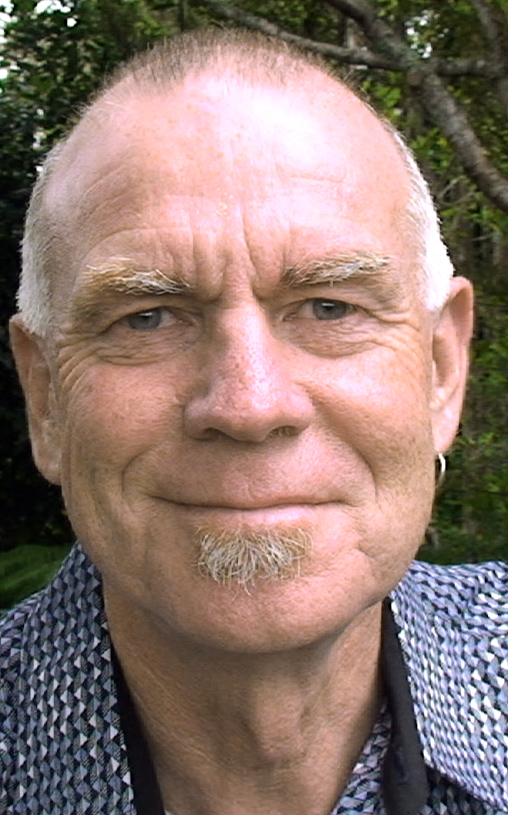
Gary Henderson
Some years ago, listening to a radio programme about the significance of Waitangi Day where a few sane voices were pitched against the mono-cultural lunacy of Don Brash, David Round and John Ansell, I heard Moana Maniapoto say ‘for Māori every day is Waitangi Day’. This resonated with me, and I’ve tried to reside in this thinking every day since.
This production, however, isn’t to do with Waitangi Day though it’s hard not to think of the play and and the day in the same anguished breath. So many parallels. Instead, it sits firmly in the heart of the Matariki Festival, a sweet natured celebration of Māori new year.
In the early 2000s Te Taura Whiri i te Reo Māori (The Māori Language Commission), the Ministry of Education and the Museum of New Zealand Te Papa Tongarewa, became involved in the revival of Matariki celebrations and the rest is history. Well, sort of. In truth, Matariki predates us all.
I guess the celebrating bit was a good idea evolving from the very best of intentions but what has Matariki become, what does it represent and how does it reflect who and what we are as a nation today? That’s the job of the arts, after all, isn’t it? Or did I miss a meeting.
Unlike Waitangi Day which, once a year, rips the scab off our racist society and exposes the toxic wounds of historical and contemporary colonialism, the macro and micro-aggressions of middle class white privilege, and that most fashionable of terms ‘casual racism’, Matariki, and the festival that now accompanies it, has come to symbolise a renaissance of sorts and is quite a different animal altogether. It is, in fact and to some extent unfortunately, all Kākāpō and roses.

Yes, it’s certainly lovely, but the question that burns in my heart relates to whether this is a real renaissance, whether everything in this newly planted garden is as lovely as it seems, or are we merely superimposing a middle class Pākehā construct, the arts festival, on a set of traditional values and beliefs, getting a local iwi, in this case the fine people of Ngāti Manuhiri, to host it, while Te Whānanga o Aotearoa Auckland Council creates it, as it does with all its festivals, in its own middle class image.
Indulge me for a moment then, and let’s look at the festival fare for this year. There’s good regional coverage across Tāmaki Makaurau so that’s a good start. There’s a photo competition, there’s Matariki Woven Histories, Treasures from the Past, Navigating Our Future, Bone Carving in a Day, Poi Poi Poi, art installations at Matariki at Owairaka Domain, classy dance with Kelly Nash and Nancy Wijohn in Lick My Past an exploration of being Māori and being women, a Māori film season, the wonderful Larger Than Life, Matariki on the Waterfront, ‘Matariki Meets Mt Albert’, sublime music from Moana Maniapoto in My name is Moana, a Whanau Day at Arataki and then, only then, the shock of E Kore A Muri E Hokia aka Mo and Jess Kill Susie which lives right, smack dead in the middle of the Aotearoa that I know and love.

Nancy Wijohn
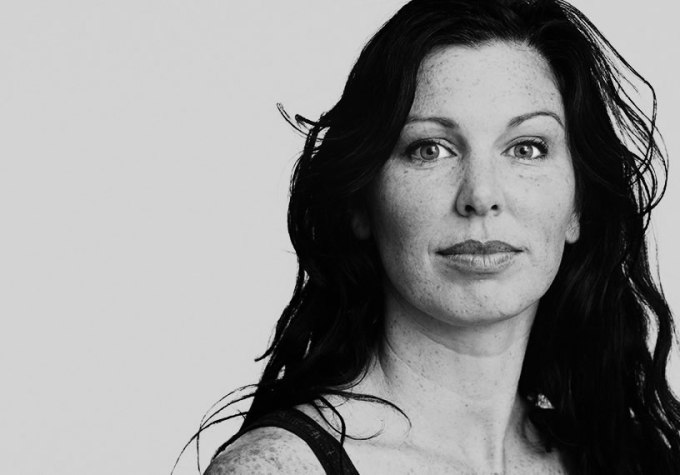
Kelly Nash
It’s nice stuff, the festival, lovely to look at, but does it in any way reflect who we are and what we’re doing here is Aotearoa? It certainly feels like there’s something we’re not saying, something that is reflected in the Matariki Festival only in Te Rēhia’s E Kore A Muri E Hokia and nowhere else. So, let’s briefly check my concerns out, first by looking at the prison muster as at December, 2016. European offenders make up 32.1% of the muster, Pacific peoples 11.4%, other (including Asian) 4.6%, unknown 1% and Māori a massive 50.8%. is this reflected anywhere in our contemporary arts culture? It’s a long time since the late Matua Bruce Stewart wrote his seminal ‘Broken Arse’. The 2013 census reliably informs us that only 14.9% of the population of New Zealand are Māori so where are we seeing any reflection of this prison muster anomaly anywhere in our Matariki Festival? Truth is, we’re not.
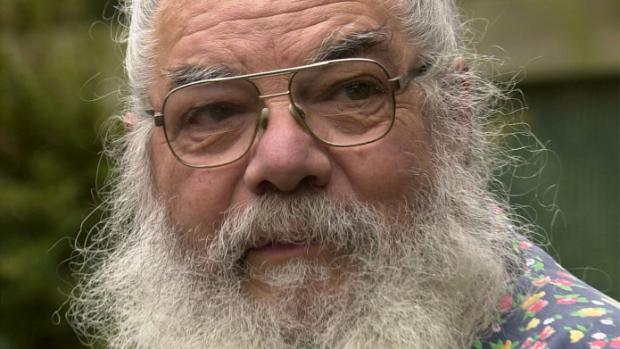
Matua Bruce Stewart
As a white, middle class New Zealand woman I may well live to the age of 85 whereas the life expectancy for Maori woman is 76. That’s another things we’re not talking about here in GodZone. I could, of course, take you on a similar journey through poverty, homelessness, unemployment, domestic abuse, suicide rates and Uncle Tamati Cobbly and all but the trends are the same – and we’re not talking about them either even though we have all the data we need. Actually ‘Hobson’s Pledge’ are talking about them and, according to ‘Hobson’s Pledge’, it’s the fault of Māori themselves because we’re all born with the same opportunity. Seriously? What utter bollocks.
Surely our festivals are not just created to sugar coat Aotearoa New Zealand for tourists? Surely the prime function of our festivals is to enable us to look at ourselves, kautona and all.

Moana Maniapoto
I’m sure your finely tuned historical brain will remind you, if you focus, that Henderson’s 1996 script predates, by over a decade, the horror of the police raids on the ‘terror’ camps in the Urawera’s and nearby Ruatoki in 2007. Earlier, in April 2004 a hīkoi assembled in Northland in protest against proposed legislation to vest ownership of New Zealand’s foreshore and seabed in the Crown. Both of these actions happened on the watch of the supposedly caring Clark/Cullen government. In 1998 then opposition leader Helen Clark was brought to tears when Titiwhai Harawira challenged a male kaumatua for allowing a Pākehā woman (Clark) to speak on the marae when Māori women could not. While each was Prime Minister, Clark and successor John Key were physically manhandled at Waitangi to such an extent that official government observances of Waitangi day now take place at the Governor General’s whare in Wellington. Are you getting the picture? Good, because there’s more.

From February to May 1995, Whanganui Māori occupied Pākaitore (Moutoa Gardens), the site of the district court in Whanganui, to protest the lack of a settlement of their treaty claims. In 2002, at Ngāwhā in Northland, where a new prison was to be built, local iwi occupied the site because it included sacred wāhi tapu and was the traditional den of Taukere, the local taniwha. The occupation failed and the prison was built, along with massive local resentment. Add to this turmoil the Māori flag issue of 1989 where, after a series of powerful protests, the Tino-Rangatiratanga flag was chosen as the national Māori flag and has been flown on the Auckland Harbour Bridge on official occasions since 2010. I guess you could say, amid the unrest, that you win a few but you lose a lot.
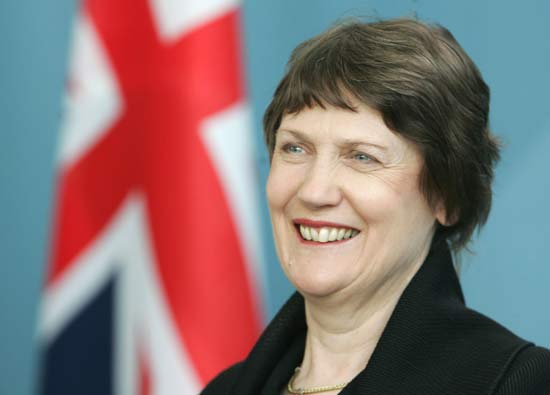
Helen Clark
Now, add the vexed issue of the government’s ‘fiscal envelope’ which aimed to cap Tiriti claims at $1b and you can see the environment of unrest that surrounded and underpinned Henderson’s play and, while a number of these issues have, from time to time, been suggested as Henderson’s source material, nothing in his enigmatic text bears this out. It’s simply an excellent text that isn’t anchored in any specific event beyond what we learn of in the play. The rest we have to construct from our own experience, and, as you can see from what I’ve reminded you about, there’s plenty to chose from, which gives the work a wonderfully timeless, enigmatic quality. You’ll note, I hope, that I haven’t even dug up my of favourite grievance, Bastion Point, but that’s another story.
This production is the first time Mo & Jess Kill Susie aka E Kore A Muri E Hokia, has been performed in Te Reo Māori and, as such, it’s an important addition to our theatre literature. E Kore A Muri E Hokia has been translated by Ani-Piki Tuari, Hania Douglas, Te Aorere Pewhairangi and Tawaroa Kawana and the text is fantastic. Nothing from the original is lost. The pace is maintained, the characters evolve as before, the narrative holds its ground. And what a story it is.

Sir John Key
We enter the Basement Studio, a space that could have been built for this production. The audience is on all sides. It’s intimate and oppressive. The Pākeha cop Suzie (Ascia Maybury) is lying in foetal position on the floor of what seems like a warehouse. There’s plastic on the walls and a wooden crate in the middle of the floor. Susie looks pretty beaten up. She’s blindfolded and gagged. There’s a definite sense of WTF – and I don’t mean World Taekwondo Federation! As we disappear into lighting designer Hudson’s darkness, Mo (Krystal Lee-Brown) starts playing about with a video camera and a hand gun. It looks like a Glock. She postures and poses and speaks but I can’t hear her very well because the accompanying music is incredibly loud. Another tool to alienate the audience, I think to myself. Another full house. There’s a silence you could cut with a knife. Mo fixes the camera on Susie and we see her on the big screen. Jess (Ani-Piki Tuari) is sitting on the floor, reading, silent. She’s giving off a ‘don’t fuck with me’ vibe and Mo doesn’t. Mo doesn’t stop talking but she leaves Jess largely alone.

Krystal Lee-Brown
The music imperceptibly fades. Mo babbles on, Jess does nothing but I can’t take my eyes off her. My understanding of the reo is OK but this is faster than I’m used to, more streetwise. Eventually Mo goads Jess into a response. It’s not the one she wants and she gets the bash. The action playing is strong, effective, the voices in great nick. There are snatches of English that hit my ears like screams. Jess is humourless, staunch. Mo is chatty. I note scars and bleeding knuckles on Jess’s hands. I had missed those earlier. Now I can’t take my eyes off them. There is a picnic of sorts. Jess unloads the necessaries including a picnic basket from out of the box. A table cloth and a cushion. She sets the table on top of the box. There’s something eminently watchable about people having a kai but it doesn’t last. In anger, Jess dumps it, food and all, back in the box and slams the lid.

Ani-Piki Tuari
Susie spasms. It’s her first movement. There is talk of chloroform and Jess has a rifle. It might be a shotgun. I lock in that these are wonderful, totally committed performances from Mo and Jess. There’s no quarter asked or given. I’m reminded that every production I’ve seen directed by Tainui Tukiwaho has been like this. Tight, steadfast, resolute. Even his comedies have this quality. I reflect that he must be seriously good at building teams, engendering trust, moving actors around so that their patterns become deeply embedded and the physical narrative seamless. Everything seems to be happening because there is no alternative. I like that. It’s hard to assess motives even in the English script. It doesn’t really matter because innately we know why this horror is happening. We live here after all. I look around the audience. Not many Pākehā. Just us. The Mo and Jess are waiting for some outside voice to tell them what to do next, to determine what must happen to Susie. Sounds, in theory, like Pinter or Satre but it’s not. It’s Henderson, and it’s bloody good.
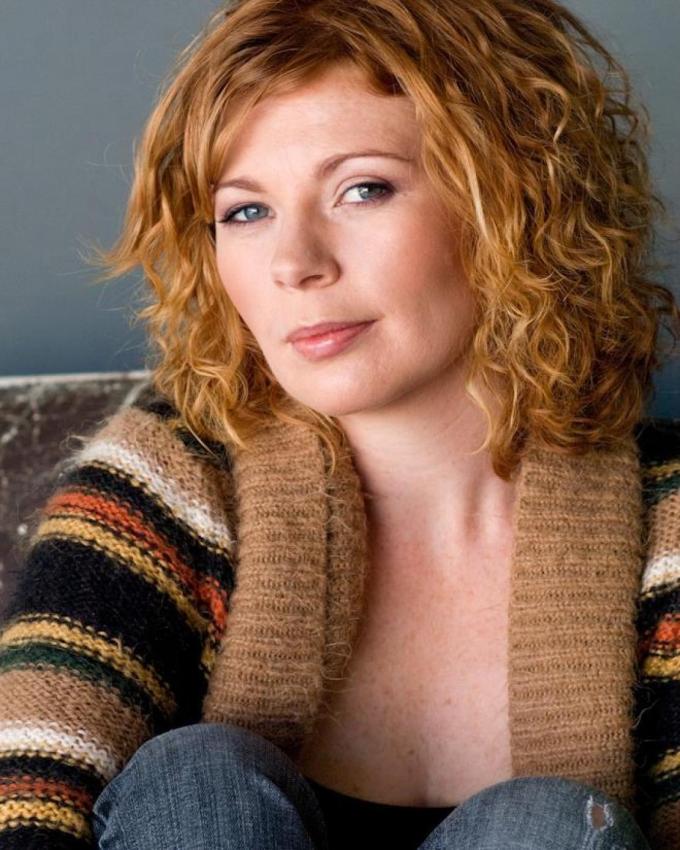
Ascia Maybury
Mo is a sociopath. She has all the questions and all the answers, but no empathy. Susie regains consciousness. Mo shows Jess some footage on the camera from earlier and and, as a result, Jess knocks her to the floor. In 90 minutes of shock this is one of the biggest. There are Genet-like moments of cold brutality, both physical and verbal. When Susie speaks she does so in te reo. This should be a surprise but I’d read about it earlier. Doing my research. I was disappointed for a moment that I had denied myself this earthquake of a shock. Jess takes control.
Susie knows the answers to Jess’s crossword. She’s done it earlier. We begin to ascertain backstories. Susie is a bloody mess. Literally. We learn of ‘the blood that leads to here’, that Tipene did 18 months in the can, that Jess has three kids. It’s clear that there is no way back from where they are. Yep, that’s the name of this version of the play. No way back. For any of them. ‘You’re not real people’, Susie is told, ‘you’re like a flag up a pole, a symbol. Violence is always with us, it’s in all of us’. Not everyone agrees.
There’s a face slap. It’s a beauty, realistic. The violence against Susie, against Mo, is powerful, it’s frightening in its authenticity. We learn some lessons about abuse from Mo. ‘It’s OK if it’s your Dad, as long as it doesn’t hurt’. Mo lies down, is covered with a blanket. She sleeps.

Amber Curreen
What follows is a complex ‘calm before the storm’ korero between Jess and Susie. It’s brutally frank but quiet. Neither moves. Susie has a serious issue with her eye. It’s badly damaged. We see Jess the sadist. She feels nothing. Mo wakes and wants to kill Susie. Jess protects Susie and she and Mo are like cats sussing each other out.
Then the play ends, not as the title suggests but differently. You’ll understand when you see it because this production isn’t going away. You should see it because it paints a picture of Aotearoa that the Matariki Festival avoids. I’ve seen productions in the reo before – Shakespeare and a musical – but this is real, this is concrete and palpable, it’s as though it was written like this in the first instance. The translation is seamless. Ani-Piki Tuari, Hania Douglas, Te Aorere Pewhairangi and Tawaroa Kawana should be really proud. I suspect director Tukiwaho’s hand might be in there too, invisible, making sure that the mix is performable and that it supports his actors.
Asia Maybury as Susie is great. She’s believable both as a cop calling on all her training to survive and her humanity which means the narrative is powerfully glued together. It’s impressive work and her reo is pretty sharp too.

Michael Craven
As Mo, Krystal Lee-Brown is simply stunning. It seems she bites off around two thirds of the script and spits it back at us as though she’s making it up as she goes. It’s sophisticated work and her characterisation is picture perfect. She handles the camera like a pro and we get to hang onto who she is because of it. Her part in the relationship with Jess is rock solid and her performance affected me in exactly the way it was meant to.
Ani-Piki Tuari has her fingers in every pie in this production. Her Jess is downright scary and most of all when she seems to be doing nothing. She’s like a caged lion ready to explode at any moment and it’s perfect. The relationship between the two women has been worked to perfection and it’s a ‘take-home’ for the audience that will resonate for a ever.
Director Tainui Tukiwaho is masterful in his work with this cast. It’s not easy stuff, far from it, and he’s worked with these three fine actors in ways that ensure they’re prepared, wound up and ready to go. It would also seem that he also knows when to walk away and to allow his actors to own their performances and the space. I don’t often feel that I’d like to be a fly on the wall during rehearsals but in this case I would have. No such luck though, and I’m not complaining. The end product is quite enough for me. More than enough. It’s frighteningly real and it sends feelers out into our communities and brings back, in sharp relief, the desolate nature of so many lives, lives that we need to be nurturing and caring for. It also has its hands on the dull, dry stuff of statistics and it reminds us that we have a job as human beings and that job is to care for each other. Always.
Tainui Tukiwaho
Thank you, Te Rēhia Theatre Company, for the two productions you’ve shared with us during this Tamaki Makaurau Matariki Festival. Fingers crossed there will be many, many more.
 dykiegirl