Baroness 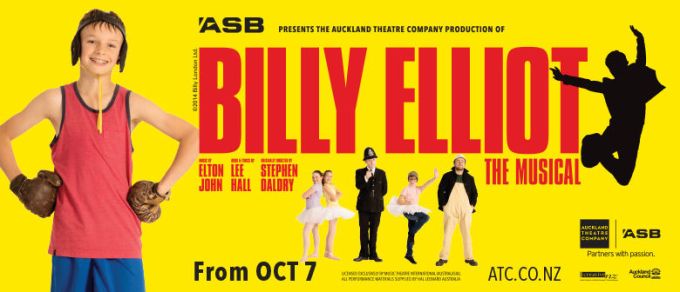
Billy Elliot the Musical
Produced by Auckland Theatre Company in association with ASB
Book and Lyrics by Lee Hall
Music by Elton John
Original Choreography by Peter Darling
Directed by Colin McColl
Choreographer Malia Johnston
Musical Director John Gibson
Set and Costumes by Tracy Grant Lord
Lighting Designer Matt Marshall
Tap Choreographer Richie Cesan
At the ASB Waterfront Theatre, Halsey Street, Auckland
From Friday 07 October, 2016 for a season
‘Good luck with the strike’.
A disembodied female voice from deep in the dark of the auditorium – we imagine it belongs to the woman (Amy Straker) who co-ordinated Billy’s audition for the Royal Ballet School – says everything that needs to be said about ‘Billy Elliot the Musical’ in one single line. This is Margaret Thatcher’s Britain, we’re in the north, County Durham to be exact, and close to Newcastle. This is mining country. The entire region relies on coal and we’re in staunch Labour country. Thatcher hates unions, all unions, and the National Union of Mineworkers holds a very special place in her litany of unreasoned, working-class loathing.
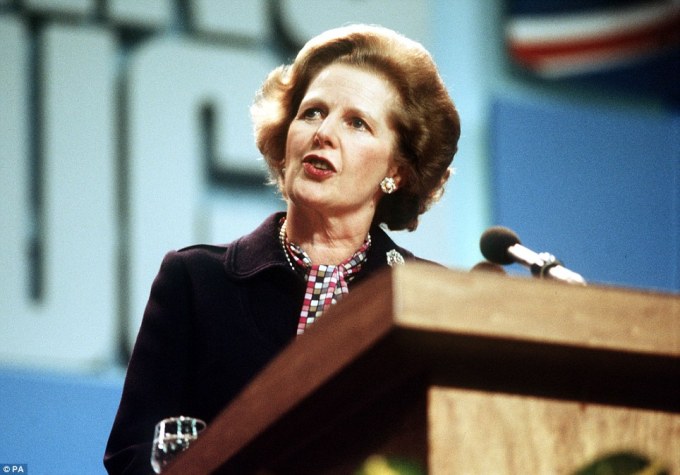
Baroness Thatcher – ‘Maggie’
With this in mind, ‘Billy Elliot: The Musical’ delivers on all fronts, some of them unexpected.
Set in a Geordie mining village and with the 1984 miners’ strike as its backdrop, ‘Billy Elliot the Musical’ is the inspiring story of a small boy’s struggle ‘against the odds’ to make his dream of becoming a ballet dancer come to life. The show’s publicity tells us that Billy (Jaxson Cooke) is a regular eleven-year-old lad who discovers he prefers ballet to his regular boxing lesson. ‘While boys doing ballet is an issue for his macho father Jackie (Stephen Lovatt) and brother Tony (Jack Barry), Billy eventually wins over his family and the entire community thanks to the help of his beloved dance teacher Mrs Wilkinson (Jodie Dorday) and his passion for dance’. We’re told that it’s ‘funny, uplifting and spectacular’ and that ‘the New Zealand premiere of ‘Billy Elliot the Musical’ will be a joyous night in the ASB Waterfront Theatre.’


Publicity is as publicity does and, while this description is certainly accurate, this production of ‘Billy Elliot the Musical’ is so much more than the few words devoted to it in the press release. For starters, the ASB Waterfront Theatre is a brand new venue and this is worthy of immense celebration in, and of, itself. It’s been years in the making and every nanosecond has been worth the wait. As a box into which to put the magic of performance it is simply magnificent. We’ve not been good at making performance spaces in Aotearoa New Zealand since the 1920’s simply because they cost so much and we’re often considered to be a nation of Palestines – um, philistines (wee Billy Elliot joke there). We’re almost better at closing them than opening them, the most recent example being the oft-lamented demise of Auckland’s Maidment Theatre with its astonishing history of multi-disciplinary performance, so a new space is more than welcome and when that space is as good as the ASB Waterfront Theatre moored, as it is in the tourist district with great dining and parking, who can complain. Add to this an auditorium with superb acoustics – we sat in the back row for a preview and in the front on media night – with great sight lines, public areas and a gathering space as good as the AUT Atrium, and you have an absolute winner from day one. The well-earned three emphatic cheers for ATC Chairman Gordon Moller, ONZM, Artistic Director Colin McColl and General Manager Extraordinaire Lester McGrath were heartfelt and merited and they will echo around Auckland for many years to come. Great work, chaps.


Left: Lester McGrath, top right: Colin McColl, bottom right: Gordon Moller
We must remember, though, that a theatre is only as good as the work that’s put in it so, credit where it’s due, ‘Billy Elliot the Musical’ is absolutely stunning. I will admit to some misgivings about the choice of show when I first heard about it but I could see the commercial logic of a family musical with kids and, of course, commercial success is what Auckland Theatre Company does so well. What I hadn’t factored into my thinking was just how good this show is, how anchored it is in our shared theatre values – most of us are social humanists for whom Thatcher was the enemy – and how much I so wanted to hear that line ‘Good luck with the strike’.
‘Billy Elliot the Musical’ is, in my opinion the perfect vehicle with which to open this glamourous edifice because, without saying as much, it enables us to parallel what Thatcher did to the working class in Britain with the poverty and homelessness that is rife in our own country today. It’s fair to say that Brexit is the natural upshot of decades of Thatcherism and who can fail to recall how Britons by the tens of thousands responded when the Baroness passed away. ‘Billy Elliot the Musical’ gives us time to personalise these experiences and to see them through the eyes of an eleven year old boy and his family as they experience the horrors of the times and endeavour to rise above them to follow their dreams. Billy gets out – but he’s actually the only one who does.

Stephen Daldry
It is ironic that a play that celebrates the working class should cost more than most working class people can afford but this is just how it is at the moment. Better that those who may need to hear the message get to do so than that silence is maintained.
‘Billy Elliot the Musical’ is a show where literally everyone is on top of their game. If you think about it, the company opened a major new public building with all the idiosyncrasies that go with that journey – there is food service and delivery, bars, ticketing and all geared to satisfy the voracious appetites of theatregoers in the narrowest possible window of time – and they’ve opened a massive new all singing/all dancing show with three casts of kids, twenty plus adults and a decent sized band. There must have been at least one solitary moment in the small hours of one morning where McColl turned over in his bed and wished he’d chosen a simple two hander with one set and only text to worry about and staged in a garage but that’s not the measure of the man and we’re so very grateful that he took on this massive challenge and, with his exemplary team, totally nailed it! The service areas were efficiently managed, ticketing done proficiently, food and drink served and consumed, programmes sold, hosting capably realised, ushering politely and resourcefully handled and all completed as though this team had been doing it for years rather than merely days. It was seamless.

Elton John
The same must be said for what happened on the stage and credit should be given to Director: Production and Premises Andrew Malmo for managing this achievement. Tucked away in the minutiae of that job title are headaches beyond the will of man to imagine, but everything went incredibly – and unbelievably – smoothly. What, after all, could possibly go wrong? I break out in a cold sweat trying to answer that question.
The show itself is beautifully crafted. Apart from Sondheim I’m not that much of a fan of musicals but this one is very special. The lyrics of the songs are raw and immediate. They carry and sustain the narrative, take us deep into the ugly world of psychological power plays between police and miners, and all in the equivocal shadow of Thatcherite ideology.
The work has a splendid unity, marrying song, dance and text in a way that enables the audience to travel the intersecting mundane, ideological, philosophical and emotional journeys of the characters without disruption. This is critical with a show that requires young people in their early teens to scale the heights and plumb the depths that Billy Elliot and his chums do. While it’s the unity that makes the whole thing work, there are exceptional scenes and show-stopping numbers that are quite simply outstanding and it gives me great delight to tell you that not all the best scenes feature only adult performers.
There is a scene in Act One where Billy (Jaxson Cooke) visits his best friend Michael (Stanley Reedy). Michael, Billy is surprised to find, enjoys dressing in his sisters clothes, as apparently does his moustachioed father. Michael encourages Billy to join him and the scene is a riot from start to finish. The innocence with which they engage in the activity alongside the rich nature of this as a theatrical device is quite simply outstanding and both boys produce astonishing work. This theme is then threaded through the rest of the production and provides the character of Michael with just the sort of shaded nuance necessary to provide him with a backstory and cements the beautiful friendship between the boys. There is plenty of ‘80’s homophobic rhetoric but all is delivered somewhat tongue in cheek.
The ultimately impotent beginning to Act Two, where the miner’s social club stages a Christmas Party Music Hall led by MC George (Andrew Grainger) to raise funds to support the strike is really quite magnificent because it’s a self-sustaining piece and equally powerful as an anti-Thatcher fight-back weapon. At the end of the song ‘Merry Christmas Maggie Thatcher’ – ‘they’ve come to raid your stockings and to steal your Christmas pud, but don’t be too downhearted it’s all for your own good’ – a chorus of small girls rips into Michael Heseltine to the tune of ‘Clementine’ – ‘Oh my darling, oh my darling, oh my darling Heseltine You’re a tosser, you’re a wanker and you’re just a Tory Swine.’ It pulls no punches and the outcome is real characters who we believe in and who speak their own truth and with real, personal honesty.

Lee Hall
Looking through the cast list I see the names of many actors I admire tremendously, each and every one a leading player in his or her own right, but this is an ensemble work and the generosity each to each is palpable.
As if rehearsing a play isn’t hard enough in itself, having to do so with three Billys, three Michaels, three Debbies and three small boys as well as a Pink and a Purple team each with six young female dancers adds a layer of complexity that boggles the mind, but it seems that whatever methods were used they were highly successful.
On media night, the role of Billy was played by Jaxson Cooke, Michael by Stanley Reedy and Debbie by Aria Ferris. Each of these fine young actors brings a totally professional dimension to their work. Each is capable of astonishing realism with each managing the comedy demands well, and, when required to, they hit their emotional peaks with clarity and honesty. Aria Ferris as Debbie develops a beautiful relationship with her mother Mrs Wilkinson (Jodie Dorday) and also manages a charming warmth in her friendship with Billy for whom she seems to have significant romantic desires. I particularly appreciated that the creators of ‘Billy Elliot the Musical’ have written roles for bairns that enable them to have real lives, real emotions, real actions to play, and that the kids are treated as human beings and not merely as ciphers or human set dressing.
The character of Michael is written in such a way that the actor could easily steal the show but in Reedy’s clever hands this delicate balance is never over-played. Reedy’s Michael is truly funny and he’s an empathic sidekick to Billy. The fact that Billy gets to leave and Michael doesn’t is an irony not lost on the audience.
As Billy Elliot, Jaxson Cooke is exceptional. His Geordie accent is faultless and his relationship with his Dad, Jackie, his brother Tony, and his quirky Grandma faultlessly nuanced.
Playing Billy is described by Stephen Daldry as ‘like ‘playing Hamlet while running a marathon’ and so it is. Billy has seven songs, one of them a complex solo, and he never misses a beat or hits a bum note. As if that wasn’t enough he dances during most of them and in styles ranging from tap to ballet and in each he is more than competent. At the conclusion of Act One and a critical point in the miner’s strike Billy is scheduled to travel secretly to Newcastle with his dance teacher Mrs Wilkinson to audition for the Royal Ballet School. Everything conspires to ensure that this doesn’t happen and Billy is confronted by his family in an ugly scene where he is stood on the kitchen table and told ‘dance you little bastard, dance!’ This humiliation leads to the most extraordinary moments of the evening. Billy dances his frustration, his passion, and his anger at every single aspect of his life and with every ounce of his being. To say that Cooke is exceptional is to underplay the achievement of this young actor. In front of a line-up of cops who are creating an orchestrated litany of percussive beats by bashing truncheons on see-through riot shields, Billy hits every emotional note and with this extraordinarily moving dance we are taken into a somewhat sombre interval.

Stephen Lovatt
As Billy’s Dad Jackie, Stephen Lovatt is a tour de force. It’s hard to believe that there is anything to Lovatt the actor that isn’t also Jackie Elliot, struggling father of Billy. It’s not true of course. We’ve seen Lovatt many times but in this he takes his talent to a new level. Jackie is recently widowed and not coping with family life. For all that, Lovatt creates in Jackie a man of deep humanity, a man who loves both his work and his fellow man – but he is also a man of his time and of this place. His anger and thinly disguised disgust that a son of his might want to dance is dangerous and beyond a modern audience’s capacity to understand, yet we relate to him, we empathise with him and we walk his path, as he does, with hope. Lovatt is entirely credible when his epiphany hits and the emotional torture he experiences when he chooses to scab on his mates is intense. Like Billy, Lovatt hits all his emotional markers and his performance never misses a beat. For an actor who professes never to have sung before his solo ‘Deep into the Ground’ is gut-wrenching stuff. It leads us, at Christmas, into the bleakest and most soul-chilling moments of the play – for Jackie, for Billy, for Michael and for Mrs Wilkinson. Not even Debbie is immune to this pain. Lovatt is wonderful and the simple humility he brings to Jackie is seriously impressive. His natural comic ability enables him to create moments of lightness that are so very necessary but maintaining the balance between his joy of the comedy and the need to ‘keep it real’ will be his greatest challenge. The sublime success of Lovatt’s performance as Jackie is to be found in it simplicity, its honesty and its clarity and adding anything else might jeopardise this delicate balance.

Rima Te Wiata
Rima Te Wiata is wonderful as Billy’s Grandma. She is wonderfully rude, wonderfully empathic, wonderfully honest and in wonderful voice. The entire show takes off with ‘Grandma Song’ where we get to hear the true nature of Grandma’s relationship with her husband, Billy’s grandfather. It’s a cynical, and cold portrayal for the most part but when she describes them dancing together Te Wiata creates some of the most beautiful moments of the two hour twenty minute journey and illuminates much about what makes this family tick. Throughout the show there are nuanced performances that expose rich backstories and essential textures that we adore and none more so than in Rima Te Wiata’s fine performance as Billy’s Grandma.

Jodie Dorday
Mrs Wilkinson, Billy’s ballet teacher, is played with world weary élan by Jodie Dorday. Again, Dorday’s is a performance of delicious multiple layers. Mother to young Debbie, for whom she has never a good word, Mrs Wilkinson is the archetypal small-town ballet teacher, a woman of heart who gives everything she can to her students but is under no illusion as to her place in the scheme of things. She gives and gives and when she meets Billy she gives some more – and in recognising Billy’s talent Mrs Wilkinson subtly enables us to recognise hers. Just like Billy’s Dad, her own alcoholic husband, and almost everyone else in the village, she is stuck where she is and cannot move – emotionally or physically – yet in Billy she sees hope not for herself but for the boy and for the future. In opening a door for Billy, Mrs Wilkinson is also providing a lifeline for herself. Dorday is quite simply exceptional and this performance reminds us of just what a talent she truly is.

Andrew Grainger
Over the last couple of years I have grown to expect that Andrew Grainger will produce performances of a consistently unique quality and in George we have yet another classy performance in a long line of fine work. Grainger manages, in George, to create a real character out of what could easily become a stereotype. George, the boxing coach, exhibits not the slightest amount of pugilistic talent and we love him for it. He loves the kids, and his commitment to his mates, and to the strike, is unwavering. We love his cheekiness and Grainger’s ability to play slapstick is without equal. We are also drawn to George’s humanity and so forgive him the fibs he tells that enable him to always be on the right side of any outcome.
It would be easy to go down the cast list and say how great everybody is because they are but there is simply not enough room to do so. It’s arguable that I’ve gone on for too long already but if you think this is wordy be glad you haven’t spent any time with me in person this week because I’ve talked of little else. I will, however, mention standout contributions from Jack Barry has Billy’s older brother Tony who provides such a strong foil for his younger sibling and Rutene Spooner, Edwin Beats, Blaise Clotworthy, Jason Te Mete and, as the quirky Mr Braithwaite, Jeremy Birchall.

Jaxson Cook
The choreography has been taught to the company by Mahlia Johnson who has completely disproved the old adage and turned a box of potential sow’s ears into a beautiful silk purse. The singing and dancing is really quite outstanding and I’ve not seen better chorus work than this anywhere in the world. Of special note is a powerful pas de deux between Cooke as young Billy and his adult doppelgänger danced splendidly by Daniel Cooper. Billy flies, quite literally, in this piece choreographed to the main theme for Tchaikovsky’s ‘Swan Lake’ score and we sit transfixed as the most raw naturalism is replaced by magical metaphor and we see Billy’s future manifest before our eyes.
What accolades can be heaped on Musical Director John Gibson that haven’t already been accumulated. Suffice to say that Gibson’s band sets a pace that never wavers and which supports Billy, particularly in his hour of crisis, magnificently with Brett Adams guitar ripping through our skulls as Billy’s grief rips through his.
Behind it all, of course, is director Colin McColl. McColl has for years been our flagship director and this will have, at times I am sure, been as much a burden to him as it is a joy. I have savoured and appreciated McColl’s exemplary work for decades, indeed since his early days at Downstage where he grew and developed under the wing of the ground-breaking Sunny Amey, until today where, with ‘Billy Elliot the Musical’, he has exceeded even his previous best. There is no doubt that McColl has pulled together a production team without peer in Aotearoa New Zealand, married them to an extraordinary cast and turned the whole kit and caboodle into an all singing all dancing all acting ensemble of which we may all be enormously proud. He’s also given us a master class in direction and ‘Billy Elliot the Musical’ is among the best and most complete musical work I have ever seen anywhere.
Please note I haven’t mentioned the curtain call. It alone is worth the ticket price!
So I add my congratulations to the thousands of others that I’m sure McColl, McGrath and Moller have received for achieving the seemingly impossible and affirm that all those hours burning the midnight oil for at least the last decade have been well and truly worth the undoubted sacrifices. Theirs is a legacy that Aucklanders, visitors and theatre practitioners will enjoy – and appreciate – long after we’ve all passed on. All we can hope is that the ASB Waterfront Theatre continues to be home to work of this quality.
Don’t you just love it when a plan comes together?

 dykiegirl