 Occupy: The Road to Joy
By Andrew Parker
Produced by Don’t Blink Theatre Company by Rachael Longshaw-Park
In Association with Te Pou Theatre as part of the Rangitahi Series
Directed by Rachael Longshaw-Park and Andrew Parker
Lighting and Sound Design by Amber Molloy and Sam Mence
Lighting and Sound Operation by Ariana Shipman
At Te Pou Theatre, 44a Portage Road, New Lynn, Auckland
Thursday 13 April, 2016 to 16 April, 2016 at 7.30pm
In his excellent programme notes playwright Andrew Parker thanks us for coming, thanks everyone who made this production possible – no, it’s not an Oscar acceptance speech, there’s no mention of God or his mother – and suggests that ‘maybe in another four years we can do this all over again.’
I’d love that theatrically, for sure, but I think I’d really rather have the revolution if I can have a choice in the matter.
Co-director Rachael Longshaw-Park gets in on the act and suggests ‘we chase this concept of joy our entire lives’ and sagely asks ‘do we ever achieve it?’ She says that this isn’t a play about politics but a play about people, ‘the relationships we form and the motivations that push us forward.’ She implies some ‘Godly interference’ – she’s right about that – and that this Godly meddling ‘highlights the humanity in the play’. She ends by reiterating that ‘Occupy: The Road to Joy’ is ‘about people and about the affectatious experiences created by the theatrical space and its players.’ I can’t help but support this noble view but, as an audience member, I hope I’m factored into this excellent equation.
In a coda Longshaw-Park informs her readers that this is the second incarnation of the play, that everyone’s hard work ‘has transformed it into something entirely new and fantastical’ and she hopes that we will ‘walk away with something to talk about, or perhaps even act on.’

Rachael Longshaw-Park
Well, she certainly got her wish!
My understanding is that this commendable work was developed as a project for Andrew Parker’s Master’s thesis in 2012 where he was encouraged, presumably by his tutors, to adapt Euripides ‘The Bacchae’ but, finding similarities with the Occupy movement, – sorry Rachael, but this is a political play, it merely manifests itself though the lives of its characters – he chose a different road, one grounded in some form of ‘Apollonian order versus Dionysian chaos’ model which, in an interview with Tim George in ‘Te Waha Nui’ (10 April, 2016), he proposed might be ‘a good start for a drama.’ He’s right, it’s a damn fine place to start as a good number of notable people before him have found. Since Euripides wisely passed over in 406BCE there have been dozens of theatrical variants, a plethora of operatic versions, more than a few excellent films, ample orchestral and choral alternatives and even an opera or six.

Andrew Parker
Joe Orton’s drama ‘The Erpingham Camp’ reinvents Euripides’ narrative and pops it down in a Butlin’s-like British holiday camp in 1967, Wole Soyinka adapts Euripides’ play and reinvents it, in 1973, as ‘The Bacchae of Euripides: A Communion Rite’ and, thirteen years later in 1986, Caryl Churchill, along with David Lan, shape seven independent Euripidean monographs into a multi-media fusion entitled ‘A Mouthful of Birds’. Aotearoa New Zealand hasn’t been immune to adaptations with Robert Gilbert’s ‘Trans Tasmin’ – another Master’s thesis – also created against a backdrop of the Greek Tragedy with the character of Simon Greenwood, a first year university student studying ‘The Bacchae’, able to view the contemporary trials of having a transgender girlfriend and a cross-dressing stepfather through the gendered lens of Euripides’ classic tragedy – and this is to name just four of the many, many theatrical adaptations from the 20th and 21st centuries.

Joe Orton
In the opera world Giorgio Federico Ghedini composed ‘Le Baccanti’ which had its premiere at La Scala in 1948, WH Auden, with Chester Kallman at his side, wrote the libretto for Hans Werner Henze’s opera ‘The Bassarids’ in 1965 while John Buller’s 2004 obituary reminds us that, in 1992, the English National Opera produced an all-singing, all-dancing production of his Bacchae replica ‘Bakxai’. This was, in turn, followed in 1993 by Buller’s orchestral work ’Bacchae Metres’ which uses the distinctive four syllable ionic rhythm common in Greek and Latin verse and which is exclusively written to be sung. There are other operas of course. This is ‘The Bacchae’ after all, and it would seem everyone and his puppy wants a part of it.
Not to be outdone, Gustav Holst’s ‘Hymn to Dionysus’ (Op. 31, No.2) composed for an all-female chorus, translated by Gilbert Murray and based on the parados, the first choral song that appears in Euripides’ work, was performed, with Holst himself conducting, in the Queen’s Hall, London on 10 March, 1914, a mere four months prior to the outbreak of World War 1. Philip Glass added to the genre with a musical version that was produced by the Public Theatre of New York City in 2009 and, in 2013, London’s Globe Theatre produced Ché Walker’s ‘The Lightning Child’ with music scored by Arthur Darvill, perhaps better known as a companion of ‘The Eleventh’ Doctor Who or as the Reverend Paul Coates in ‘Broadchurch’.

Caryl Churchill
It should be no surprise then, given the extravagant intrigues of ‘The Bacchae’, that there have also been a number of films based on this classic tragedy. Georgio Ferroni directed his own adaptation ‘Le Baccanti’ in 1961 and in 1970 Brian De Palma filmed Richard Schechner’s stage adaptation ‘Dionysus in ‘69’ performed by an experimental theatre company in New York. My research also suggests that at least five television adaptations have been made but it’s probably best to leave those be. Suffice to say that Parker, while in extremely illustrious company, can say with pride that his work certainly stands up to every comparison.
‘Occupy: The Road to Joy’ isn’t just an adaptation of ‘The Bacchae’, however, it’s much more than that. While the themes of the ‘The Bacchae’ – that endless war between the opposing dimensions of human nature, the belief that the means to spiritual power is through a superfluity of uninhibited sensuality, that anger and vengeance can be cleansing if engaged in to excess and that duplicity is an acceptable tool when used to remain in control of the capricious human game of life – are cleverly woven into a contemporary text that has as its context the ‘Occupy’ movement.
‘Occupy: The Road to Joy’ is a political play – sorry again, Rachael – in the same way that ‘The Bacchae’ is a political play, the political is personal and the personal is political and each is woven inextricably, like the vital organs of conjoint twins, into the other. Just as Dionysus appears in ‘The Bacchae’ as both a God spoken of only by Chorus and as a man who clearly speaks and acts for himself, so does the Dionysus of Parker’s play fulfil both roles. In both ‘The Bacchae’ and in ‘Occupy: The Road to Joy’, the play’s structures are mirrored and this device works flawlessly as a tool to expose the narrative of the newer play. Parker tells us in his media release that ‘change is coming. Protestors’ he says ‘have set up camp in the middle of the city’ – he doesn’t say that it’s Auckland but there are hints it might be – ‘and they’re not moving until their demands are met. Beth (an impressive Rebekkah Farrell) has come here to set the world right. Mag (the enigmatic Georgina Silk) has come here to work out who she is. Dan (a slimy, gaslighting Joe Nathan) has come here to make his future. And Dionysus (the stunning Mary Rinaldi) has come to play. He’s going to make sure everyone gets what they want. They’re on the road to joy. And who knows where it will take them.’ He describes the work as ‘a dark journey into the heart of a revolution’ and so it is. It’s uncompromising in its intelligence and the lens it uses enables us to experience a warts-and-all – if somewhat cynical – picture of this – or conceivably any – protest movement. Parker also slips in the wee factoid that ‘Occupy: The Road to Joy’ was shortlisted for the Adam New Zealand Play Award in 2014 only to be beaten by Elisabeth Easther’s ‘Seed’, Pip Hall’s ‘Mule’, Nancy Brunning’s ‘Hikoi’, Mei-Lin Te Puea Hansen’s ‘The Mooncake and the Kumara’ and Sam Brooks’ ‘Riding in Cars with (Mostly Straight) Boys’. While they’re all excellent plays, it’s hard to see how any one of them could be considered better than the others.
Yes, I think Parker’s is a cynical view of the protest movement but then I’m not the best person to judge. I willingly declare a conflict of interest and proudly bear the scars of the anti-Vietnam war protests of the ‘60’s and early ‘70’s, the ‘Halt All Racist Tours’ marches of 1981, the nuclear free New Zealand movement demos in 1984, Homosexual Law Reform in 1986, the foreshore and seabed rallies of 2004 and I certainly provided vocal opposition to the pro-smacking brigade in 2007. I supported Civil Unions (also in 2004), Louisa Wall’s Marriage Equality Bill in 2013 and fought – and will continue to fight – against the TPPA for all of this year. So you see, I’m John Key’s archetype Rent-A-Mob protester and I’m incredibly proud of this history, in part because it carries on my father’s legacy from the 1951 Waterfront Lockout and the nasty scrap that accompanied the 151 days of direct action and the 1952 Rubber Worker’s Strike which was almost as bad. Mind you, I’m not blind to the hypocrisy associated with some of these movements so I can acknowledge a degree of validity to Parker’s representation of his protesters – I did say ‘some’ and not ‘all’ and if you disagree I’ll make a placard, write a chant, picket your house and throw glitter on your cat – all with a thoroughgoing commitment to non-violence of course.

Mary Rinaldi
Wikipedia tells us that ‘between 1979 and 2007 the incomes of the top 1% of Americans grew by an average of 275%. During the same time period, the 60% of Americans in the middle of the income scale saw their income rise by 40%. Since 1979 the average pre-tax income for the bottom 90% of households decreased by $900, while that of the top 1% increased by over $700,000, as federal taxation became less progressive. From 1992 to 2007 the top 400 income earners in the U.S. saw their income increase 392% and their average tax rate reduced by 37%. In 2009, the average income of the top 1% was $960,000 with a minimum income of $343,927.
In 2007, the richest 1% of the American population owned 34.6% of the country’s total wealth, and the next 19% owned 50.5%. Thus, the top 20% of Americans owned 85% of the country’s wealth and the bottom 80% of the population owned 15%. Financial inequality (total net worth minus the value of one’s home) was greater than inequality in total wealth, with the top 1% of the population owning 42.7%, the next 19% of Americans owning 50.3%, and the bottom 80% owning 7%.’
This has been replicated throughout the western world and in Aotearoa New Zealand where currently over 300,000 children live in unacceptable poverty. The result has been the increasingly strident use of the slogan ‘we are the 99%’ and the arrival of Anonymous, whose Guy Fawkes masks are used liberally in this production. Oh, and, of course, the worldwide spread of the ‘Occupy’ movement since Wikileaks Central began promoting the idea of a ‘US Day of Rage in March of 2011. The Occupy Wall Street protests that targeted the lack of any significant legal response to the perpetrators of the Wall Street market crash began on 17 September 2011 in downtown Manhattan and on 9 October 2011 ‘activists in cities in over 25 countries repeated their calls for a global protest on 15 October, 2011. A list of events for 15 October included 951 cities in 82 countries’ so this was no small pickings. In fact, it’s really big stuff and it’s to Parker’s eternal credit that he’s picked up the ‘Occupy’ ball and run with it.

New York’s Finest at Work
I read about ‘Occupy Wall Street’ online in March of 2011 and followed closely the growth of both the movement and the violent police response to it in downtown Manhattan. Hardened protester that I am I was still truly shaken at the level of violence from the NYPD towards the protesters. I looked for it to be reported in our own NZ Herald so as to get an antipodean perspective but it took twelve weeks for even a four line acknowledgement to be published. It was as though it wasn’t happening and our middle-of-the-road television news programmes were just as bad. The mainstream media boycott of all things ‘Occupy’ was so tangible you could taste the imperceptible tang of cordite on your tongue each and every day. When ‘Occupy’ hit Auckland exactly the same thing happened. What did find its way into the media portrayed the protesters as smelly, layabout, unemployable trouble-makers and it didn’t help that some of them actually were.

Rebekkah Farrell
Longshaw-Park’s production begins, as so many productions do, in the foyer of the theatre but this one is different. It’s a protest march and it’s loud, aggressive, perfectly timed and bloody scary. It reeks of authenticity and drives the full house, silently from the foyer into the performance space and there isn’t a hint of that self-satisfied tittering you get when an audience is fully aware that this is just a piece of theatre and, as such, should not be taken at all seriously. I’ve been at the heart of a few ugly protests and this one sure felt real to me.
The Occupy camp is set up right before our eyes and we’re introduced to the characters in a way that breaks the fourth wall. So far so good, I think to myself. I remember a review of Sam Pillsbury’s outstanding Kiwi film ‘Starlight Hotel’ that labelled the flick ‘an excellent excuse to wear designer depression clothing’ and I’ve never forgotten it. The reviewer had a point, it was incredibly pretty, and I’ve seen other examples of the same thing – the tens of thousands of dollars spent on costumes for a Court Theatre production of Berthold Brecht’s ‘The Threepenny Opera’, all to create the illusion of a Socialist denunciation of a Capitalist society. Spending all that loot to ensure that the cast looked exactly like penniless, down-and-outers seemed to fly in the face of what Brecht was actually trying to say. Tony Taylor’s tenure at Wellington’s Downstage did much the same thing creating some of the most expensive poor theatre of all time so much so that Grotowski, Stanislavsky, Brecht, Barba and Boal must have been flinching in their burial plots. Theatre of the Oppressed has never looked so sartorial.

Georgina Silk
No such issue with this production, everything was visually and socially hunky-dory, but there was a hint of well-heeled white kids playing at being protesters and I’ve little doubt this was exactly what Parker intended. If so, it works a treat and this refrain is also carried effectively through the juxtaposition of Beth’s passionate commitment and Mag’s oddly discordant ulterior motives – she does sneak off home for a shower at night, after all. The personal relationship that grows between them glues them together however, and enables the conflict to be apparent but seemingly, though not actually, diminished. Beth’s battles with Dan, the self-appointed top dog of the group, is magnificent and the scripting of both characters is seriously impressive. Dan (Joe Nathan) is a master gaslighter and Beth and her comrades are powerless to fight back. Dan’s chauvinist insistence that Beth take responsibility for the camp kitchen and the kitchen roster is an absolute highlight of the first half. It’s ugly, debasing and transpires with an alacrity that is terrifying in its immediacy. Beth is absolutely humiliated and in the most breathtakingly ghastly manner imaginable. It’s irrefutably great theatre, a sublime amalgam of top notch writing (Parker), courageous direction (Longshaw-Park) and acting (Farrell and Nathan) and it’s over almost before it’s begun. Nathan’s performance is extraordinarily good and, with little overt cause, we loathe him from go to whoa. Farrell gives as good as she gets providing all the spunk necessary to make this pas de deux really work.

As the protest begins to disintegrate from within the performances get better and better. The central characters are clearly drawn and carry the complex narrative very well indeed with stand-out performances from Brie Hill as the hippie Lyn, from Jake Love as Jim and from Georgina Silk as Mag. Rebekkah Farrell as the ill-fated Beth carries the weight of the hour-long first half and, apart from a tendency to be too strident at times, she’s otherwise quite excellent. The shock ending to Part One, the unseen power from without, comes as a bombshell and is most effectively staged.
Part Two, also an hour long, is as unlike Part One as can possibly be imagined. Rather than having the twelve strong cast all onstage most of the time, we slide effortlessly from outdoors in the city square into a series of powerful two-handers within the confines of the Mayor’s office. We are told she can see the occupation in the Civic Square from her office window and this has a recognisable hint of truth to it. I could imagine Mayor Len doing exactly the same thing.
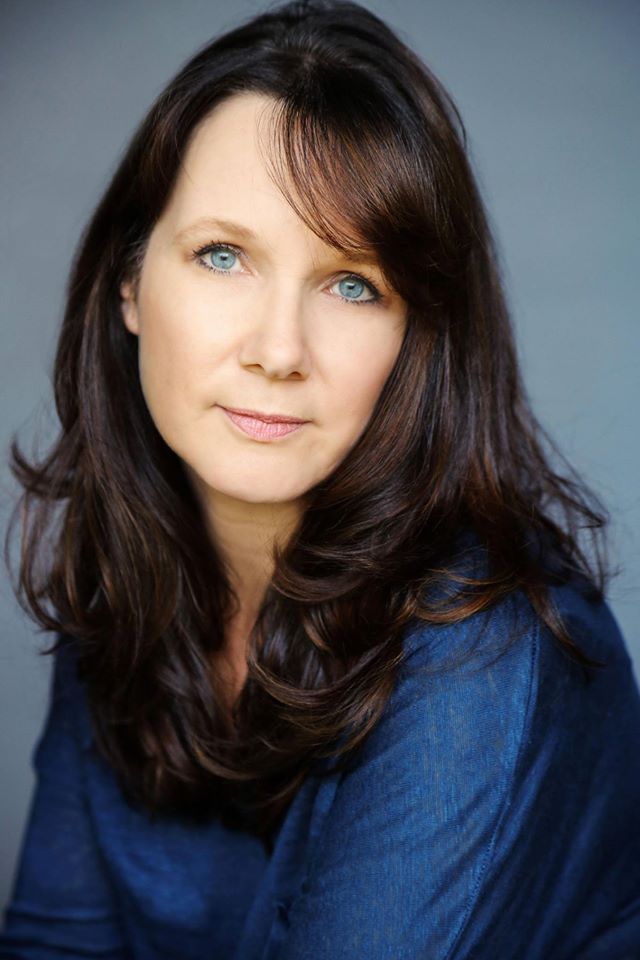
Anna Baird
Dionysus, in Part One, is an enigmatic and shadowy figure and it’s almost as though he’s drifted in from the rehearsal room next door, a refugee from another play, just popped in for a look-see – which of course he is. He’s different in Part Two, as different as Puck and Pirate Jenny. From the inscrutable, spectral observer of the first stanza, he becomes a Godlike instrument of vengeance – as indeed Euripides has painted him – and in the hands of the supremely talented Mary Rinaldi, Dionysus literally rocks our world. Rinaldi has great presence, an acute understanding of personal space and moves so very, very well. She has a great voice, is in supreme control of every moment she spends on stage and it’s as though a new actor, unseen earlier, has grabbed Parker’s text by the balls and wrenched it from its moorings exactly as Euripides Dionysus should.
Almost matching Rinaldi is Mayor Joyce, the play’s protagonist, played beautifully by Anna Baird. She sidles, oozes and sidesteps her way around Parker’s excellent script and Rinaldi’s none too subtle attacks before finally being trapped in the most awful way imaginable. Her relationship with daughter Mags in Part One – yes, Mags turns out to be the Mayor’s delinquent daughter – is along the lines of what might be stereotypically expected between an ultra-conservative mother and her wayward, runaway offspring. Parker does a good line in abrasive and antagonistic dialogue and it’s nowhere better exemplified than in the scenes between Mags and Joyce and between Dan and almost all of the women in the cast with whom he comes in contact. Parker has a great ear for rhythm and nuance and this script is full of the music of aural recognition. The addition of a political power relationship between Mags and Joyce adds a further frisson of radical muscle to Part Two and I liked it a lot.
To tell more would be to give away some exquisite plot twists so I won’t, I simply won’t, not even if you offer me money which … well, I guess it does depend on just how much you’re offering but I’m also extremely aware that Dan would no doubt beat me to it, such is his unabashed and opportunistic capacity for betrayal, so I will say no more.

Brie Hill
As Winston Churchill said of the Russians before World War II, there is ‘a riddle wrapped in a mystery inside an enigma’ but in this case it relates, not to the empire-building intentions of the then Soviet Union, but to the second half of the title of the play. I find the phrase ‘the road to joy’ evocative but, at the same time, elusive in this theatrical context. I want it to mean what I think it means but I simply can’t be sure. We hear the words ‘we’re on the road to joy, but it’s too damn long’ and, in the moment, it seems easy enough to understand. It’s later that there’s a problem. Part of me wants to believe that this axiom can simply be taken at face value but as most of the play replicates the Churchillian riddle/mystery/enigma trope I feel the need to look further, much, much further, to experience the blinding insight that I seem to hanker for.

Nathan Joe
On my journey I rediscovered a solo music project of the prolific of Conor Oberst performing as ‘Bright Eyes’ and lyrics that were, at the time I first heard them, for some inexplicable reason, beyond my comprehension. I had completely forgotten about Oberst’s song ‘The Road to Joy’, the final track from his 2005 album ‘I’m Wide Awake, It’s Morning’ which contains lyrics that are deeply evocative, to me at least, of Parker’s fine play:
‘So when you’re asked to fight a war that’s over nothing
It’s best to join the side that’s gonna win
And no-one’s sure how all of this got started
But we’re gonna make them goddam certain how it’s gonna end
Oh yeah, we will, oh yeah we will!
Well I could have been a famous singer
If I had someone else’s voice
But failure’s always sounded better
Let’s fuck it up boys, make some noise!
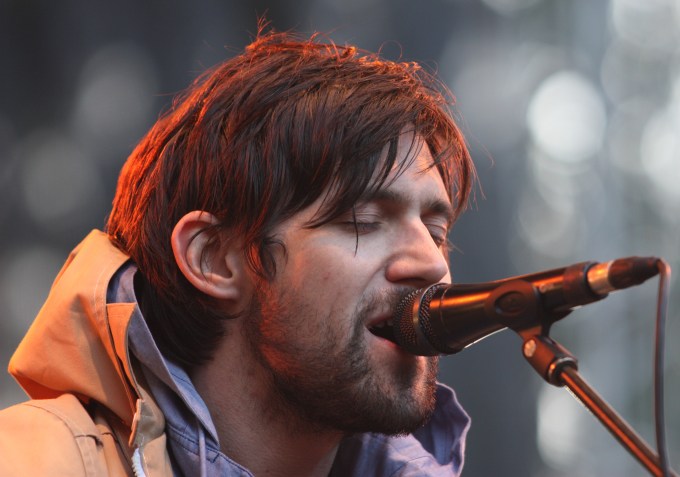
Conor Oberst ‘Bright Eyes’
It would seem that the tune takes its muse from Beethoven’s ‘Ode to Joy’ and that Oberst has simply added his own brand of worldly, if somewhat cynical, lyrics. Oberst’s song is multifaceted, just like Parker’s script, and while it’s unquestionably political, it also has an apposite odour of self-loathing about it. Parker’s ‘Road to Joy’ has the same as made manifest via Dan’s overt amorality, Mag’s personal dishonesty, Beth’s caustic passion, Joyce’s majestic duplicity and Dionysus’ rancorous anger. While this sounds like a most unpleasant mix, the nature of the narrative keep everything within the bounds of realism and each of the human characters, with the possible exception of Dan, has definite redeeming features.
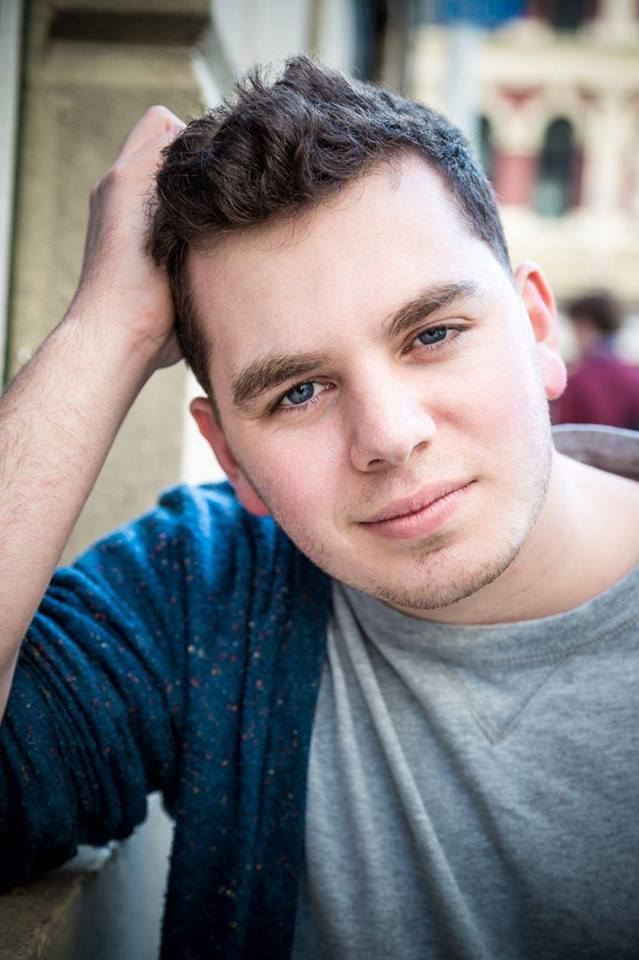
Jake Love
I’d like to say that this is all but it’s not. There’s also an epistolary book with the same name by Thomas Merton who, after a vigorous and fun-filled adolescence, joined that most ascetic of Roman Catholic monastic orders, the Order of Cistercians of the Strict Observance, otherwise known as Trappists. Like the Jesuit Gerard Manley Hopkins and William Blake before him, Merton’s letters present a conflict between the secular and the sacred and his wisdom, like Parkers, is at times profound.
I doubt Parker’s ‘joyous’ muse could be Merton but it’s possible that Oberst has had an impact of some sort on our playwright, assuming of course that he’s ever actually heard of him and I’m not off chasing Scotch mist. Truth be told, I don’t really know but I can honestly say that Andrew Parker’s textured, rich and nuanced script and his and Rachael Longshaw-Park’s damn good production have kept me enthralled and on edge now for almost three days and that is a rare and wonderful thing, an experience I can, and will continue to, truly treasure.

This went on for months and never hit our media. Kim Kardashian did, though. Often.
There’s a bonus too, of course, and it’s Mary Rinaldi’s intoxicating Dionysus. Hers is as good a performance as I’ve seen in a good long time and I can’t wait to see more of her – and to experience Andrew Parker’s next smart, shrewd and thought-provoking work. If I could have both together I’d be a very happy – if mildly perplexed – human person.
So get to it, please, both of you.

 dykiegirl