
You Can Always Hand Them Back
By Roger Hall
Produced by Auckland Theatre Company
Directed by Janice Finn
Musical Direction by Jason Te Mete
Choreography by Jeremy Birchall
Set Design by Rachel Walker
Costume Design by Lisa Holmes
Lighting Design by Philip Dexter MSc
AV Designed by Simon Barker
Sound Design by Jason Smith
At Sky City Theatre for a season
Published at www.theatreview.org.nz
As we sat in our car, stuck at traffic lights after leaving Sky City Theatre, I realised I had a song going round and round in my head. It was ‘Please Don’t Let Me Be Misunderstood’ – The Animals version with Eric Burdon’s haunting vocals. This dates me, that’s for sure, but it’s rather the point – or at least a part of it.
Wikipedia tells us that the beginnings of ‘Don’t Let Me Be Misunderstood’ came with composer and arranger Horace Ott, who came up with the melody and chorus lyric line after a temporary falling out with his girlfriend (and wife-to-be), Gloria Caldwell. He then brought it to writing partners Bennie Benjamin and Sol Marcus to complete. However, when it came time for songwriting credits, rules of the time prevented BMI writers (Ott) from officially collaborating with ASCAP members (the other two), so Ott instead listed Caldwell’s name on the credits. It’s a terrific story but it was still Burdon and his mates destroying my grey matter at the traffic lights and not Nina Simone.
Yes, we were stuck at malfunctioning traffic lights at eleven o’clock at night and, for the first time since forever we’d been to the theatre without our son who had a sleep over at school. We planned to hit Hell Pizza in Remuera for supper but it was closed so we settled for Greenlane McDonalds instead. Greenlane McDonalds isn’t as bad as it sounds and we have history there because in late November 2001, due to crazy circumstances way beyond our control, we ate there instead of at a flash waterfront bistro on our wedding night. Yes, we were in all our wedding finery and, yes, we had burgers and chips and frozen coke for the drink. It’s a case of ‘don’t ask, don’t tell’, you see, because if I went into all the bizarre details here, no doubt Roger Hall, embedded as he was in my head after an evening spent uploading his human acuities, would shamelessly download said details direct into his next script and nothing would be sacred any more. After all, he’s been making me laugh, cry, and ruminate on the foibles of others who are just like me for forty years so why shouldn’t he eventually put me in his grab-bag of mortal flotsam and jetsam and spurt my story forth in one of his superbly crafted plays sometime in the future?
But why that song? Sure, I like the song and always have, but it’s more than that. It’s actually how I view a part of Roger’s legacy. I think his work has sometimes – perhaps often – been misunderstood.

Roger Hall
Let’s go back to the beginning. Hall’s debut work was the immensely successful ‘Glide Time’ which hit the stage running in 1976 and then morphed onto the small screen as ‘Gliding On’. It took the pulse of the nation and no-one could doubt that Roger Hall had arrived. My professional career began the same year as Hall’s but rather than hitting the ground running as Hall had, my first appearance was more reminiscent of a dull splat, a charming and urbane dull splat, but a dull splat nonetheless.
I was slightly younger than Hall then and, oddly enough, I still am, which means that, as Hall’s raw material, acutely observed, has aged, I have aged with it – and what a joy that has been. My own practical association with Hall’s work is limited to a shoestring production of ‘Prisoners of Mother England’ in 1980 but I have had the pleasure – and pain – of seeing dozens of his plays produced, for better or for worse, over the past four decades so I do feel somewhat qualified to comment and, yes, I think he has often been misunderstood, rather like a brilliant All Black first five with a stunning sidestep who is seen by the hoi polloi as being nothing more than that, a one trick pony. Sure, Hall writes what can loosely be called comedy but it’s the comedy of a Chekhov and not the farce of a Bennie Hill, though he’s quite capable of writing that too when he puts his pen to it.
Hall’s real success comes, in my eyes, via his ability to capture sublime aural moments and to weave them into a rich, liquescent narrative in which his characters, also acutely observed, sink or swim, and we sink or swim with them. It’s evident in every word he writes that he loves all of his characters – and we know most of them, have played golf with them, cried with them, lusted after them, wanted to strangle them – and because he loves them he exposes them to us warts and all. When directors and actors get it right, it’s superb theatre, and when they don’t … it can be dire stuff. That’s not an experience exclusive to Hall of course – who hasn’t seen ghastly Goldsmith, horrible Hare or shitty Shakespeare – but it somehow seems more personal with him because, well, he’s ours, and we love him, and how bloody dare they! He’s up there with Barry Crump, Pinetree Meads, Sir Ed, Murray Ball, Wal and Dog and, of course the magnificent Fred Dagg, he’s a Kiwi icon like L&P, and he deserves to have his work respected and done right.
It isn’t always, and the worst fault I see in productions of Hall’s work is actors and directors who stop looking too soon for what’s embedded deep in the sub-text, the stuff that, when a smart actor does smart stuff with an astute director, rips our hearts from our chests and leaves us sitting in the dark racked by silent sobs because it’s us, it absolutely, totally us, and it hurts.
This isn’t to say that everything Hall has written is great, it’s not, but, say what you like, it’s always maturely crafted and actor friendly. It’s gotten more so too over time and I’d list his best as ‘Middle-Age Spread’ (no-one beats Hall for snappy and marketable titles), ‘Social Climbers’ with its wonderfully written roles for women, ‘State of the Play’, a rehearsed reading of which I saw at Centrepoint Theatre and which gutted me before I’d had my gender epiphany, ‘The Share Club’ which was timely in a terrifying but, Hall being Hall, entirely predictable way, ‘Market Forces’, the under-rated ‘Multiple Choice’ and, finally, ‘Four Flat Whites in Italy’. Each is a varied, rich and complex study of the human condition wrapped dexterously in a haze of hilarity with regular jabs of cryptic and none-too-gentle cynicism.
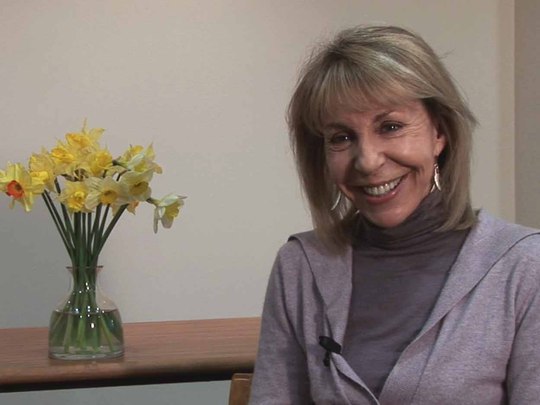
Janice Finn
Let’s not forget the wonderful collaborations either, with A.K. Grant and Philip Norman on ‘Footrot Flats: The Musical’ – Hall wrote the book based on Murray Ball’s characters – ‘Dirty Weekends’ again with Philip Norman writing the music, and ‘You Can Always Hand Them Back’, the reason for writing all this stuff, where Hall wrote the book and the astonishing Peter Skellern wrote the music and the lyrics.
I fell in love with Hall’s work in 1979 at The Fortune Theatre with ‘Middle-Age Spread’ where the creative team touched the core of the work and my core as well, again when I saw an excellent production of ‘State of the Play’ in the early ‘80’s and further with ‘Social Climbers’ at The Court in the ‘90’s where an excellent cast reconnoitred the angst of intergenerational female relationships in a confined space and managed even to turn the menopause into an art form. Not so successful was The Court Theatre’s production of ‘Dirty Weekends’, Hall and Norman’s very funny musical about gardening, which would be, in the pantheon of the most awful productions of anything I have ever seen anywhere, unchallenged right at the top.
With all that history I was looking forward to catching Auckland Theatre Company’s 40th anniversary production of Hall’s latest opus ‘You Can Always Hand Them Back’ where, the advertising tells us, ‘Maurice and Kath’s kids have left home. The nest is finally empty and a life of gin, golf and overseas jaunts awaits. That is, until the grandchildren arrive. With grace and good humour (and a little song and dance), old rhythms are given new life as they embrace the delights and demands of bath time, babysitting and bundles of joy.’ We’re also informed that the cast includes Peter Hayden (‘Lysistrata’, ‘Trees Beneath the Lake’, ‘Other Desert Cities’), Darien Takle (‘Lysistrata’, ‘Four Flat Whites in Italy’) and Jason Te Mete (‘Guys & Dolls’, ‘Stepping Out’, ‘Little Shop of Horrors’).’ It’s an impressive bunch and the somewhat humble bios belie the decades of excellence that Takle and Hayden can both claim. I first saw Takle in a touring production of ‘Agincourt’ in 1976 and she absolutely blew me away. Hayden I first saw somewhat later at The Fortune and, while his impact was more subtle, it was no less profound. We age, and these two have done so beautifully. Te Mete is, of course, a prodigious talent, more than a tad chronologically junior to his cast mates, but no less capable.

Rachel Walker
Sky City Theatre isn’t my favourite venue but Auckland Theatre Company made our arrival as enjoyable as it might possibly have been. Box office staff were pleasant, friendly and efficient and the complimentary glasses of wine for my partner and myself were most welcome. Although the house was full the foyer never became unbearably packed and the house was opened early enough to allow the audience to be seated comfortably without any sense of last minute rush.
Rachel Walker’s clean lined set is attractive and replicates the homes of every retired elderly couple I have ever known. Not mine, I hasten to add, as I’m still working, have a thirteen year old son and tidiness was never my forte anyway. There are family photographs on a white back wall in the centre of which is a good sized TV screen which sees multiple clever use throughout the two and a bit hours (with interval) of the production. The furniture is appropriate for an older couple with no financial worries to speak of and this in itself is worthy of note. I heard a wee murmur of concern from behind me at one point and the voice suggested that this was a very white, heteronormative, middle class lens on life. My response – unspoken – was ‘and why not?’ We all have the right to see ourselves and our lives presented on the stage and middle class, white heterosexuals are no different. A witty, gay friend commented as we left that, in a few short years, we could see ‘You Can Always Hand Them Back’ with a gay or lesbian couple centre stage and that the play would still work. He’s right, of course, but that’s for another day.
From Kath’s (Darien Tackle) first confident ‘Hi. I’m Kath. Are any of you grandparents?’ to the end of the show, the production never missed a beat. It’s complex stuff because Hall has his actors speak direct to the audience for a lot of the time which is great for delivering narrative but less easy for playing a deeper, more complex, subtext or for developing relationships.
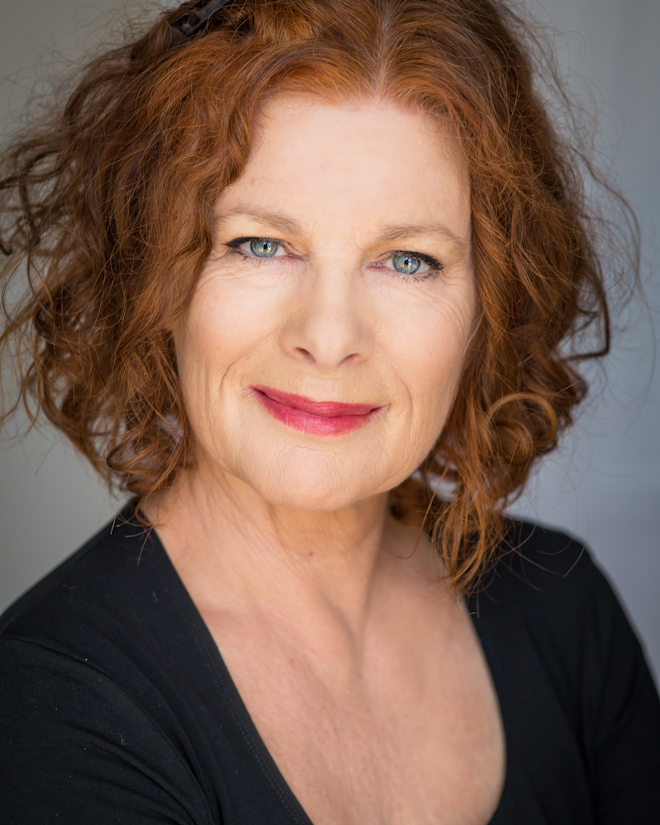
Darien Takle
Te Mete takes over early and establishes himself as a character in his own right and not merely an accompanist though he’s stunningly good at that too. His playing is tight and empathic, but there’s always a hint of Skellern scepticism that edges, at times, into a Sondheim-like realm that suggests a darker human understanding. I like it very much when it happens as it enables the actors to get on with the more saccharine grandparenty stuff without seeming too one-dimensional.
We first meet Kath and Maurice (Peter Hayden) after their own kids – a pigeon-pair named Annabelle and Marcus – have left home. Kath wants grandchildren but Maurice not so much. The Hall battle of the sexes is alive and well but these two are not at odds over anything particularly important – except maybe the golf at Augusta on the TV.
The calm of the empty nest doesn’t last long and in a twinkling there is a wife for Marcus. She’s Julia, she’s English, a vegetarian, and Kath doesn’t like her very much. There’s also a husband for Annabelle. He’s James, and he seems to be more acceptable. In the time it takes to check the programme there are four wee rug rats to baby sit, to take for walks, bath, get to bed and sleep and Maurice and Kath engage almost willingly in every possible permutation of the grandparenting art.
Hall engages his love of beautifully crafted speeches and they are delivered beautifully by these fine actors but the audience doesn’t really warm up. It could be the black hole that Sky City Theatre is – it drains the emotion out of sound and it’s hard for performers to reach beyond row eight – or it could be something else. I ask myself where this is heading and frankly, at this point, I have no idea. No question the performances are top notch, the direction (Janice Finn) is flawless, and all the technical things seem to be well under control but something seems in limbo. Can’t be the script, I tell myself, because Hall’s trademark comedy is ticking along, there’s some pretty tart social comment that we’re all enjoying – Hall has a crack at Wellington and that’s always good for a laugh – and the audience seems engaged. Not fully, but engaged all the same. Takle and Hayden – with occasional support from Te Mete – are doing a splendid job of creating Marcus and Julia, Olly and Harriet, Annabelle and James and Leonard and Sophie. They shape the paths both kids and grandkids take and we feel, by the interval, that we know them all really well. Maurice thinks Olly is a woos which I sense the audience doesn’t like. Nor do they like the fact that Leonard is his favourite because grandparents shouldn’t have favourites. It’s very clever acting and fine scripting.

Peter Hayden
The first half has seen some seriously good songs interwoven into the text and they are performed with clarity and style. ‘If you’re feeling weak and flabby’ is a cracker but they all pale in comparison to Takle’s ‘we’re home alone, Maurice come to bed’ torch song at the end of the Act One. It’s simply incredibly good. In fact, the end of Part One sees the entire show kick up a gear with the discovery that Julia and Marcus are going to England to live and that they’re taking the kids with them. It’s heart breaking stuff, and the emotion certainly gets past the footlights on this occasion.
Part Two begins with a reprise of ‘They grow up so quickly’ but something has changed. There’s a serious urgency and even the set has transformed. We’re now in the Hillcrest retirement village and two single beds take the place of the couches. More important, Kath and Maurice are hating it. There’s a hilarious set about deafness and hearing aids – classically outrageous Hall one-liners that has the audience in stitches – and a pay-off at the end to die for. They discover, courtesy of Te Mete, what Skype is and connect with the family in England. Olly and Sophie visit and Olly has brought a DVD – ‘Glee’ – and you don’t have to be a genius to see what Hall is setting up here. It’s gentle – and gently dangerous too. I like it very much … at least I think I do.
Hayden sings ‘I’m entering the age of bewilderment’ supposedly about living in a computer age but its more than that and we see the slow deterioration of Maurice’s quality of life begin. He’s dragged from his bed though to go to Harriet and Olly’s school show – ‘Joseph and his Amazing Technicolour Dreamcoat- – and Olly is the star. He’s won his Grandpa – and Olly’s narrative takes a terrific step forward at this point.
The English branch of the family comes home for good – a great job for Marcus with a government department – and there’s a collective family Christmas – illustrated by a magnificent, if less than traditional a capella song. It’s excellent stuff.
Suddenly it’s Hall at his very, very best. The subtext becomes the text and we’re faced with the mortality of these people we’ve grown to like. It’s raw and real and the pain is everywhere. ‘It’s all gone by so quickly’ is reprised again and this time it’s not about kids growing up but life in a much fuller sense. Olly is cast in his next musical – Bloody Mary in ‘South Pacific’ – but it’s a step too far and Kath decides not to tell Maurice.
Maurice tries his ‘pull my finger’ fart joke one last time and I’m reminded of Sir Ken Robinson asking how we can hope to educate young people for a future twenty years down the track when we don’t know what the world will be like at the end of next week. Hall does that to you when the productions are good – as this one is – he makes you ask yourself the tough questions. Janice Finn’s classy production features a litany of waved goodbyes and they become more and more poignant as we follow the arc of the narrative.
Jason Te Mete is a musical star with a glittering career ahead of him. The sky is his limit. Peter Hayden is a wonderfully giving actor, rich in craft and talented in so many ways. His Maurice is rich and empathic and I loved him to bits. Darien Tackle is simply fantastic. No-one sings better, moves better, acts better or changes into a higher gear with more ease than she does. There seems to be no end to her talent or her capacity to entertain us, make us laugh and move us to tears. She is the consummate artist and I salute her in every imaginable way. She’s quite brilliant.
Once the traffic lights behave in Albert Street and the car begins to move forward I feel as though all the great things that are said about Roger Hall are true and that somehow I’ve been lucky – more than lucky – to have shared this time in our theatre’s history with such a pre-eminent artist. He’s our greatest popular playwright, no question, and up there with the great Bruce Mason overall. He’s been handed a few gongs – he’s a companion of the Queen’s Service Order, a Companion of the New Zealand Order of Merit, he’s twice been a Burns Scholar, he has an Honorary Doctorate of Literature from Victoria University. In 2014 he was presented a Scroll of Honour from the Variety Artists Club of New Zealand for a lifetime of excellence in the performing arts and in 2015 he was awarded the Prime Minister’s Award for Literary Achievement in Fiction. In my opinion he’s more than deserved every one of them because behind the playwright and the awards, the accolades and the applause, there’s a very decent fellow who only ever want to do his best for his fellow man. It’s what he does every time he sits down at a keyboard he turns out work that is deeply anchored in humanity and compassion.
Jason Te Mete
There were curtain speeches but only Roger understood that, yes we loved him – that was a given – but it was now time for all of us to go home. There was still the foyer to manoeuvre, the slowest lifts in the world to do battle with, the parking bill to be paid ($31.50 for three and a half hours), traffic lights to exercise the patience and supper to be found and had. Oh, and that awful empty nest feeling when your child is off with his mates for the first time and you’re somehow left feeling bereft. Roger was brief – we’d heard from him already – he’s a taonga a fact borne out by the enormous bunch of flowers that were presented to him.
We’re a funny bunch, we Kiwis, as Hall never stops reminding us, and, as we so often do, we missed two classic opportunities to do the right thing during the opening night celebrations. We should have clapped Jason Te Mete when he appeared for the first time – he’s the Musical Director, after all – and we didn’t, and we should have applauded long and hard when Hall was invited to the stage and given him the resounding standing ovation he so richly deserved. We didn’t, but I’ve just paused to put that right in my own small way. Jason – I just clapped for you for a full minute – and Roger, I’m writing this standing up, clapping and whistling through my teeth. It’s an awful sound in this small room but I’m sure you’ll understand. I’d say ‘pull my finger’ but at our age that’s not necessarily a great idea.

 dykiegirl