 Henry V as a play and as a character is inextricably linked with war, and with a consideration of war generally come suggestions of patriotism and machismo. Laurence Olivier’s film version focused on the patriotism of war to give Britain hope and support during World War II, while Kenneth Branagh’s later version portrayed the horrors of war for a Britain that was still recovering from the Falklands conflict. It’s therefore intriguing to see this most British and masculine of plays presented by an exclusively female cast in the heart of Auckland. The production takes a lead from action movies, where Charlize Theron’s performance in Mad Max: Fury Road has continued the work begun by Sigourney Weaver in changing perceptions about action movies being the exclusive province of male actors.
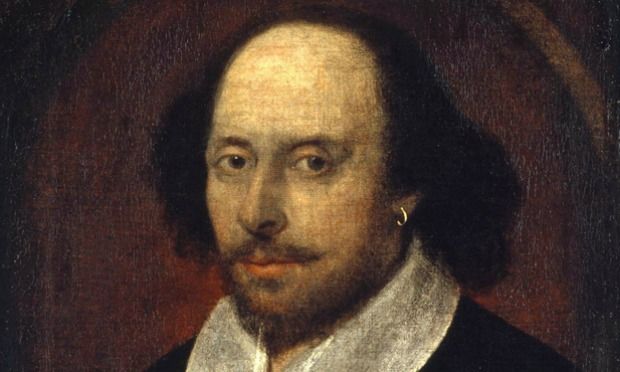
The Chandos Portrait (purportedly Shakespeare) hangs in London’s National Portrait Gallery
The look of the production has a definite Mad Max vibe, with leather being a popular clothing choice for the English lords. Accent colours in the costumes are used very effectively to differentiate between the English and the French, with the English using purple and grey accents, while the French use dark blue. This helps many of the cast play multiple characters with clear points of difference.

Jennifer Matter as Henry ~ ‘a little bit of Harry in the night.’
The setting of Pah Homestead gives the players a clear and serene environment where our ‘imaginary forces’ are invited to work by Maxine Cunliffe as Chorus. Her regal stature and clear delivery of the verse invites us into the world of the play, and gives us a warm companion with whom to experience the story.

Maxine Cunliffe as Chorus
After this strong start, the first half of the play feels somewhat uneven in pace and tone. Much of the first scene is taken up with a long and complex description of the legal position regarding the proposed war with France.
Alison Quigan, as the Archbishop of Canterbury, skilfully guides us through the scene, making the long explanation of Henry’s legal standing clear and precise. Her subtle encouragement and appeal to Henry’s familial pride is effective and allows us to see some of Henry’s uncertainty about the proposed course of action.
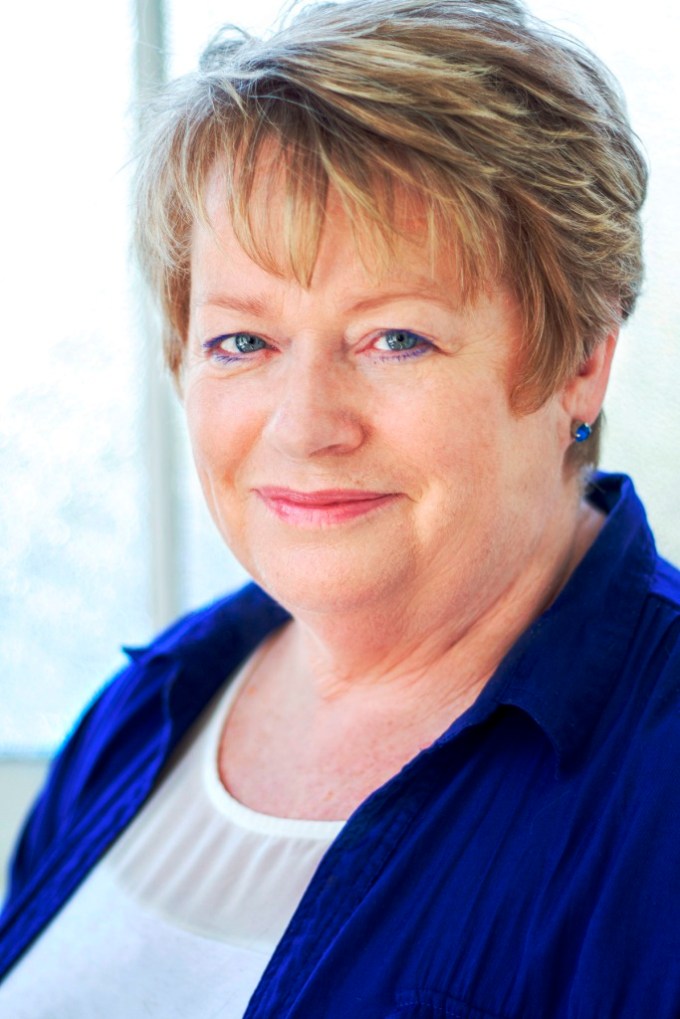
Alison Quigan as the Archbishop of Canterbury
Jennifer Matter as Henry shows this uncertainty on many occasions by nervously biting her thumb. Although she responds strongly to the infamous tennis ball insult from the Dauphin, there is a lack of confidence in her Henry throughout the first scenes that makes us fear for a positive outcome to the war with France. While this does highlight Henry’s struggle to reach maturity and become the King his country needs, it makes us work quite hard to accept Henry as a decisive leader.
The turning point for Henry (and Matter’s performance) comes with the revelation of the assassination plot by Scroop, Grey and Cambridge. Matter’s delivery of the verse is clear, crisp and intelligent throughout the play, and from this point on, her physicality matches the growing confidence that we have in Henry’s actions. “Once more unto the breach” is delivered with understanding and passion, although for me, its effectiveness is slightly reduced by the very active, hissing support from the rest of the English lords.
Shakespeare gives Pistol, Bardolph and Nym little to work with in this play, but Alice Pearce as Nym, Jacqui Wall as Bardolph and Genevieve McClean as Pistol do wring some laughs from the audience. However, it is Delaney O’Hara as Boy who is the standout in these sections of the play. She is convincing and eminently watchable in all of her scenes, and sings beautifully.

Delaney O’Hara as Boy
One highlight from the first half of the play is the gorgeously played scene between Princess Katherine of France (Amelia MacDonald) and her companion Alice (Lexie Matheson). Despite being entirely in French or terrible English, the scene is played with such clarity and joy that the audience is enthralled and delighted.

Amelia MacDonald as Katherine, Princess of France
The first half ends with the English army entrenched in France, and it feels like it has taken us a long time to get there. The pace has seemed uneven and the plot has moved forward very slowly. However, just before the interval we are introduced to Katherine Watson’s Fluellen, whose energy and commitment lift this section of the play.

Katherine Watson as Fluellen
It is in the second half of the play that magic happens and this production really takes off.

Lexie Matheson as Alice
The pace picks up and the decision to keep the French and British armies in the space together for the majority of Act IV pays dividends in the speed and clarity of action. It is the action in this second half that is most memorable: the brief but fierce fights choreographed by Alexander James Holloway are a highlight; Pistol’s murder of Le Fer is brutally effective and the murder of Boy is superb in its simple power.
Delaney O’Hara leads the requiem for the dead after the English have won the day at Agincourt, and her voice is beautifully clear and full of emotion. When the rest of the cast joins in the singing, shivers start to run down the spine.

Amy Usherwood
A number of other performances also delight in this second half. Amy Usherwood as Michael Williams is a highlight; Henry and Katherine combine beautifully in the ‘wooing’ scene, where Henry’s pragmatism and confidence are skilfully captured by Matter while MacDonald’s Katherine is believably confused and indignant in equal measures.

Henry V
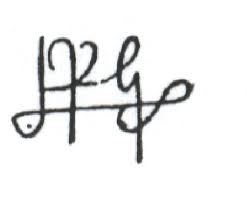
Henry’s Signature (from Craik’s Pictorial History of England)
The play ends as it begins, with the calm and measured Chorus giving us a glimpse into the future of Henry’s early death and the crowning of Henry VI, and welcoming us back to our actual surroundings.
The production makes no attempt to make the forty fabulous females of the cast ‘act male’ and the performance is all the better for that. Instead we have an array of characters who take us on a journey. While the play does not clearly promote any one theme – it seems neither in favour of, nor against, war and Henry’s exploration of his maturity and kingliness is very understated – what we do have is a dramatic experience that rises to hugely satisfying heights in the second half. This will make an excellent addition to the programme at the Pop-Up Globe.


Four famous theatrical Henry’s
Above Jude Law, below (Left to Right) Laurence Olivier, Kenneth Branagh and Alex Hassell
 dykiegirl