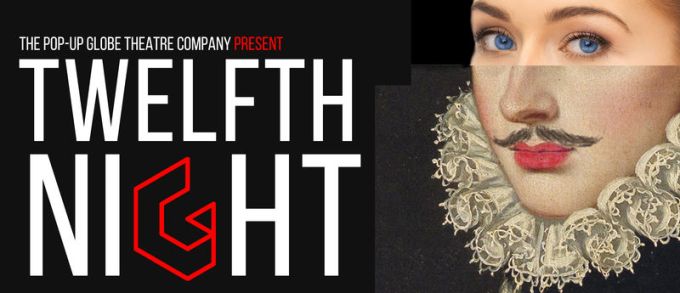
Twelfth Night or What You Will
By William Shakespeare
Produced by the Pop-up Globe Company
Director: Miles Gregory
Voice Consultant: Sylvia Rands
Costume Designer: Bob Capocci
Composer: Paul McLaney
Fight Director: Alexander James Holloway
At the Pop-up Globe for a season
Published at http://www.theatreview.org.nz
A few weeks ago my spouse suggested I look out her 15th floor office window at a new structure that was growing in the Auckland City Council carpark behind Q theatre and in front of The Basement. I had no idea what it was until she informed me, rather smugly because I am supposed to know these things, that it was a full size, to scale, replica of Shakespeare’s Second Globe Theatre originally built on the South Bank of the River Thames in London. This ‘second’ Globe replaced Shakespeare’s original Globe theatre which was built in a similar location close by in 1599 and burned down fourteen years later, ironically during a performance of Henry VIII, when a fateful cannon set fire to the theatre’s thatched roof and that, as they say, was that.
The Second Globe Theatre was somewhat more robust and survived until 1642 largely due to ecstatic Elizabethan audiences who were privileged to see, under its thatch and for the very first time ever, the sublime works of Marlowe, Fletcher, Beaumont, Johnson and, of course, Shakespeare himself. The Puritans disapproved, as Puritans invariably do, and Oliver Cromwell’s fun police closed all the theatres during the English Civil War and the dear old Second Globe, having outlived its usefulness, was finally demolished in 1644. After all, we can’t have people having too much fun and too many small beers when serious people are trying to run the country, to blazes with the fact that many in Shakespeare’s audience would have got much of their classical education and a swathe of their British history from seeing these plays.
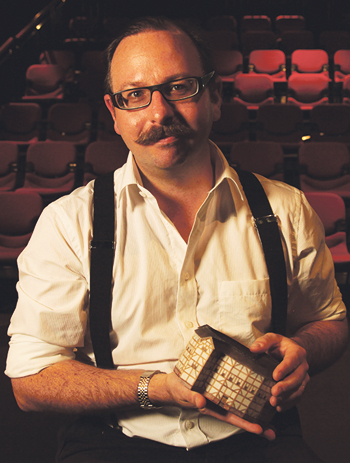
Miles Gregory
Sam Wanamaker, the great American actor/director, visited London in 1949 and instigated a project that twenty three years later saw the Shakespeare Globe Trust established with the goal of overseeing a reconstruction of the original with the sage addition of an Education Centre and a new exhibition space. Twenty three further years were spent fundraising and in 1996 the project came to fruition. Sadly, Wanamaker never saw his dream come to fruition as he had passed away three years earlier.
The new structure was recreated as faithfully and accurately as was possible given the limited information available and housed nearby to where the original once stood. In the years since millions of playgoers and tourists have visited and seen modern productions of works by the great Elizabethan and Jacobean playwrights as they might well have been seen by audiences four hundred and more years ago.
Cranking ourselves forward four hundred years since the death of Shakespeare himself and we are suddenly, and I must say unexpectedly, privileged to have the brilliant Pop-up Globe concept come to life here in the antipodes, in Tāmaki Makaurau Auckland, emerging like a mushroom from the newly named ‘Bard’s Yard’. I’m assured that it’s accurate to within millimetres of Wanamaker’s Globe and it certainly looks that way. Big ups to the planners and especially to our own Camelspace whose genius with scaffolding and all that manly stuff has brought this dream to fruition.
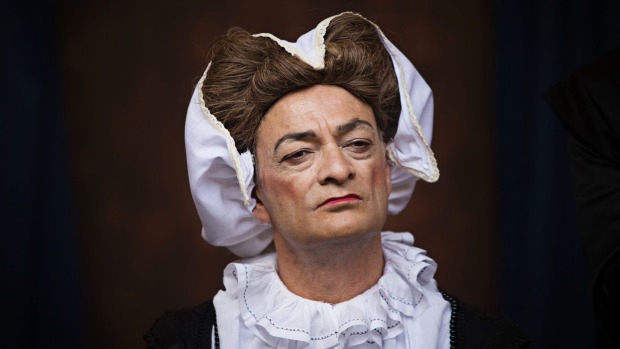
Stephen Butterworth
Pop-up Globe’s directors Miles Gregory and Tobius Grant seem to have touched a nerve with Aucklanders and this is evident from the fact that, prior to the opening night of the first of seven separate seasons, over fifty thousand tickets had been sold. That’s right, there are nine different productions planned for the next three months – ‘Romeo and Juliet’, ‘Twelfth Night’, ‘Much Adoe About Nothing’, ‘Henry V’, ‘The Tempest’, ‘Titus’ ‘Hamlet’ ‘Ugly Othello’ and ‘Anthony and Cleopatra’ – and you can see them all as a groundling for a mere fifteen bucks per show. That’s $135.00 all up. How cool is that?
The Pop-up Globe has its own performance company and has staged two of the great classics with essentially the same cast, a tragedy (‘Romeo and Juliet’) and a comedy (‘Twelfth Night, or What You Will’). ‘Romeo and Juliet’ opened on Friday 19 February, 2016 and ‘Twelfth Night’ was performed at the Gala Opening a day earlier on the 18th.
This review of ‘Twelfth Night’ is from the performance of Saturday 20 February, 2016, the same evening as The Pride Parade and the Lantern Festival and it says so very much for the manner in which this concept has charmed the pants off Auckland city that, even with this level of populist completion taking so many people to other areas of the city on what was a divine summer evening, the house was still virtually full.
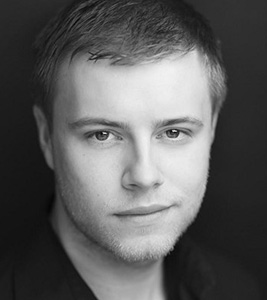
Alexander James Holloway
Walking through the doors is actually a heart stopping experience for any audience member but for those who have had the exquisite experience of attending a production in London it’s like deja vu all over again. You can buy a beer, a wine and even an ice cream from the plentifully stocked temporary container bar and audiences members have very quickly caught on to the fact that you can get service even during the show.
‘Twelfth Night, or What You Will’, is the perfect choice to pair with ‘Romeo and Juliet’. It’s one of Shakespeare’s most regularly produced works and the bittersweet comedy and knock-about fun ensure it remains a perennial favourite. Director Miles Gregory has opted for a traditional look and sound for the production – Elizabethan costumes with perhaps a nod in the direction of the Venetian – with all the roles, women included, being played by men which gives the work a delightful sense of contemporary authenticity especially when taking into account the nature of the performing space.

Aaron Richardson
In the original, Fabian wryly informs the audience that ‘if this was played upon the stage now I could condemn it as an improbably fiction’ and he’s right, except Feste the Fool gets to say the line in this production which is all very, very good, because it is evident from the get-go that there is some very clever cutting and shifting around of the text and that this contributes to ensuring that the production maintains a cracking pace and that the text is both contemporary and vivid and the narrative clear.
On a personal note I would place this production second only to Trevor Nunn’s fabulous 1996 television adaptation which just happened to have Nigel Hawthorne, Imogen Stubbs, Helena Bonham Carter and the fantastical Ben Kingsley in the cast. The only thing separating the two, again in my view, is the emphasis Nunn places on the bittersweet core of the play whereas Gregory has opted to highlight the knockabout comedy and the contemporary nature of Shakespeare’s narrative. That’s not to suggest for one moment that Gregory’s ending doesn’t work – it does, splendidly – it’s just that, in Nunn’s production, there was a greater sense of guilt expressed by Maria and the duet of Sirs than there is in this. Oh, and the fact that one is television and the other live is probably a factor too.

Daniel Watterson as Olivia
Gregory’s ending has a pertinent modernity, however, in that the lack of guilt and the joy in inflicting pain far beyond what might be deemed reasonable, can be seen every day from our leaders and their minions no matter where in the world you might abide.
Viola and Sebastian are twins who, on a sea journey on Twelfth Night are shipwrecked and separated. Viola ends up on the shores of Illyria and believes her brother to be dead. In order to survive she impersonates Sebastian, takes on the name Cesario, and expediently attaches herself to the court of Duke Orsino as a page.
Orsino is hopelessly in love with the Countess Olivia who is in mourning the recent passing of her brother. Olivia is avoiding Orsino’s overtures and this provides an opportunity for Cesario who becomes the go-between. Predictably – it’s Shakespeare after all – Olivia falls in love with Cesario who isn’t really a boy at all, but in reality he is so – cross-gendered chaos reigns. Much comedy is gained from this.

Edward Newborn
Members of Olivia’s household hatch a plot against the haughty Malvolio, her officious steward, which involves a letter, written by Maria in Olivia’s hand, that suggests his Malvolio’s mistress is in love with him and that, to woo her, he should dress cross-gartered in yellow stockings – ‘a colour she abhors’ – and smile a lot. Olivia thinks he’s crazy and has him committed. Much laughter and good sport is gained from this and all at poor Malvolio’s expense. Not happy with the situation, Feste, Sir Toby, Maria and Sir Andrew take the opportunity to humiliate him further.
There is considerable mirth around a faux duel between Sir Andrew and Cesario and, all in all, a great time is had by all. All, that is, except Malvolio.
Sebastian has survived, however, and fortuitously also arrives in Illyria, accompanied by Antonio who saved him from drowning. Antonio isn’t a favourite in Orsino’s court and, when he comes across Cesario and mistakes him for Sebastian, Shakespeare’s oft-used mistaken identity plot kicks in. Sebastian meets Olivia, who mistakes him for Cesario and marriage is instantly agreed to. Orsino hears of this and, deeply annoyed, he fires his page. All ends happily, however, when Sebastian and Cesario meet face-to-face. Cesario reveals her true identity and Viola immediately appears. Enrapured, Orsino proposes to Viola while the humiliated Sir Andrew and Malvolio trudge from Olivia’s estate with Malvolio’s parting words ‘I’ll be revenged on the whole pack of you’ echoing in everyone’s ears.

Carl Drake
Three musicians greet us at the outset but sadly they are difficult to hear which is unfortunate because the spoken word is fully audible – and intelligible – throughout. Music plays a vital role in the production with most of this responsibility carried by a guitar-wielding, full-voiced Feste (Adrian Hook) who makes the most of every opportunity.
The stage is decked with three rectangular, topiaried faux shrubs that are utilised throughout as though they are themselves characters. Central to the opening action is a portrait of the beautiful Countess Olivia (the gorgeous Daniel Watterson) on an easel. We know from this that we are in the court of the melancholic and love-sick Duke Orsino (Carl Drake) and similarly, an easel-borne portrait of her late brother informs us of when we are in the Countess Olivia’s house. The use of portraits attached to easels of varying sizes is an amusing and effective way for the audience to follow the locale of the action.
As the performance begins to unfold I note that access to the seating is generally very good and that the groundlings probably have the most excellent view. Providing cushions for the bench seating was a thoughtful touch though many audience members brought their own. One such gentleman wore a large backpack filled with them and wielded it like a traveling punching bag. When entering the row behind me he almost decapitated me with his bag and when I turned to see what had happened his long suffering wife apologised and said ‘that’s why I’ve been trying to divorce him for 30 years.’ Not all the comedy at the Pop-up Globe will, I suspect, happen on the stage.
The first actor to appear on the stage is Alexander James Holloway who is listed to play Curio but begins with Duke Orsino’s immortal lines ‘If music be the food of love play on.’ I am confused at this point because it seems unconscionable that this character should deliver such crucial lines. All becomes clear when Holloway’s mobile phone rings and, embarrassed, he answers it. I am, of course, appalled that he would interrupt his opening speech to answer his phone but, slow coach that I am, I finally get the message that this is Gregory’s witty way of telling his audience to turn their cell phones off.
This is truly an ensemble production but within these parameteres there are some outstanding performances. Adrian Hook as Feste the Fool guides us none to subtly through the narrative, treading a suitably dangerous path between the nobles and their ratbag relatives. His musicianship brings an extra dimension to the storytelling and is particularly effective at the conclusion of the play when his delivery of ‘Hey, ho, the wind and the rain’ pulls everything that has gone before together. Carl Drake as Duke Orsino is a suitably melancholic foil for the grieving Olivia and we are immensely happy – and relieved – when, at the resolution of the narrative, he gets to marry Viola, as was Cesario, played beautifully by Aaron Richardson.
The more serious themes of the text are carried by Antonio and the Sea Captain, both played efficiently by Jatinder Singh and Sebastian (Jonathan Tynan-Moss) an eerily effective look alike for Viola. Each has fine moments and Singh in particular ensures that the underlying narrative is never swamped entirely by the slapstick tomfoolery.
Each of Duke Orsino’s manservants is quite splendid. Each has developed a unique personality but when they work in tandem – and with the Duke himself – the comedy is rich and layered. Curio (Alexander James Holloway) leads the duo and Valentine (Phodiso Dintwe) opts to be the follower and, with the collusion of Orsino, they have developed some exceptionally funny business with the stage furniture. Holloway is a most watchable actor, always busy, and always to the purpose of the play.

At the heart of the work is a classic Shakespearean classic comedy ruse, namely the use of identical twins. He separates them, thus enabling the different identities, unbeknownst to each other or any other character, to create mayhem until this clever plot device is finally resolved when the two finally appear together in the most amusing way imaginable thus rounding out the love stories of the principal characters. Gregory capitalises on this opportunity to maximum effect and the audience erupts when the twins finally look each other in the eyes. Not only the audience either, the actors do as well, and it’s a very, very special moment – as indeed it should be.
Central to the inner workings of the comic sub-plot are Sir Toby Belch (a tangy Edward Newborn), his terminally stupid friend, Sir Andrew Aguecheek (a sinewy Paul A Willis) and Olivia’s manipulative maidservant Maria (a transcendent Stephen Butterworth). The butt of their somewhat nasty trickery is Olivia’s steward, the vainglorious Malvolio (a suitably self-involved Stanley Andrew Jackson III) who gets a comeuppance far more substantial than he could ever have bargained for.
Crucial to the brilliant success of the physical comedy are Newborn, in magnificent voice, the subtly nuanced performance of Willis and, the undoubted star of the evening, the wickedly funny and profoundly authentic Stephen Butterworth as Maria. Each links with the others to create a prodigiously funny trio and, when you add Hook’s very funny Feste, this becomes a comic team to die for.
While Malvolio does leave swearing to take his revenge on all of them there isn’t any real sense that his departure will actually tear the house apart, in fact quite the opposite. It will be business as usual – apart, that is, from the new marriages that might keep their participants involved with other activities at least for a moment or six. It’s all about happy endings and we, Gregory’s audience, are satisfied by this as we exit the theatre from what has been a thoroughly enjoyable, and unquestionably exceptional, evening. Do we experience a resonance of Malvolio’s mistreatment or a hint of distress at the way Aguecheek has been humiliated as we wander off into the night? I hope so, because I’m committed to the view that this is what Shakespeare would have wanted us to feel, even in embryo, extraordinary humanitarian that he undoubtedly was.
Finally, let me admit that I’m a sucker for a great curtain call and this production of ‘Twelfth Night’ or ‘What You Will’ has one of the best I’ve seen for ages. It’s danced, formally and in period, but it has such precision, just artistry, and such joy that I was off my bench and cushion in a nanosecond and clapping my silly head off. I wasn’t alone because there were seven hundred plus other patrons jubilantly doing the same.
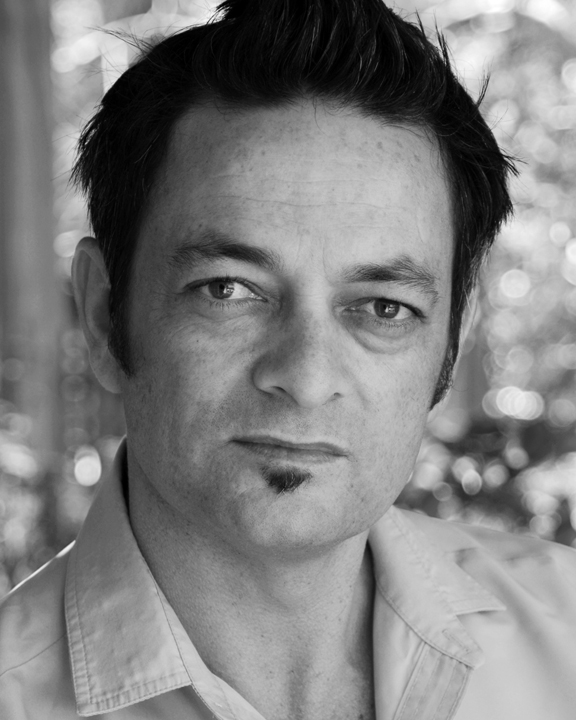
Stephen Butterworth
If I had to choose a single take-away element from this excellent production, one that has stayed with me most for the twenty four hours since I saw the play, it would have to be the playing of the women’s roles by the men: the supremely talented Stephen Butterworth (Maria), the deliciously roguish Daniel Watterson (Olivia) and the subtle and sexy Aaron Richardson (Viola). The level of authenticity is exceptional because these fine actors are not ‘dragging’ it up at all, and there is no more a sense of gender parody than there is a hint that they want us to know that they are actually actors playing roles. These men have observed acutely and play accordingly, thus honouring the women in our profession, the tradition of boys playing women and their audience by so doing. It’s simply ,and totally, top stuff.
I loved the whole evening. I especially liked the intimate interface between stage and audience and I can’t wait to see, later this week, what this feels like from the other side of the non-existent footlights. There is no amplification but, hard of hearing though I am, I heard every word which is to the credit of each actor, director Gregory, voice consultant Sylvia Rands and the fabulous design of the building.
You should travel from far and wide to experience of the Pop-up Globe. The concept is one of sheer genius and you should engage with this once in a lifetime opportunity whether you are a Shakespeare nut or not. Somewhere in the seven productions there will be one that is right for you. If that happens to be ‘Twelfth Night’, you won’t in any way be disappointed.
 dykiegirl