Legacy Project 3
Produced by The Legacy Project
Artistic Director Bruce Brown
Script Advisor Roy Ward
Lighting Design and Operation Michael Craven
Q Theatre Loft
9 – 13 February, 2016 at 8.00pm
Published at http://www.Theatreview.org.nz
In its own words ‘Legacy Project wants to help tell LGBTIQ stories.’
Legacy Project asks if ‘you have that script you’ve been working on but not sure how to get it onto stage’, or are you ‘looking to expand your directing experience and to work on exciting new work? To this end Legacy Project provides a platform for emerging writers within the LGBTIQ (lesbian, gay, bisexual, transgender, intersex and queer) community to create short theatrical works that express our unique Kiwi voices. I’ve seen them all the previous Legacy Project shows and can vouch for the integrity of this vision, the clarity of its execution and it’s almost immediate success.

Bruce Brown – Artistic Director
I was welcomed into the Q Theatre Loft by the oomphy sound of ooga-chaka ooga-chaka (Hooked on a Feeling) which was followed immediately by a number of other instantly recognisable queer anthems. Having heard them all before on many occasions I may well have been irritated – as I have been in the past – by this apparent superficiality but on this occasion it seemed more than appropriate because this is year three of the wonderful ‘Legacy Project’ which is called, ironically and with tongue firmly in cheek, ‘Legacy Project 3.’ I know from my past experience that I’m going to see stereotypes – both queer and straight – in these productions but I’m also going to experience a level of sophistication in these short works that is deeply, deeply satisfying. The stereotypes, invariably attended by self-effacing and often vicious humour, serve to remind me that, yes, this community is different for the mainstream while the deeper rich and varied textures reinforce an understanding that, while we are culturally different, we are also, in many ways, essentially the same.
I have, as previously stated, had the pleasure of experiencing the works from years one and two of Bruce Browns excellent concept so the opportunity to experience six new short plays written, directed and acted by yet more of our less experienced LGBTIQ writers, how could I not be excited. Running into artistic director Brown in the foyer prior to the show and finding him happy and satisfied with both his product and his audience numbers augured well for an excellent night to come. It was also great to leave a sticky, tropical Auckland evening and to enter the air-conditioned coolness of the Loft and I have to say that it wasn’t just the air that was cool: the plays, the set changes, and the technicals courtesy of the wonderful Michael Craven were all cool too.

Michael Craven – tech wizard
Craven’s electric blue pre-show wash was both soothing and suggestive of things to come as it lit the three seater sofa that constituted the simple set for the first play aptly titled “The Last Date” by Sean Carley and directed by Kat Glass, a work that is both funny and moving. The programme advises us that this is “a disastrous hook up that’s going nowhere fast” but in reality it’s much more than that. Two men, one younger, one arguably forty nine, sit uncomfortably side by side drinking cheap Sauvignon Blanc. They’ve hooked up online and this is the moment of reckoning. The older Garrett (David Capstick) is new to the internet dating scene, so much so that Kyle (Jake Love) hasn’t even seen a photograph of his new potential fuck-buddy. As they get to know each other it becomes clear that not only has Garrett not done this before he is in fact a married man with children who are older than Kyle. To make matters worse he has come all the way from Swanson which Kyle clearly thinks is the arsehole of the universe. It’s also an issue that he doesn’t like virgins. As Carley’s excellent script evolves we observe a delightful and wacky friendship evolve between the two men that quickly travels beyond the expectation of a quick grope and a long trip home. Especially poignant is the moment when Garrett tells Kyle that he has a brain tumour and has only a few months to live.
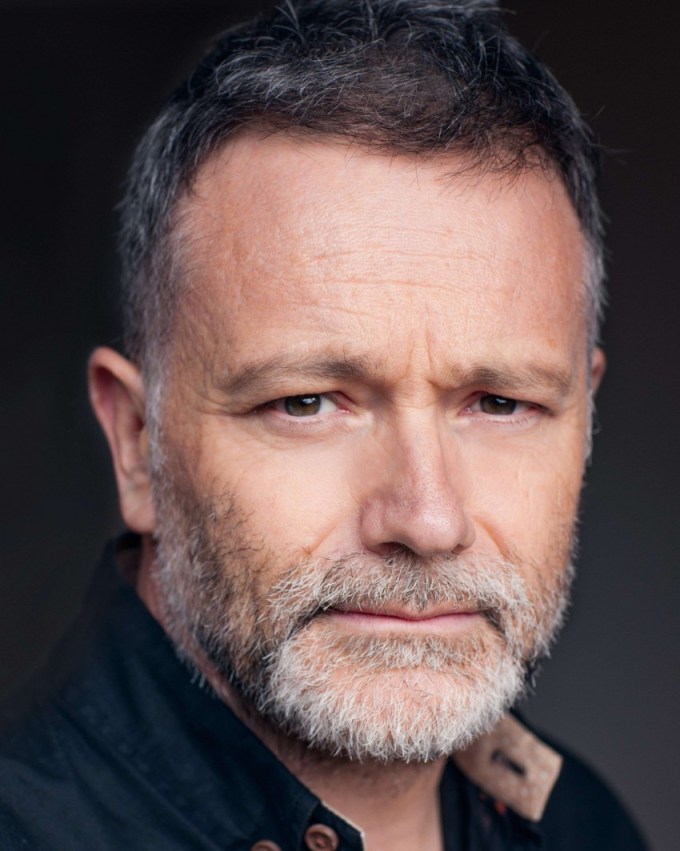
David Capstick
There are some exquisite moments of tension exemplified by clichés such as ‘age is a state of mind’, ‘I’m normal, you’re not my type’ down to a modern gay classic ‘cocks are better than the best dessert ever’. The latter brings the almost full house to its knees. Clever Mr Carley has created an ending almost impossible to realise but in the smart hands of director Glass and these fine actors they make it work splendidly.

Kat Glass
Play Two is called ‘The Sign’ and Brown’s excellent programme tells us that ‘you can never predict where that impulsive late night drive might lead’. The set consists of two connected seats that tell us that this is the interior of a car. In addition to the seats there are two signs suspended from the rig on either side of the expansive stage, one illuminated with the word ‘sex’ in red and the other a simple, illuminated white cross. Having had our withers wrung by ‘The Last Date’, ‘The Sign’ is a much softer but no less profound emotional journey. We meet two attractive and very young women. Rea (Carrisse Utai) is Samoan and Melanie (Kyla Dela Cruz) is Asian. They plan to complete a specific lesbian Rite of Passage namely, going together to a sex shop for buy a buzzy toy of their choice.

Carisse Utai
They consume milkshakes and eat burgers just as any young couple might while discuss both their sweet relationship and the response of their families to it. Rea’s mother looms large over the play even though we never see her. She is empathic, not only loves her daughter but is accepting of her Rea’s relationships and more than welcoming of Melanie. They know this because the Mum caught the two making out in her lounge. In an odd quirk it is Melanie and not Rea who is challenged by the concept of god and a possible conflict between religion and her sexuality. The girls square this seemingly game-changing circle by deciding to pray together and to ask God to both accept their love for each other and to bless the Rite of Passage excursion to the sex shop to by the toy. The roof doesn’t fall in and the various plagues – frogs, locusts etc – don’t eventuate so we can only assume that, on this particular day at least, the almighty must have been in a really good mood. The gentle script (M Villanueva) is exquisite and Joanna Craig’s direction in the restricted space available was excellent. All in all ‘The Sign’ alone was well worth a trip to the theatre.

Kyla Dela Cruz
Play Number Three is called ’Sugar Cubes’ and comes with the tag ‘bliss can be found in the harshest of places’. Set on a beach to a audio track of sea sounds and with an electric fire glowing centre stage we see Serenity (Khloe Lam Kam), a young PI transgender women and her straight friend Sophitia (Marissa Holder) drop a tab each of LSD and see how their perception of world around them changes. Their world is invaded inadvertently by two young men Ethan (Jasper Sole) and Matt (Kelaan Schloffel-Armstrong) and the chemistry between the couples is electric. Sophitia dances with Ethan and Matt dances with Serenity and it isn’t long before Matt ‘clocks’ Serenity as being transgender and there is the potential for a very nasty moment. Serenity runs off, the young men leave and Sophitia tracks her friend and finds her at the water’s edge and in a very distressed state. The scene between the two where Sophitia talks Serenity down from her dangerous, drug-induced place is touching and yet stereotypical in all the right ways. After all, bad things do happen to transgender when that sort of discovery is made.

Marissa Holder
‘Sugar Cubes’ is the least successful of the six plays largely because of challenges posed by the script (Dominique DeCoco) which are difficult to resolve. It tries too hard to do too many things in its fifteen minute life and ultimately falls a trifle short of real success. The fact that the girls are tripping makes deciding what is real and what is not difficult for the audience despite very good performances and sound direction by Cole Meyers.

Cole Meyers
Half way through this theatrical version of speed dating I ask myself whether six plays in ninety minutes is just too much for a modern audience even when the works are as riveting and variable as these are. I wonder if, despite the richness that these works contain, an audience’s concentration and focus might simply run out but somehow, while this ought to be a problem, it simply isn’t. Having satisfied myself of this, I move on.

Dominique DeCoco
Play Number Four, written by and directed by Hamish McGregor, is simply entitled ‘Smoke’. Again the programme sets the scene it tells us that ‘in the smoking area behind the local gay bay, two unlikely individuals take refuge from a space crowded with distant memories, false expectations and really shitty music’. Fortunately for us all we hear little of the aforementioned merde-music which ensures I hear every word and I like that!
Joni Nelson
On ‘lights up’ we are greeted by Dyke (Katie Fullard) sitting on a form having a cigarette out the back of a club. She is quickly joined by Queer (Ryan McKee) who immediately bludges a fag which Dyke doesn’t find in the least amusing. The two simply don’t get on – well not immediately – and the age difference, sexuality, and gender identity seem to be the cause of the beautifully underplayed conflict, a conflict that enables some great expositional writing.
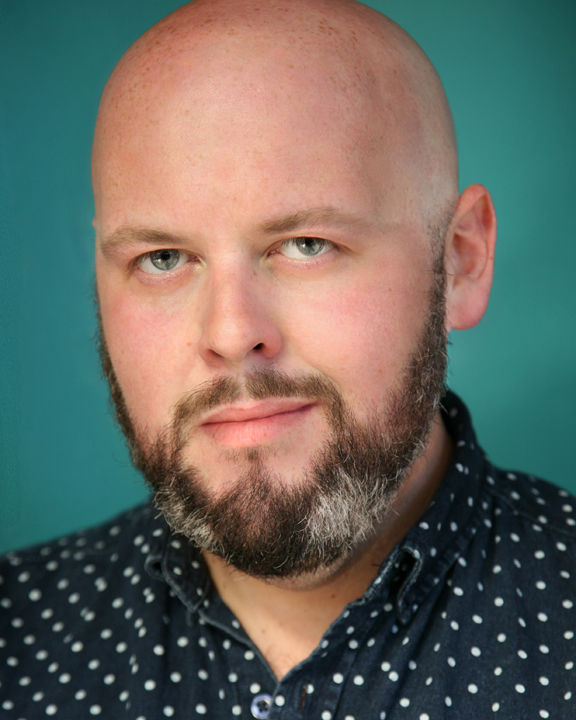
Hamish McGregor
There is talk of the patriarchy (of course) and some really great lines. Dyke asks the challenging question ‘were you around when these places were being raided? The answer is, of course, that Queer wasn’t even born. Queer observes that ‘last time I checked I wasn’t female’ and follows it up with ‘I don’t believe in Gender’. She speaks for both of them when she says ‘I don’t know why I’m here in the first place’. While of the tone of ‘Smoke’ is one of cynicism, it avoids any sense of bitterness and the ending is quite beautiful.

Iana Grace
The penultimate play in this splendid sextet is Iana Grace’s impressive work ‘The Pronoun Game’ directed by Todd Karehana. It contains an excellent performance by the immensely capable Doug Grant as Gemini. The programme tells us that ‘we all have that voice inside our head nagging us to clean our room. Some are just a little pushier’. While I know this voice exists I have so far managed not to comply with its insidious demands!
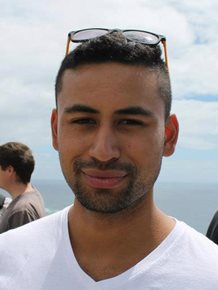
Todd Karehana
The play opens with Gemini in bed. They are playing on their phone surrounded by the detritus of growing up: shoes, a Barbie doll, a Pokemon, and a clothes rack full of clothes. Gemini doesn’t say much but the voice inside their head (an excellent voice over by Kelaan Schloffel-Armstrong) has plenty to say. Alternating pronouns between he and she – I’m choosing ‘they’ and ‘them’ – we quickly get the idea that Gemini sits somewhere less conventional on the gender spectrum. There are issues of identity, there is a sense of sadness – Gemini says ‘I’m not ok, but I don’t need help, I just want people to know’. Even in the detritus of the setting the genders are confused, there is a Barbie alongside a rugby ball and Gemini tells us ‘I gave up playing with Pokemon under the covers at night’ which might, or might not, be a denial of the more male binary signature that playing with that toy might imply. When I asked my son – a world-renowned expert on Pokemon or so I’m lead to believe – he assured me that anyone can play with Pokemon, it simply doesn’t matter. There is an exquisite crisis moment after which the voice tells Gemini ‘you have to choose’ to which Gemini replies ‘no I don’t’ – and she’s right!

Doug Grant
‘The Pronoun Game’ is an excellent piece of theatre anchored by a novel concept – the extensive use of voiceover – alongside splendid acting and direction.
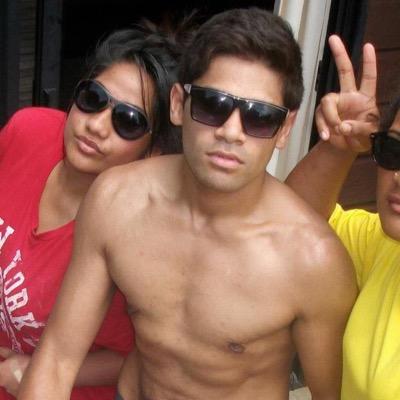
Paolo Va’a
The final piece of ‘Legacy Project 3’ is called ‘Straight Acting’ and it’s a magnificent way to end the evening. Written by Juliet Lyes and Paulo Va’a it’s a laugh a minute, genital-grabbing romp one for the boys that the rest of us lapped up too. Directed by Jessie Hilford it tells the story of Murray (Stephen Lunt) and Frank (Ciarin Smith) who meet on the internet and decide to go on a date. This might seem simple enough but unfortunately each of these queens has told the other that they are straight acting. The comedy comes from the desire that each has to prove that they are more blokey, more heterosexual, have had more girlfriends than the other and that this ‘bi-curious’ thing they’re venturing on is a first for each of them. The play come to a crisis when a gorgeous women appears on the restaurant TV and there is immediately much discussion about which of the men loves vagina the most and it’s immediately and patently clear that neither of them has been within ten dick lengths of the real thing. When they get around to discussing their sexual preferences both lads, of course, claim to be ‘tops’ – ‘nothing’s going to get through these buns of steel’ has the audience in fits – but eventually they can’t keep up the pretence any longer and they agree that Queenery rules and that leaving together in the campiest, most broken-wristed way possible is the best option – and they take it. Both men are fantastic and the play works a treat. A special word for Jack Fairley as ‘Waiter’ who takes every opportunity to shine and who completes a most impressive trio.

Ciarin Smith
One of the challenges when staging works of this nature is that they are by their very nature focused on the young so it was heartening to find Garrett in ‘The Last Date’ and Dyke in ‘Smoke’ representing and older demographic. I say older but I need to clarify this by saying not that much older.

Stephen Lunt
This begs the question, of course, as to where the queer narratives of the overs 50’s are that might be worth recording? I’d suggest there are plenty and from talks I’ve had with older gay men I’m sure there are some great autobiographical gems out there to harness if ‘Legacy Project’ can harness the resources. I certainly know there are the stories of older transwomen and lesbians that is also a rich mine to exploit.
‘The Legacy Project’ is in the safest of hands with Bruce Brown. Let’s hope that he keeps developing the concept and that the Auckland Pride keeps supporting him and making this annual excursion into our collective narratives something to truly treasure.

 dykiegirl