
Lysistrata
By Aristophanes
Produced by Auckland Theatre Company
Adapted and Created by Michael Hurst
Set Design by Rachael Walker
Choreography by Shona McCullagh
Musical Director/Composer John Gibson
Costume Design by Troy Garton
Lighting Design by Sean Lynch
In the Rangatira Room at Q Theatre
From 30 July, 2015 to 23 August, 2015 at 8.00pm
Published at http://www.theatreview.org.nz
‘Sitting in a park in Paris France
Reading the news and it sure looks bad
They won’t give peace a chance
That was just a dream some of us had’.

Joni Mitchell
Joni Mitchell recorded and published these lyrics in her song ‘California’ from the 1971 Album ‘Blue’ and playing it today reminded me of the thousands of times I’ve sung ‘Give Peace a Chance’ but all to no avail.
Mitchell’s song is classic stuff and it followed John Lennon and Yoko Ono’s two week-long ‘Bed-Ins for Peace’ in Montreal and Amsterdam in 1969.

The slogan ‘make love, not war’ came out of the United States in the mid-sixties and celebrated both the free love and the anti-war movements of 1960’s counter-culture. The origins of the slogan are unknown but In April 1965, at a Vietnam demonstration in Eugene, Oregon, university student Diane Newell Meyer was photographed wearing a slip of paper with the slogan on it and the picture ended up in the New York Times on 09 May, 1965.
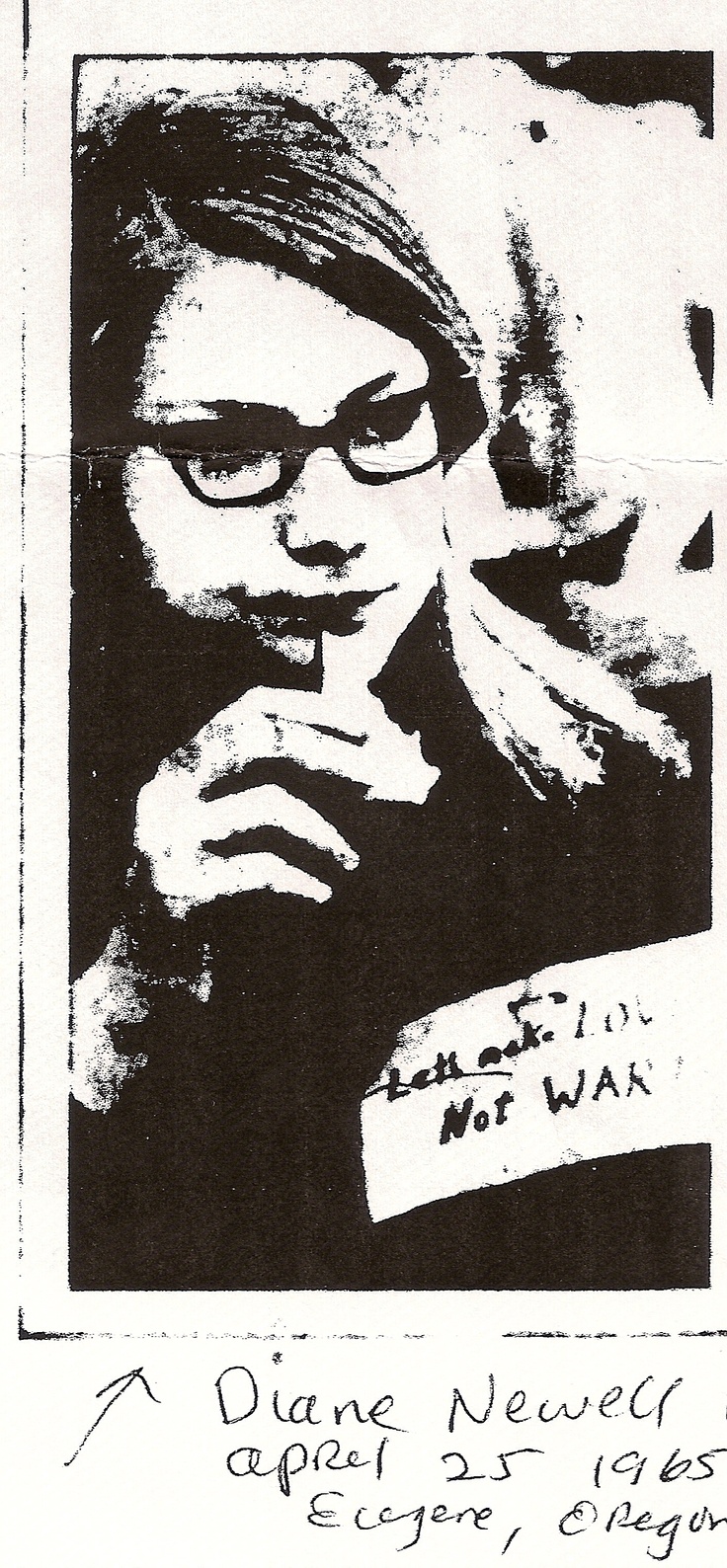
Diane Newell Meyer with ‘Make Love, Not War’ for the first time
Now it’s turned up again, this time in the excellent programme notes of both Artistic Director Colin McColl and Director Michael Hurst as they introduce the second play in Auckland Theatre Company’s ‘Sex and Power’ season, the two and a half thousand year old ‘Lysistrata’ by Aristophanes. Hurst has, in his inimitable style however, grabbed Aristophanes’ play firmly by the goolies and given it a thoroughly good shake up and this modern treatment really works. He’s cleverly stayed adjacent to the style and spirit of the original but this is no ancient Greek replica, oh dear no, this is as crass and inane as any reality TV show you’re going to see anytime soon – but it’s more than that too as I hope you’ll appreciate by the time I’ve finished writing, and you’ve finished reading, this review.
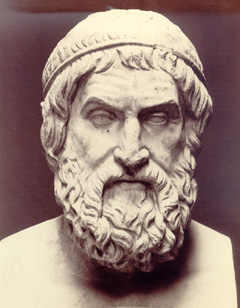
Sophocles
I should come clean, I guess, and say I adore the Greeks, Sophocles in particular, but Aristophanes runs him a close second and I’ll travel to the ends of the earth to see any new production.
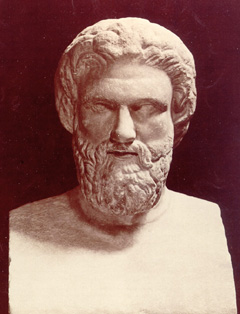
Aristophanes
The Greek theatre was divided neatly into three types: comedy – that’s Aristophanes forte – tragedy and the satyr play. Comedy was, likewise divided into three periods, Old Comedy where Aristophanes eleven surviving plays sit, Middle Comedy and New Comedy. It is commonly believed that ‘Lysistrata’ was Aristophanes last work but we don’t know for sure. Old Comedy was notable for the pungency of its satire, its bawdiness, its obsessive interest in things sexual, and what we today might call ‘toilet humour’. Hurst’s production scores heavily in each of these categories and, given the show’s propensity for unabashed horniness, erect phalluses, erogenous pranks, side-splitting visual gags, and universal glee, it edges into the domain of the satyr play as well and, believe me, this is no bad thing.
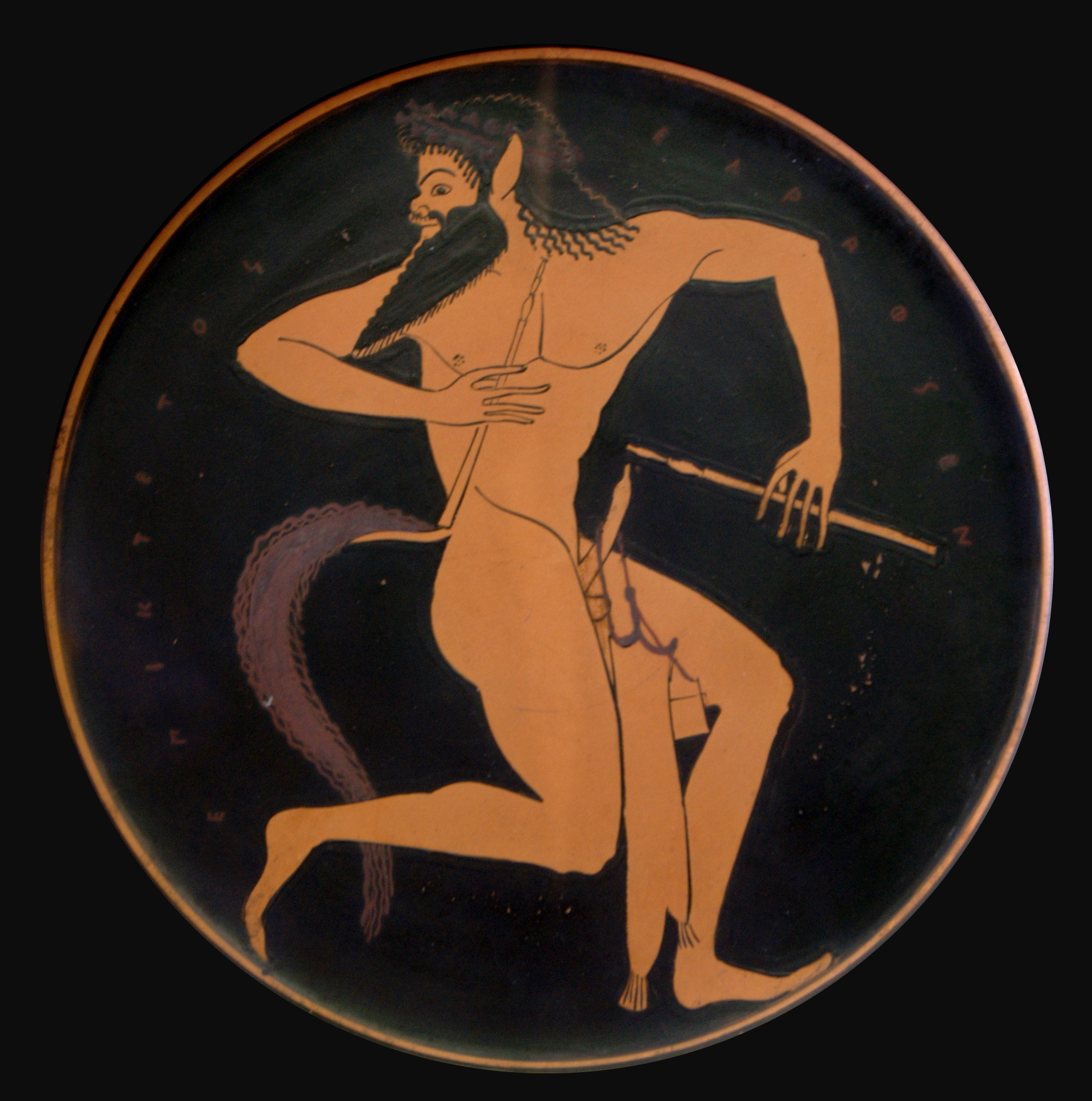
From the only complete remaining satyr play, ‘Cyclops’, by Euripides
Please forgive the momentary digression but those of you who read my reviews will know I’m pretty hot about the theatre experience starting well before you enter the auditorium so this experience began for me a week or so ago when I asked to have an extra ticket added to my booking. Yes, I know, people like me are a pain in the proverbial but hey, we give you something to do, don’t we? Naturally I expected to pay for this ticket, and so I did. The process of contacting the theatre, speaking to Ticketing and Sales Manager Jesse Hilford, connecting with ATC Publicist Siobhan Waterhouse and finally, not only getting the additional seat but having it right next to my original booking, can only be described as quality service personified.
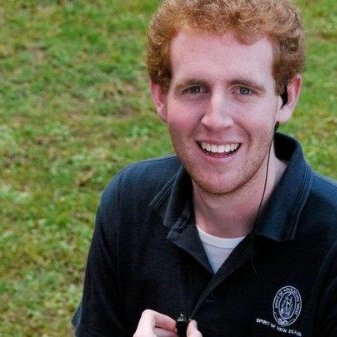

Jessie Hilford and Siobhan Waterhouse
Arriving at the theatre early enough to have a snack was also great. Though we were weeks too late to get a booking in the dining area we were able to order food from the ‘small plates’ menu and to dine in the area of the foyer set aside for this purpose. The food was fabulous – seafood chowder and a lovely glass of Last Shepherd Pinot Noir for moi – and the service absolutely excellent. The venue was dressed to kill and everything about the experience was world class. So, top marks ATC, top marks Q Theatre!

Last Shepherd Pinot Noir
Finding our seats I went through my usual rigmarole of finding my pad, dropping my pen, finding it under my seat, checking the programme and then, finally, looking at Rachael Walker’s excellent set. The production is played in traverse with entrances from each end. There is a great obélisquey thing at one end and a giant archway at the other and they’re joined by a catwalk-like performing area covered in cream deep-pile carpet with flecks, it seems, of milk-chocolate brown. Very attractive, I thought. Very Walker-esque, and suitably Greek. I wrote this down. My son, who had been briefed about the content of the play and given the option as to whether he came with his other Mum and I or stayed at home with a minder, saw more symbolism in the setting than I did and informed me that the obélisque was a penis, the archway a vagina and had I noticed the sculptured ‘flaccid penis’ (his words) that protruded tastefully from halfway down the male pillar? No I hadn’t, I said, and congratulated him on his observation skills and his growing understanding of symbolism. Frank Wedekind tells us in his 1891 work ‘Spring Awakening’ (Frühlings Erwachen) that ‘the whole world revolves around penis and vagina’ and for the next 140 minutes my world, and that of my play-mates, did just that. Walker’s set is fantastic and allows for an intimacy that contributes enormously to the immediacy of the experience and allows for a Brechtian sense of connection with us as co-conspirators. It also allows sneaky peeks at the audience opposite to gauge responses and these proved most interesting. Who laughed at what, who didn’t laugh at all, what the men laughed at, what the women laughed at – and was there any difference. Very illuminating, I thought.

Rachael Walker
Each act opens with an explosive electronic sound that herald’s immediate action. John Gibson, musician and composer extraordinaire, is responsible for these and all the sounds for the show. Based around unique Balkan sounds which Gibson describes as ‘wild, passionate and melancholic’, the music is at once magical and intense. It serves the singing which is a real feature of this production and also the carefully integrated choreography (Shona McCullagh) which is perfectly tuned to actors who dance and highlight’s the many and varied abilities of this multi –talented cast. Hurst and Gibson have woven material, not in Aristophanes’ original text but from lyric poets of an earlier era, Archilochos, Sappho from Lesbos and the Spartan Alkman, seamlessly into this adaptation and these provide a delicate and often deeply sentimental, mantra-like modality to the aural textures of the production. Often linked to McCullagh’s startling choreography, the music enriches the work and takes it to a level deeper than any lewd first impression might suggest, richer than the erotic writhing of unfulfilled humans and their potty mouths and places it firmly three centuries BCE providing a gravitas that might otherwise be missing. Particularly affecting is the song lead by Lyststrata (Amanda Billing) and sung by the women as they seal, with an oath, their carnal pact using Sappho’s paean to ‘deathless Aphrodite, in a chariot pulled by sparrows’. Sappho was a perfect choice and this was simply wonderful stuff.
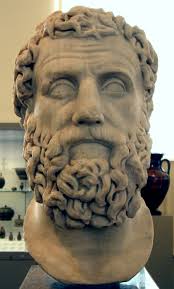


Archilochos, the Spartan Alkman and Sappho from Lesbos
It’s an incredibly heterosexual work and, in this instance, that’s totally OK given the nature of the plot and the increasing horniness of all the characters, the women struggling to remain true to their chaste vow and the men doing everything they conceivably can to break the women’s will without actually signing up to any dreaded peace accord. Therein lies the crux of the humour, of course. Men like sex, women like sex, and they like sex with each other. It’s not rocket science. There are subtle jokes, there are bawdy jokes, there are sleazy jokes and there are jokes hot enough to fry and egg on and they’re all about the topic du jour: sex. To make this work in true Greek comedic fashion there is a certain amount of tasteful disrobing – well, perhaps ‘tasteful’ is the wrong word – maybe ‘aesthetically pleasing’ would be a better term. The women do it and the men do it, no gender inequality here and everyone does it well. It’s all great fun, suitably erotic, and the actors really do everything necessary to make it work.

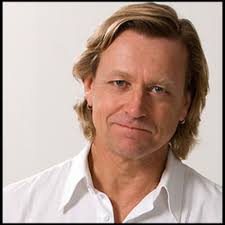

Shona McCullagh, Michael Hurst and John Gibson
There are oodles of great lines all of which we love, but I have little doubt there are also some that would cause Aristophanes a hiccup or too were he alive today. ‘Touch me sonny and I’ll pull your guts out of your arse’ brought the house to its knees – well, would have done if they’d been standing which they weren’t – ‘now they have woken the beast’ and ‘you weren’t pregnant yesterday’ are but a trio of the very best.
I’m not going to give any more away because to do so would spoil the million and one surprises that in any Hurst production abound but I seriously need to say this: if you leave the auditorium and go for a drink at interval, you’re going to miss a rather special treat that happens in the auditorium but … there, my lips are now sealed.

A vacuum cleaner
The beauty of the Sappho fragment from the first half of the evening is exquisitely balanced by a selection from Archilochos for the men in the second. What could be more perfect for the way the men are feeling than:
‘Her hair was as simple
As flax, and I,
I am heavy with infamy’.
Sublimely good, and so it went on.
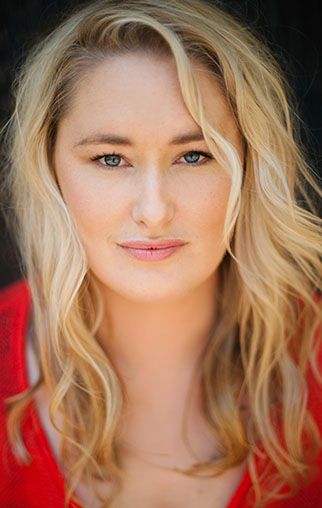
Lucinda Hare
The evening is full of star turns and most are to the purpose. The women are all excellent. Jennifer Ward-Lealand is a tip-top Kalonike, Lucinda Hare is a riot as the butch, arse-smacking Spartan Lampito, Hannah Tasker-Poland as Ismenia is the hottest thing since Mata Hari and Naomi Cohen as Gorgo has almost a hint of innocence but that doesn’t last very long at all.


Hannah Tasker-Poland and Naomi Cohen
The men are great too. Cameron Rhodes has to be one of the most versatile actors around. His Magistrate is as conniving and devious as any politician you’ll meet in a month of Sundays and the only person on the planet, if this performance is anything to go on, who might breathe life back into the New Zealand Conservative Party. Andrew Grainger never ceases to surprise me. Just when I think I know what he is as an actor, he’s suddenly more than that. Much more. His General Praxis is a light-footed, big-voiced man-of-war in full sail and he’s in good voice too. His is a performance I’ll definitely be going to see again. as Kinesias carries much of the male heart of the play. He draws us in – and the women too – and in one of the best scenes of the night almost succeeds in breaking the spirit of Sia Trokenheim’s Myrrine. Almost, I’m very happy to say, but not quite.
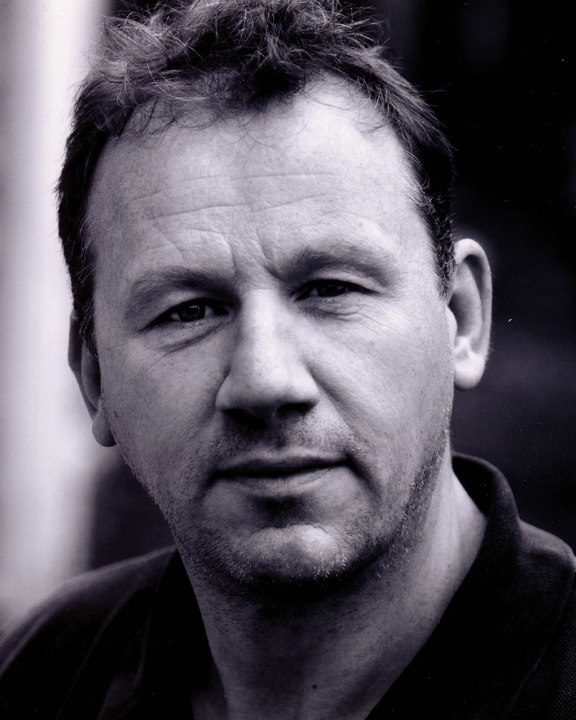
Cameron Rhodes, Andrew Grainger and Fasitua Amosa
It’s always a special night when I get to see Peter Hayden in a play. He has craft to burn and his Drakes does things with a wheelchair that should be deemed a danger to pedestrians. Yes, he’s in a Hawking-like wheelchair and he makes the absolute most of it – as any good actor should. Paired with Hayden as Straylis is another life-long favourite in Darien Takle. She’s sublimely funny and her singing is as good as ever. The emotional heart of the play is in the relationship between she and Hayden and it’s played by both actors with tenderness and a sweet empathy that sends me out into the cold Auckland night satisfied that there is hope for a happy ending because Darien and Peter said it’s so.


Peter Hayden and Darien Tackle
Having written all the above, there are still some performances that are even more worthy of note. Sia Trokenheim’s Myrrine is right on the money. Every now and again performances hit just the right note and you know, you just know, that the actor could move in any direction and she’d be safe in what she’s created. This is one such performance.

Sia Trokenheim
Anchoring much of the coarse comedy is the magnificent Paul Glover as a Spartan and Naxos. No-one plays broad, self-effacing, clownish comedy better than Glover and his soldier is a riot from go to whoa. He’s everybody’s foil, he loves it and so do we. Top marks, Mr Glover.

Paul Glover
Lisa Greenfield plays Doris. Doris is the sidekick of the Spartan Lampito (Lucinda Hare) and she’s one mean chick. She appears in the programme as an insert and Hare appears on stage in a moon boot and I’m lead to believe there’s a connection but you wouldn’t think so. She dances up a storm and has one supremely skilful fight during which she lets fly some mawashi giri kicks that suggest more than a little martial arts training. Big ups to Greenfield who gets the ‘Trouper of the Year’ award for absolute professionalism.

Lisa Greenfield
At the centre of it all is, of course, the magnificent Amanda Billing as Lysistrata. It’s no easy journey when you’re surrounded by talent of this ilk and a creative team as high powered as this one is but Billing is equal to everything asked of her, and more. She’s got an extraordinary balancing act to perform and a character who could quite easily disappear among the razzamatazz but, rather than that, she surfs the wave created by the rest of the team. She’s in fantastic voice, looks like a supermodel, moves like a dream and has a heart as big as the play itself – and that’s saying something because, not only is this a big play, but Hurst, Gibson and McCullagh have made it even bigger. Billing doesn’t seem to care though and her Lysistrata is quite simply a smart and savvy tour de force.
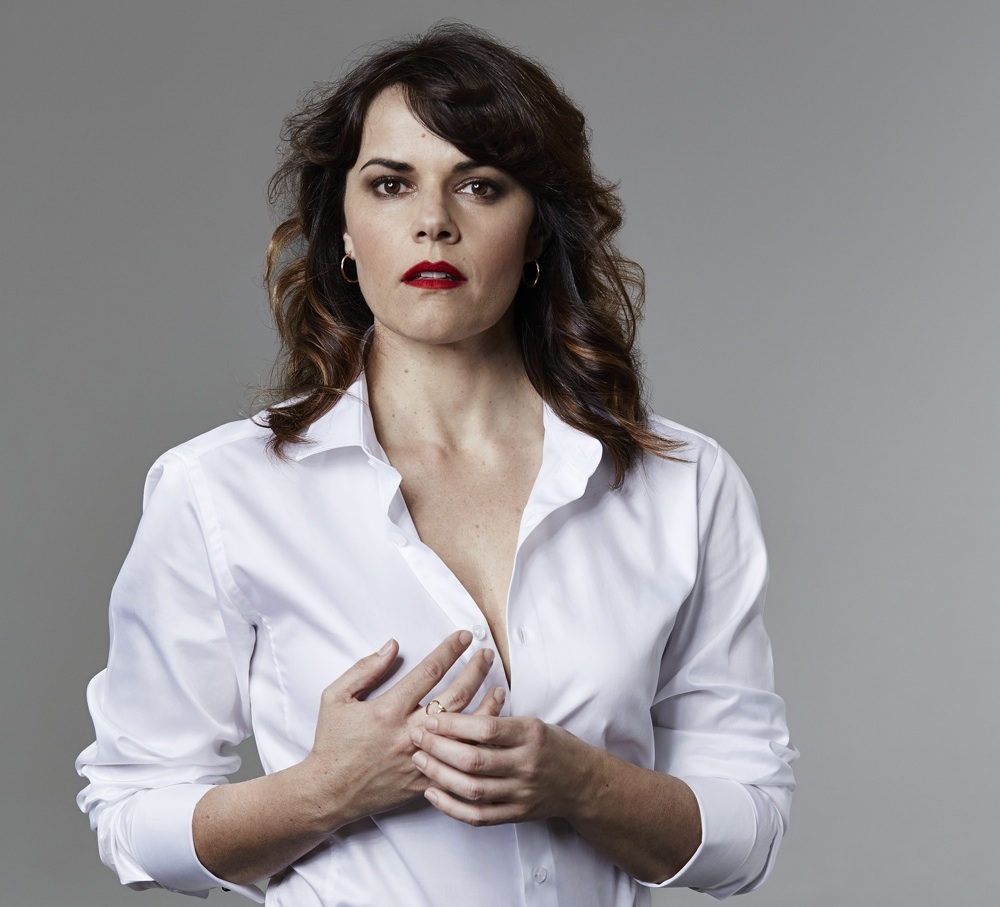
Amanda Billing
Believe me, this is a very clever production. It plumbs the depths of shallow like no other work I’ve seen for years but just when you think it’s sacrificed itself on the altar of superficiality and given itself up to bawdy for its own sake it rips off into another realm, one of rich emotional sophistication, and Billing is always there, anchoring the ship and quietly enabling the rest of the cast to do their hysterical – and appropriate – thing.
Seeing a show at Q Theatre has become a world class experience from the moment you hit send for the purchase of your tickets to the second you hit Queen Street at the end of the night, and with Auckland Theatre Company and ‘Lysistrata’ in residence, it’s a no-brainer that you should go and see it.

 dykiegirl