
Antony and Cleopatra
By William Shakespeare
Directed by Vanessa Byrnes
Set Design by Vanessa Byrnes
Lighting Design by Jacob Parkes
Costume Design by Rhianna Crawford
Sound Design by Melissa Collocot
Produced by UNITEC and featuring 3rd year acting students
At UNITEC Theatre, Carrington Road, Mt Albert, Auckland
From 10 to 17 June, 2015
Published at http://www.theatreview.org.nz
For folks of my generation Cleopatra is Elizabeth Taylor, Antony is Richard Burton, Julius Caesar is Rex Harrison and an incredibly slimy Roddy McDowell is Octavian (Augustus Caesar), all rolled together in Darryl F Zanuck’s cinemascopic epic ‘Cleopatra’ from 1963.
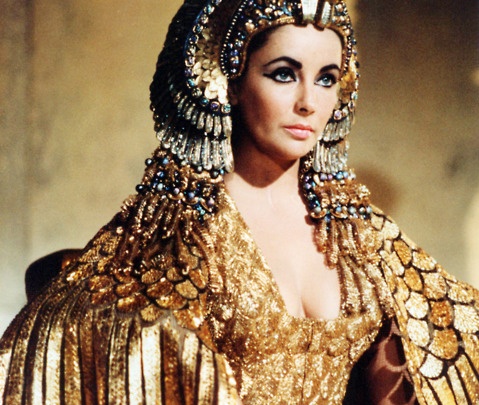
Elizabeth Taylor as Cleopatra
A new film in cinemascope caused great excitement in my hometown of Christchurch in the 1960’s and as an eighteen year experiencing Elizabeth Taylor on the big screen was nothing short of heaven. This cinematic grandeur followed the 1953 biblical epic ‘The Robe’, again with Burton in the lead, and, in 1959, ‘Ben-Hur’ starring Charlton Heston as the iconic Judah Ben-Hur. Because of these films I was, before I was 20, steeped in Roman – and filmic biblical – history.

Richard Burton as Antony
In 1960 I was introduced to Shakespeare for the first time by my 4th form (Year 10) English teacher Mrs Moore who gathered a few of my classmates and myself together in a darkened room and showed us Joseph L. Mankiewicz’ 1953 film of ‘Julius Caesar’ starring Marlon Brando as Mark Antony, Louis Calhern as Caesar, James Mason as Brutus, John Gielgud as Cassius, Greer Garson as Calpurnia and Deborah Kerr as Portia. My life was changed forever. I demanded to be shown the film again and again until I knew the lines by heart – and thus began my life-long love affair with The Bard of Avon.
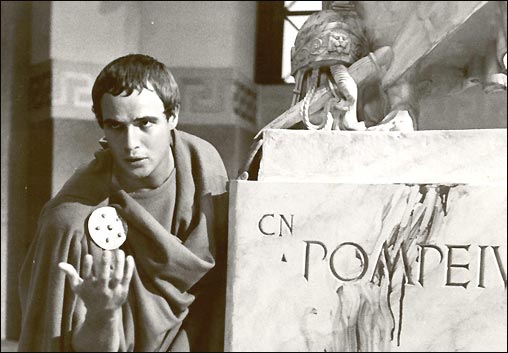
Marlon Brando as Mark Antony in ‘Julius Caesar’
I find this especially interesting in that many writers and critics, in discussing ‘Antony’ and Cleopatra’, refer to Shakespeare’s ‘cinematic vision’ and this, of all the Roman plays, fits that description to a tee. It’s painted on a huge canvas integrating desert and sea, urban and rural landscapes, metropolitan and senatorial settings, sophisticated and savage actions. It’s all there in ‘Antony and Cleopatra’, waiting for film to be invented. No surprise then that Shakespeare is still one of the most sought after screen writers in history.
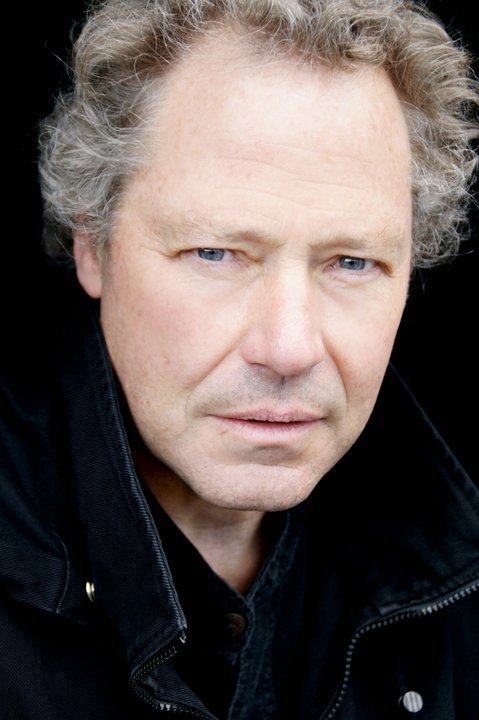
Alistair Browning
As an actor at Christchurch’s Court Theatre my Romanising continued when, in 1996, the doyen of classical theatre in that city director Elric Hooper, programmed Shaw’s ‘Caesar and Cleopatra’ and, in 1997, Shakespeare’s ‘Antony and Cleopatra’ in close succession. I played Marcus Vipsanius Agrippa in the latter and had the pleasure of witnessing Alistair Browning’s excellent Antony at close quarters for what memory suggests was quite a lengthy season.

Elric Hooper MBE PhD
‘Antony and Cleopatra’ is seldom performed in Aotearoa New Zealand probably due to its length – it plays at least three hours – the number of characters and the nature of the action, yet it trims cleverly to both a manageable length, and the number of characters can be reduced, as Byrnes shows, without the play losing much impact.
Large tracts of Shakespeare’s less than original work have been lifted direct from Sir Thomas North’s translation of Plutarch’s ‘Lives’ and it would seem that his source narrative is to be found, in its most complete form, in the third edition of North entitled ‘Parallel Lives’ which was published in 1606.
It’s difficult to categorise the play as a tragedy because it doesn’t truly adhere to the Aristotelian requirements. While the play does generate some sense of fear and pity in the audience at various points it can hardly be argued that there is any catharsis or emotional healing as a result. It is just what it is. Nor is it a true history because it deviates so much from what is accepted now as historical fact. Personally, I prefer to consider it a romance but that view may well be influenced as much by 20th century film as it is by anything else.
The Royal Shakespeare Company allows us insight into the play by telling us that this is a play of ‘mature passions’, not the easiest of understandings to convey when you’re in your early 20’s, but this young cast certainly give it their best – and sexiest – shot.
Written around 1607 the RSC informs us that ‘the play picks up where Julius Caesar leaves off. Antony, Octavius and Lepidus, having defeated Caesar’s assassins, now rule Rome as a triumvirate.’ While in Alexandria Antony becomes enthralled with Cleopatra who is, among other things, the mother to Caesar’s illegitimate son Caesarion. Antony’s infatuation with the Egyptian Queen causes discord between Octavius and Antony, ironically on the grounds that Antony’s behaviour is ‘un-Roman and senator Pompey leads the, not unpopular, charge on this. News from Rome informs Antony that Fulvia, his wife, has died. He returns to Rome and makes an entirely political decision to marry Octavia, Octavius’s sister and this doesn’t please Cleopatra one little bit. With further civil war against Pompey on the cards, Antony and Octavius negotiate a wobbly old peace and then, joined by Lepidus and Pompey, they celebrate this by getting horribly, horribly drunk.
Antony soon learns, however, that the devious Octavius has ignored the peace, attacked Pompey, is plotting against Lepidus, and has also spoken disparagingly of Antony himself. In short, the triumvirate is in ruins. Incensed, Antony prepares for war against Octavius but, hedging his bets, he sends Octavia back to Rome to act as a go-between. Antony returns to Alexandria and he and Cleopatra crown themselves – along with their children – as kings and queens and, unsurprisingly, Octavius declares war.
To cut a long story short, after three sea battles during which the Egyptian navy deserts, Antony is finally defeated. The naval desertion leads Antony to believe that Cleopatra has betrayed him to Octavius. Angry that he would think this, Cleopatra retreats to her monument and sends word to Antony that she has committed suicide. Believing this news, Antony begs Eros, his servant, to hold his sword while he falls on it, but, unwilling to do so, Eros kills himself. Antony then attempts suicide but instead is badly wounded. He’s not having his best day ever.
Antony is then taken to Cleopatra’s monument where he dies in her arms. Fearful for her own safety Cleopatra holds a snake to her breast and dies alongside her faithful servants.

Dr Vanessa Byrnes
It’s a massive narrative and director Vanessa Byrnes has used all of her considerable expertise and talent, both intellectual and practical, to condense the story down to ninety minutes without removing anything of note. She’s done some incredibly smart things with the text and she takes the trouble to outline these in her first-rate programme notes. She goes, she says, for the ‘nugget’ at the heart of the play, the opposing forces that exist in all our lives, those of love and fear. She talks also of the ‘dichotomies that clash and attract; repulsion and desire, male and female, East and West, emotion and reason, private and public.’ Byrnes talks about the magnitude of the historical characters and her desire to retain a ‘sense of intimate, actual humanity’ in the work and she has, in my opinion, achieved this to perfection.
Byrnes says she’s ‘taken huge liberties with the play’ and who could disagree. Not me, because I love each and every one of them. Two of these are especially worthy of mention. The addition of a scene from John Drydens ‘All for Love’ that ‘brings Octavia and Cleopatra into close contact’ and which, according to Brynes, ‘feels like the missing scene from Shakespeare’s play’ is an outrageous and sublimely flawless act of lawlessness that I can only applaud, and applaud again.
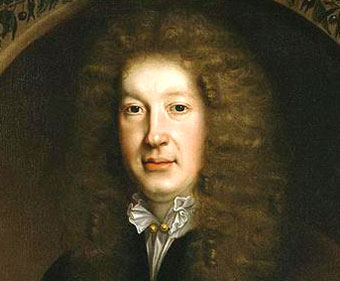
John Dryden
Dryden, who wrote his play in 1677, was not bound by the need to have boys playing women since women had been appearing covertly on the private stage since Cromwell closed the theatres in 1653 and openly since the end of 1660 when Margaret Hughes played Desdemona in ‘The Moor of Venice’, a reworking of Shakespeare’s ‘Othello’, at the Vere Street Theatre in London. He could, therefore, write in-depth, emotionally detailed scenes between women in ways that Shakespeare never had the opportunity to do.
The second modification that I felt really worked was the bookending of the entire performance with segments of Enobarbus’ famous portrayal of Cleopatra on her barge, dressed as Aphrodite, sailing along the river Cydnus:
‘I will tell you.
The barge she sat in, like a burnish’d throne,
Burn’d on the water: the poop was beaten gold;
Purple the sails, and so perfumed that
The winds were love-sick with them; the oars were silver,
Which to the tune of flutes kept stroke, and made
The water which they beat to follow faster,
As amorous of their strokes. For her own person,
It beggar’d all description: she did lie
In her pavilion—cloth-of-gold of tissue—
O’er-picturing that Venus where we see
The fancy outwork nature: on each side her
Stood pretty dimpled boys, like smiling Cupids,
With divers-colour’d fans, whose wind did seem
To glow the delicate cheeks which they did cool,
And what they undid did.’
Not only is this one of the most famous speeches in all of Shakespeare (though nicked almost in its entirety from North) it reinforces that fact that Cleopatra is more spoken about in the text than she has the opportunity to speak for herself, and so the decision to add the Dryden balances the gender scales and enriches the text more than just a bit.
The set for this production is quite brilliant and its use by the actors is crisp and precise. It consists of two quite steep ramps and a central rostra that interlock and break apart. Stood on end they are powerful and imposing pillars, laid flat and moved around they become virtually anything the actors want them to be. When used as a slide they are at their most exciting, and I’m happy to admit I wanted to go out and have a turn too they looked like so much fun.
Visually the show is exceptional. Rome is in black and silver and all the men have bleached blond hair. Egypt is softer, creams mostly, sensuous tunics that suggest woman totally comfortable with themselves and their environment. Two soothsayers, one from each nation, hooded and gauzed, effectively gender neutral, provide a mythic powerhouse and gateway to the supernatural.
The performances are especially exciting.

Brianna Smith
As the soothsayers Brianna Smith, (Dolabella representing Rome), is a commanding and disquieting presence. It’s an impressive performance, consistent and satisfying, and serves play and director’s vision perfectly. Amber Liberté as Alexis, Cleopatra’s soothsayer, is equally imposing and just as unsettling as her counterpart. Byrnes has balanced them and played them off against each other in ways I suspect Shakespeare would have approved of.

Rhiann Firman
Cleopatra’s women are exceptionally good. It was exciting to see them played as quite separate personalities and not merely, as sometimes happens, clones of each other. As Charmian, Rhiann Firman is sensual and forthright while Sarah Nessia as the enigmatic Iras acts as a perfect foil for her mistress. The music for the production is worthy of particular comment too. It is lead primarily by the women and is an especially powerful addition to the drama. There is chanting and ritual which the men join but it’s the women who take the lead in each case. Nessia is particularly impressive and a guitarist to certainly listen out for.

Sarah Nessia
Grace Augustine carries two critical roles for Rome, Pompey, the enemy of the triumvirate, and Octavia, Caesar’s sister. As Octavia, Augustine is anything but the doormat her brother would want her to be and is both feisty and courageous. She has the benefit of the Dryden scene to help her mould Octavia into a real person and she grabs this opportunity with both hands.
Sam Goodger plays three roles, Proculeius, Eros and, more importantly, Lepidus. Each is created as a rounded character and his Lepidus suggests that he’s an actor of considerable ability.
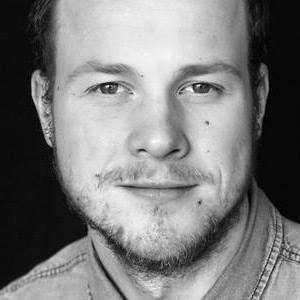
Sam Goodger
Michael Wightman plays Enobarbus as a seriously nice guy. It’s right that he should and he serves the play splendidly. There is a unity of intention that holds this, and its sister work ‘The Taming of the Shrew’, together and selfless ensemble playing is certainly a feature of the brace of UNITEC Shakespeare’s of 2015.
Reuben Bowen is an excellent Antony. He has gravitas and passion and while, predictably, the ‘mature’ aspect of his performance is largely missing, he makes up for it with a characterisation that is both true to Byrnes vision and to Shakespeare’s play, no mean feat when the concept – and the script – is such a new one.
Most impressive among the men is Michael Jamieson whose Octavius Caesar would not have been out of place in an episode of ‘Game of Thrones’. He played this cold, disagreeable character as I’ve always read him to be and that’s pretty smart because reviewers can cast from the cattle-call of the world where perfection is easy and the accolades are guaranteed. Jamieson has a great voice and impressive presence and he was the perfect foil for Bowen in scenes that really cooked.
Last – for a reason – and certainly not least is Waimarie Stone’s Queen Cleopatra VII. Playing Shakespeare’s Cleopatra is no walk in the park. So much is said about her yet she says little for herself. When she does speak it’s often contradictory, sometimes fickle while, in the same breath, intelligent, politically smart and always passionate. It’s a challenge to comply with what the audience hears about a character while maintaining what you as an actor want to play and Stone managed this with an arrogant (in a good way) assurance. At times child-like and tender, at others haughty and aloof, she presents us with a queen who is both believable and human. It’s excellent work and I found myself surprisingly moved by her death and by the deaths of her women.
Byrnes’ ‘Antony and Cleopatra’ is a sensual feast – for the eyes, for the ears and for the heart. It’s a work for both the purist and the innovator, for the world-weary Shakespeare scholar and the first-timer, for the ritualist, the pragmatist, the critic and the examiner. It’s especially good for lovers of the craft of acting and for those who like to look to the future of our art – and, of course, it’s a production for all ages.
The last word can go to my twelve year old son Finn. Of the way Byrnes built her script he said ‘it was smooth and easy to follow and not as though it had been cut by a five year old with jagged scissors.’
I think this means he liked it.
So did I.
 dykiegirl