
The Non-Surgeons Guide to the Appendectomy
By Finnius Teppett
Directed by Jessie Hilford
Set and Costume Design by Christine Urquhart
Lighting Design: Nicole Astrella
Sound Design: Sinisha Milkovic
Graphic Design: Chris Hutchinson
At The Basement Theatre
04 March, 2015 to 07 March 2015 at 7.00pm
Published on http://www.theatreview.org.nz
It’s always something of a privilege to attend the first night of a new play whether it’s on The Great White Way, in Sydney, the West End or the upstairs studio at The Basement. There’s always a sense of occasion and this was definitely the case with Finnius Teppett’s brand new 50 minute offering, ‘The Non-Surgeon’s Guide to the Appendectomy’, and the applause from the full house at the conclusion of the first performance would suggest a number of very happy customers descended the stairs to the foyer and off into the gloaming after the show.

Finnius Teppett
It’s a good time to be in Auckland and the theatre buzz in the arts precinct is palpable with Aotea Square filled with tents, a booking office and a raft of other structures all designed for frolics and fun. I’m there in the precinct to review two shows and there’s a gap of an hour between them so it’s ‘take-a-seat-on-the-Q-back-stairs-time’ with a glass of water and a chat with old mate Waimahi Hotere who’s just finished two runs of Mei-Lin Te Puea Hansen’s ‘The Mooncake and the Kumara’ ready for opening night tomorrow. While my spouse and son chat with Waimahi I recognise actors and crew coming and going from both The Basement and the Q and it’s all very exciting.

Mei-Lin Te Puea Hansen
The festival opens on the morrow, ‘Mooncake’ is booked out for the season, as is Nancy Brunning’s ‘Hīkoi, so perhaps we’re beginning to acknowledge the significance of our own indigenous stories and paying them the ultimate courtesy by spending money to go and experience them. It sure has an excellent feel about it.

Nancy Brunning
Maybe we’re coming of age as a society and valuing the performing arts more than we did in earlier times. That would have to be a good thing.

Waimahi Hotere
Since 19 February I have reviewed 10 productions and all but a couple have played to full houses with some seasons sold out before they open. I know that tonight’s second show, ‘On the Conditions and Possibilities of Hillary Clinton Taking Me as Her Young Lover’, is already booked out and that tends to validate my theory, for Auckland at least.

Dolina Wehipeihana
At the end of the evening we leave via the Q main foyer which is equally alive. We run into Arts Festival Senior Programme Manager Dolina Wehipeihana and she confirms my belief. Bookings, across the board, are heavy. While she and my spouse, old schoolmates, catch up on the goss, my son and I take a look at the giant prints that line the Q foyer wall. There’s Dame Whina Cooper leading the land march of 1975 that was organised by Te Ropu o te Matakite, there’s a deeply moving photograph of the 1977 – 78 occupation at Bastion Point organised by the Orakei Māori Action Committee and lead by Joe Hawke, and there’s a powerful image of people holding a huge sign ‘Save Papatuanuku’. There are more, and I’m alert to the extraordinary contribution made by Māori to the city’s cultural celebrations over this summer period, to the Fringe, to Pride, and now to the Auckland Arts Festival.

Dame Whina Cooper
‘The Non-Surgeons Guide to the Appendectomy’ is quintessentially Kiwi but in quite a different way. It’s anchored in the European tradition of ‘plays in rooms’ about plays in rooms. It sniggers its way across a number of genre but is seemingly happily stuck in a conventional delivery style. There’s an impressive script that’s been thoroughly digested by good actors who are capably directed (Jessie Hilford). There’s an excellent set and props (Christine Urquhart) and, I’m pleased to say, an ending which both surprised and pleased. There’s good lighting (Nicole Astrella), excellent sound (Sinisha Milkovic), the actors are suitably dressed (again Christine Urquhart), and, all in all, it was quite a fun night.

Jesse Hilford
It’s a tricky space and I was thrilled to see that the production team had the courage to move away from the somewhat prosc-archy tradition that’s grown up in the studio space. Working with the audience in an L shape was both interesting and effective. It meant some small issues with lighting with a powerful lamp burning directly into the eyes of those seated in the front row at the end of the long arm of the L. It didn’t spoil my appreciation of the play or the performances but I would have preferred not to have tears flooding eyes quite so much.

Christine Urquhart
Urquhart’s set is quite outstanding. Predominantly in eggshell white, there’s a cushiony couch seated on a slatted wooden pallet centre stage and the floor is covered with a liberal coating of sand. In front of the couch is a beer crate on top of which is a carafe with artificial white roses in it but no water. Against the back wall on stage right is a filing cabinet on top of which is a bottle of Jim Beam. Next to the filing cabinet is a white painted school chair. Random suitcases dot the floor along the walls. The entire set gives the impression of a designer who really knows what she’s about and the whole thing screams ‘Kiwi bach’ (or ‘crib’ if you’re in the far south).
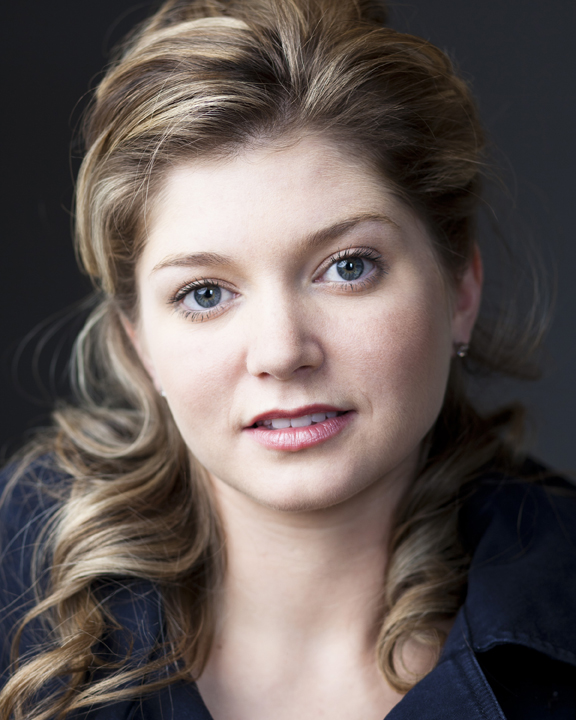
Esmée Myers
On the couch is a woman in duck egg blue pyjamas. The programme tells us that this is Jackie (Esmée Myers). She’s reading a book. Since we entered an almost unrecognisable sound is heard, something like a deep rumble that could be the sea but isn’t. It’s disturbing. As the lights change the sound increases. Sound (Sinisha Milkovic) is important in this production and this is just the start of it. It’s clever, evocative and works a treat.
A man enters and, finishing a phone call, he introduces himself as Neil (Chris Bryan). There’s some clipped dialogue between the couple – ‘you look like him’, ‘it’s definitely diabetes’, ‘it’s what you came for’, ‘family visits’ and an invitation for him to share her bed rather than sleep on the couch. He inexplicable rejects the offer.
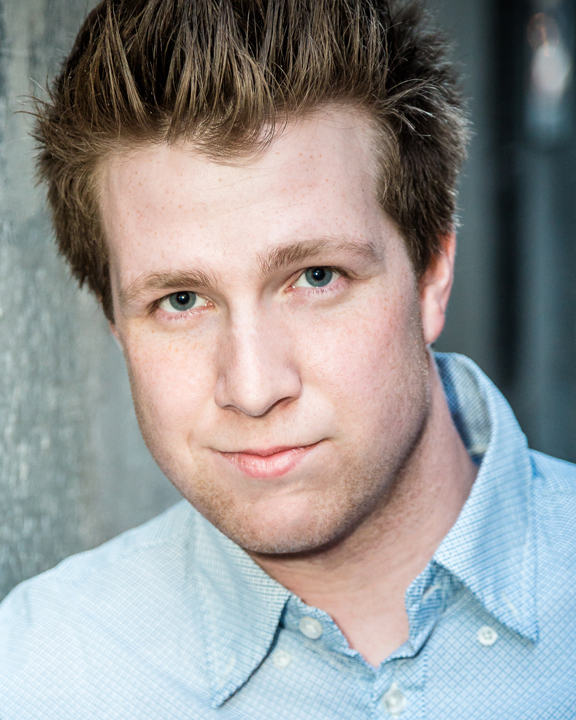
Chris Bryan
It’s fast paced and has the absurdist echoes of N.F. Simpson, ‘A Resounding Tinkle’ and a delightfully singular aversion to plot. Throughout there are resonances of Ionesco, Beckett, Pirandello and the surreal works of Apollinaire but they aren’t taken anywhere. Perhaps that’s the point and I’m being too linear but I suspect the production fails the writing somewhat in this respect. Not a lot, just a bit.
A third character enters. He is Frank (Kevin Harty) and he’s dressed in a dark suit, tie and black shoes. He’s a bit sinister, a trifle Pinteresque, potentially terrifying but this time it’s the actor who chooses not to take the right road so there’s a sense of theatrical impotence. It’s a shame because the text to this point is a real beauty and Esmée Myers has certainly grabbed it by the throat. There is talk of appendectomies, ‘instruments of suffering, instruments of God – or perhaps the devil – and a baling hook and pliers are produced. It could be terrifying but it’s not because nothing is done with them. Frank leaves, but Harty returns later as Grant, a travel agent, a different character, but with the same mannerisms and vocal quirks. He’s likeable enough and that is, at least, one good thing.

Kevin Harty
Jackie sings snippets of the Koehler/Arlen classic ‘Come On, get Happy’ – ‘Forget your troubles, come on get happy, chase your cares away, shout Hallelujah, come on get happy, get happy before the judgment day’. It’s poignant, meaningful, writers don’t have characters sing about Judgement Day for nothing, but again it all falls a bit flat.
There is talk of hostility, ‘my father was a liar’ we are told, and Neil is called Cornelius more than once and suddenly we’re in Donleavy country, ‘A Fairy Tale of New York’, at the intersection of character, plot and the works of others. It’s a place I like, but it too evaporates.
It’s nebulously unsatisfying but it feels like it shouldn’t be. Myers is very good, excellent in fact, and all the bits are there but it doesn’t quite arrive, it doesn’t yet gel. The production seems too soft, too careful, too well spoken.
Having said that, the end is quite simply outstanding. It’s powerful theatre but, even so, we leave with a sense of having been gently battered with a foreign newspaper rather than torn apart and wrecked on the rocks of incongruity. I go back to the press release to find some clarity. None is forthcoming. I read that this is ‘a hilariously confusing tale about Africa, Coffee and the Appendix, that ‘coffee is a rarity in small coastal towns, the appendix is actually a human ticking-time-bomb and travel agents are actually one of New Zealand’s oldest professions.’ It’s nice writing, but it’s not the play I saw.
I’ve already said that’s maybe the point, but I think Teppett is a much smarter writer than that. This is the man, after all, who wrote ‘AKLD Blues’, ‘Reading Lamouche’ and pulled together ‘The Watercooler’. I end up thinking that this is actually a damn good script but a somewhat lacklustre staging of it. It wouldn’t be the first time that the initial exposure of the journey of a narrative – especially a difficult one – has fallen short. You have to do it to find out, and I certainly applaud that.
I leave having had a rather pleasant evening and feeling, as I said, privileged to have been at this first night. I hope the season is a success as the show has much to commend it and, with grit and determination, there’s more yet for the cast to achieve. Now there’s a challenge.
Appendices

 dykiegirl