
Romeo and Juliet
By William Shakespeare
Produced by Rita Stone for Young Auckland Shakespeare Company
Directed by Paul Gittins and Calum Gittins
Lighting design by Ruby Reihana Wilson
At TAPAC
4 – 13 December, 2014 at 7.00pm
Published at http://www.theatreview.org.nz
It’s been quite a week.
On Monday, the extraordinary Wintergarden at Auckland’s exotic, Indian-inspired Civic Theatre played host to The Auckland Theatre Awards 2014, a night when the stars came out to play and Kiwi theatre royalty is on show. The Civic, described as ‘one of the few remaining Atmospheric Theatres in the world’, was built as a movie palace to show examples of that ‘new phenomenon’, ‘the talkie’. It was the first purpose-built cinema of its type in this country and remains, by the very skin of its dazzling, Colgate-shine teeth, an iconic landmark in the City of Sails.
While the Wintergarden lacks the seated Buddhas, Abyssinian panthers, domed blue sky and twinkling stars of the main house, it’s still the perfect venue for an awards ceremony and certainly proved to be so on this occasion. It seems rather fashionable to dismiss awards and award ceremonies as ego-driven monstrosities but I respectfully choose to disagree and The Auckland Theatre Awards reinforced my view that we have finally come of age and that the time is right to acknowledge our immensely talented and hugely experienced professional practitioners. It was an absolute delight to see so many of our most respected – Henare, Hawthorne, Hall and Blackburn to name a few – proudly sporting the unasked for symbols of a lifetime of service and experience (the odd grey hair or six) and the well-earned medals of acknowledgement that we as a country have bestowed on them. It made this old heart beat just a bit faster, which I always take to be a positive sign.

George Henare CNZM, OBE

Roger Hall CNZM, QSO

Ken Blackburn ONZM
TAPAC as a venue came in for quite a degree of light hearted ribbing during the evening and in one of the highlights artistic director Margaret-Mary Hollins, having literally scaled dizzy heights on the backs of her contemporaries, won the day.

Margaret-Mary Hollins
No surprise then that TAPAC is the chosen venue for Young Auckland Shakespeare Company’s classy modern interpretation of Shakespeare’s social commentary disguised as tragic romance, ‘Romeo and Juliet’. Directors Paul Gittins and his prodigiously talented progeny Calum Gittins have wisely focused on a topical social equivalent and their 2014 production is as modern as tomorrow. This is not to say that the ‘star-crossed lovers’ and their narrative is over-shadowed by the world around them but rather that it is contextualised in ways that are singularly appropriate but don’t overwhelm the critical importance of Shakespeare’s timeless messages.

Paul Gittins
As with any young company – or any company attempting ‘Romeo and Juliet’ for that matter – there are casting challenges because Shakespeare never allows for a narrow age band nor does he limit his observations to one particular class. If this production has one superior quality – and there are many – it is Gittins’, pere et fils, ability to unify Shakespeare’s many and varied strands into one, eminently accessible whole.
Calum Gittins, in his excellent programme note, asks the age-old question, ‘is Shakespeare going out of style?’ and the answer is simple: ‘he’s not’, and as long as companies such as this tear his passion to tatters, ‘to very rags’, Shakespeare will always be as relevant as any modern playwright.

Calum Gittins
None of this is to suggest that this production is perfect, it’s not, but what it is presents a damn good, deeply satisfying, totally relevant, night at the theatre.
The first surprise of the evening takes place in the pre-show TAPAC foyer where Chorus (Devon Webb) delivers her opening speech to a somewhat startled audience otherwise engaged in imbibing, nibbling and otherwise convivial, pre-Christmas chat. It’s an excellent segue into what is to follow when we finally enter the performing space via two carefully managed tunnels. Having been surreptitiously slipped a red cardboard square telling us that we are Montague supporters and seated as such in the traverse setting opposite our mortal enemies, the Capulets, the deadly partisanship at the heart of the play in tangibly, and ingeniously, established.
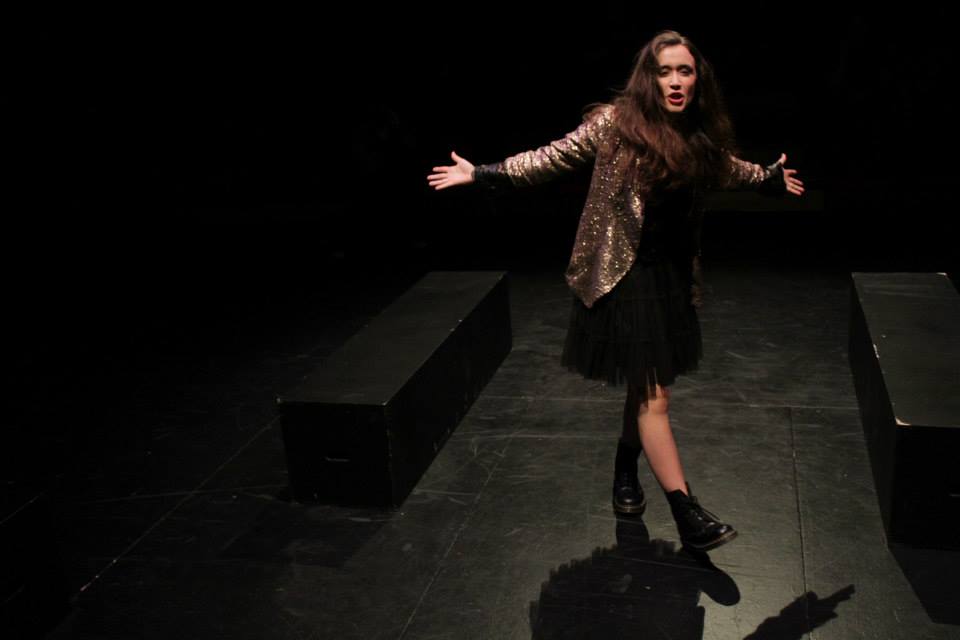
Devon Webb (Chorus)
The set is simple, four elongated black trunks that serve as seats, bleachers, public square, marriage bed and mausoleum, along with two floor to ceiling banners with the rest left to actors and Shakespeare’s magical text.
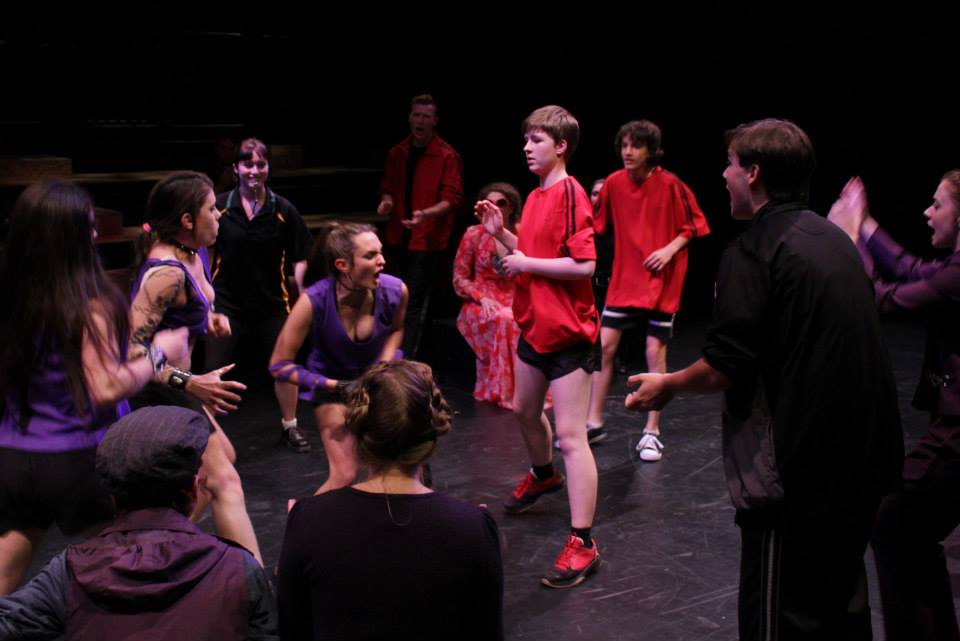
We’re welcomed on entry to a basketball game of great passion between two sides, the purple Capulets and the red Montagues. The hotly contested game includes, as anticipated, a fantastic fight. The physicality of the entire cast and their willingness to engage fully in the tactile nature of the text is a highlight of this production and speaks volumes for the trust established between actors and directors. Also impressive is the ease with which the cast speak directly – and often pertinently – straight to we groundlings and even, if we’re inordinately unlucky, get us up to dance wildly at their family extravaganza. The stage settings are created simply and allow for a wide range of entrance possibilities and these are maximised as is necessary with so many off-stage locale to be made credible. The carefully chosen music throughout adds much to the vitality of the production by enriching the aural texture of the experience.
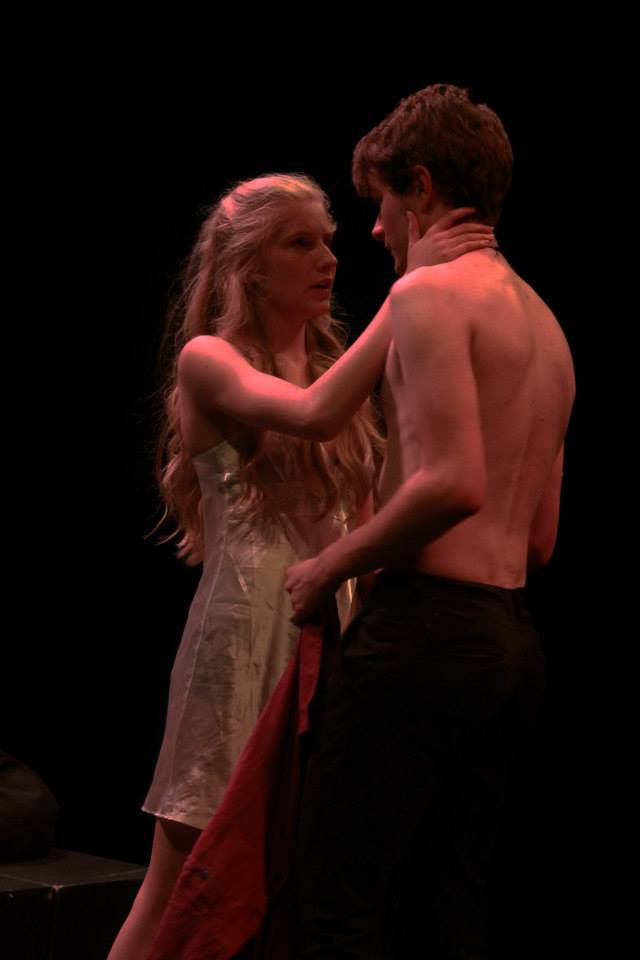
Scenes with more than two actors have a charming sense of naturalistic chattiness about them and most of the principals handle the richer, more personalised, text very well indeed. This is especially so in the intimate scenes between the lovers, scenes that can appear mawkish and unbelievable in less skilled hands.
The ultimate success of Shakespeare productions rests, however, almost entirely on the capacity of the players to handle Shakespeare’s rarefied text and to turn the language into relationships of quality and richness that are credible to the audience.
Juliet (Daya Czepanski) and her Romeo (Matthew J Smith) have a striking rapport and it is easy to believe in their instant, and dangerously innocent, attraction. The world in which they live, dominated as it is by family and feud, is clearly etched in this work and the protagonist’s mindless commitment to the profound antagonism that feeds the tragedy, is deeply felt and drives their need for union at a rate beyond mature reason.

Daya Czepanski (Juliet)

Matthew J Smith (Romeo)
The mothers – Lady Capulet (Jessica Stubbing) and Lady Montigue (Maeve Kelly) – are uniformly excellent as are the Nurse (Harriett Maire) and Paris (Cameron Stables), Benvolio (Elsie Bollinger) and Balthasar (Flynn Mehlhopt). As might be expected the Dad’s – Capulet (Ben Egan) and Montague (Hamish Sealey) don’t fair quite so well as much is asked of them that requires both life and performance experience that these otherwise fine young actors have yet to achieve. As is often the case, Shakespeare creates one scene that drives the outcome of the tragedy more than any other and in ‘Romeo and Juliet’ it is the scene in Juliet’s bedroom with her father. It’s a play in itself and, while this Capulet didn’t quite make it, his attempt went a lot further towards success than many more senior actors I have seen attempt the role.
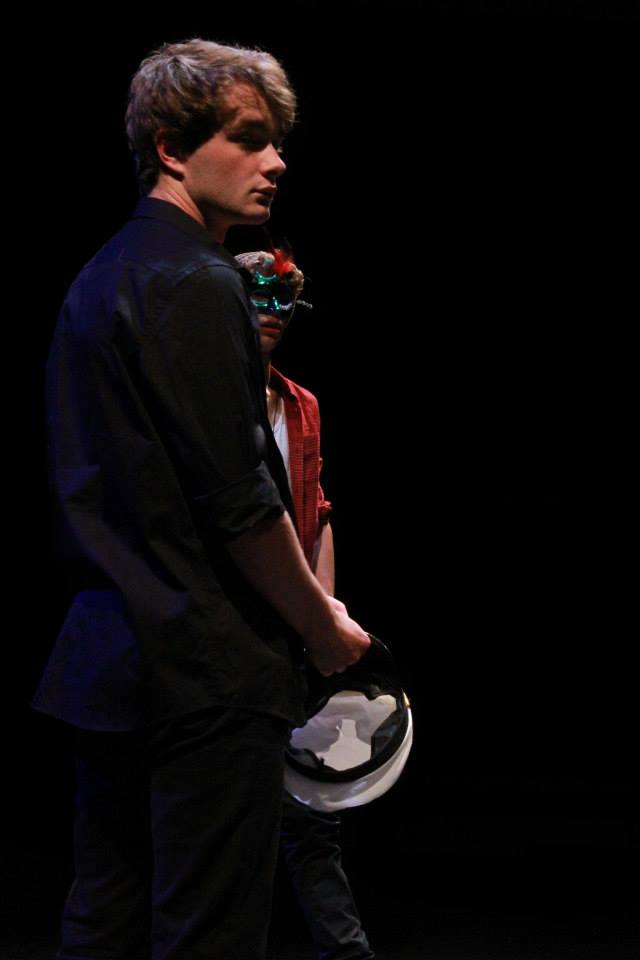
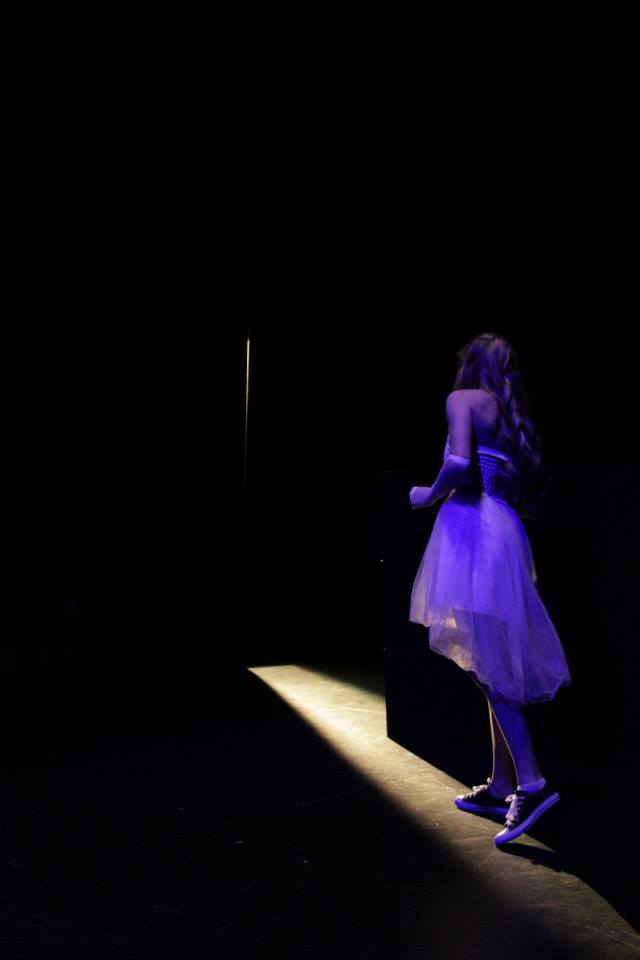
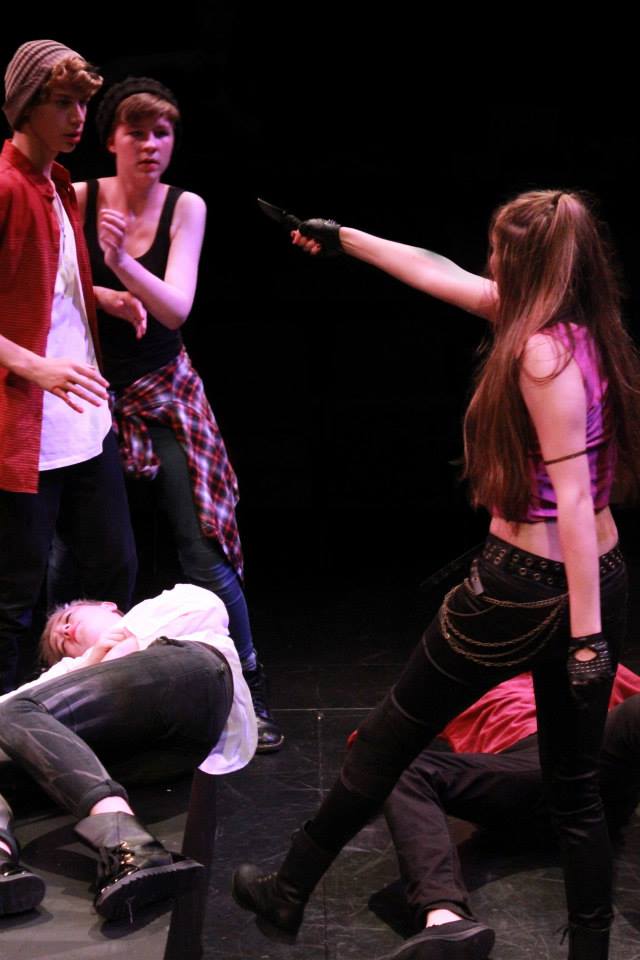
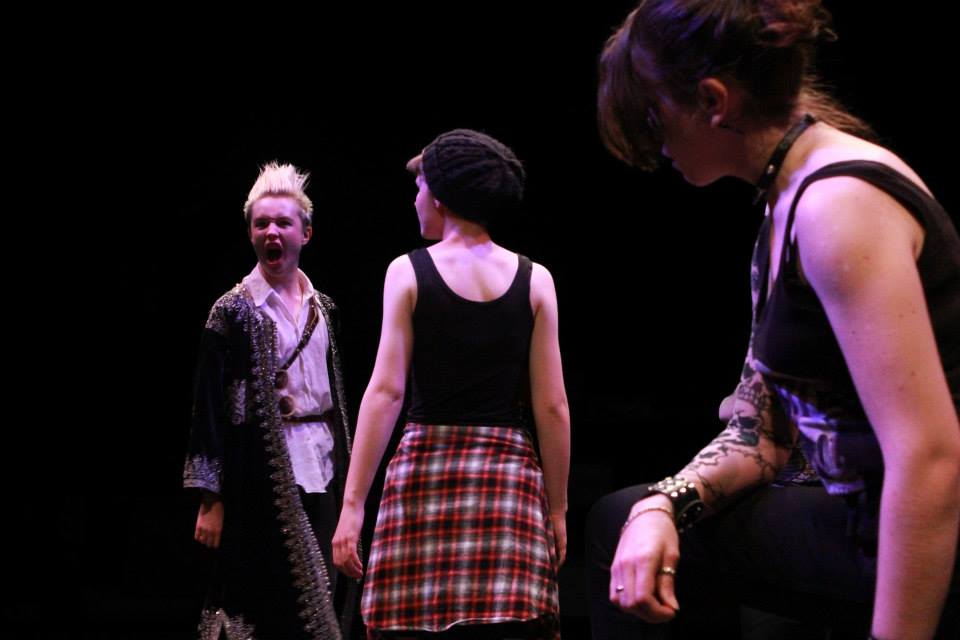
While Czepanski and Smith are clearly the stars of this first-rate production they are closely shadowed by the excellence of Murdoch Keane’s astonishingly good Mercutio and Mirabai Pease’s frighteningly real – and downright psychotic – Tybalt. Keane’s Queen Mab speech was heart-stoppingly good on opening night.

Murdoch Keane (Mercutio)
Mirabai Pease (Tybalt)
There are moments that challenge any cast engaging with this play – parents dealing with the death of children, characters confronting the violent chaos and unbearable pain inherent in Shakespeare’s text, actors addressing the superficially glib resolution to a seemingly timeless feud – and all in the context of unfolding a narrative to an audience who probably have a pretty good idea of where you’re going anyway. Keeping it real, spontaneous and new are the stuff of acting and this young cast in the hands of such experienced theatre practitioners have made a seriously laudable job of doing just that.
By plays end we are profoundly reminded that Juliet is not yet 15, her Romeo not much older, that Mercutio and Tybalt are not yet 20, that their parents are most likely still under 40 years old – and that the young man seated next to me is an impressionable twelve year old seeing every moment through the eyes of the characters in front of him and feeling acutely what they are going through. If nothing else – and there’s plenty else – this production should remind us of the incredible fragility of life, the supreme importance of our families – and the families of others – the need to constantly revisit the bearing of grudges the sources of which, as is the case with ‘Romeo and Juliet’, often defy memory, and the need to care for our beloved children, and ourselves, whatever our age might be.

I left TAPAC with similar feelings to those I had experienced when leaving the Wintergarden on Monday evening: that family is everything, whether it’s the domesticity of a fictional ‘Romeo and Juliet’ and the final harmony they discover at such great cost, or the wonderful sense of family that exists within a maturing theatre community. As I walked to my car on this balmy Auckland evening I was reminded of Raymond Hawthorne’s delightfully nuanced speech in support of Linda Cartwright’s well-earned ‘Lifetime Achievement Award’ which referenced families not once but four times – his own, the broader families of Theatre Corporate and the Theatre Corporate School of the 1970’s and 80’s, UNITEC and the creation of the Bachelor of Performing and Screen Arts and the broader theatre community to which we all belong whether we like it or not.

Raymond Hawthorne ONZM

Linda Cartwright
I had sat listening to Hawthorne – he gave me my first job in 1975 and Gittins senior was already an established actor in the Theatre Corporate company – with my immediate family at a table with Alistair Browning, who I first worked with in the early ‘80’s, and Kristian Lavercombe with whom I first trod the boards a mere 20 years ago. Kristian was very young then and, from memory, I played his father. The comic irony that he is currently playing the Messiah in ‘Jesus Christ Superstar’ for Auckland Theatre Company was not lost on my spouse. These fine men are my brothers-in-arms, my mentors and my friends – they are probably yours, too – and I love them with a passion beyond words. I left both venues feeling proud to have been cast as a bit part player in their extraordinary lives, and with the resonances – and warnings – of ‘Romeo and Juliet’ sounding loudly in my ears at the beginning of this season of supposed good will to all men.

Kristian Lavercombe (Jesus in ‘Jesus Christ Superstar’)

Alistair Browning
We should look after each other, whanau, because ‘all the world’s a stage, and all the men and women merely players’.

The fabulous Rita Stone (Producer)
 dykiegirl
