‘I’ll speak in a monstrous little voice’
Bottom the Weaver in A Midsummer Night’s Dream by William Shakespeare.
In Laurie Halse Anderson’s 1999 novel Speak, she writes ‘When people don’t express themselves, they die one piece at a time.’
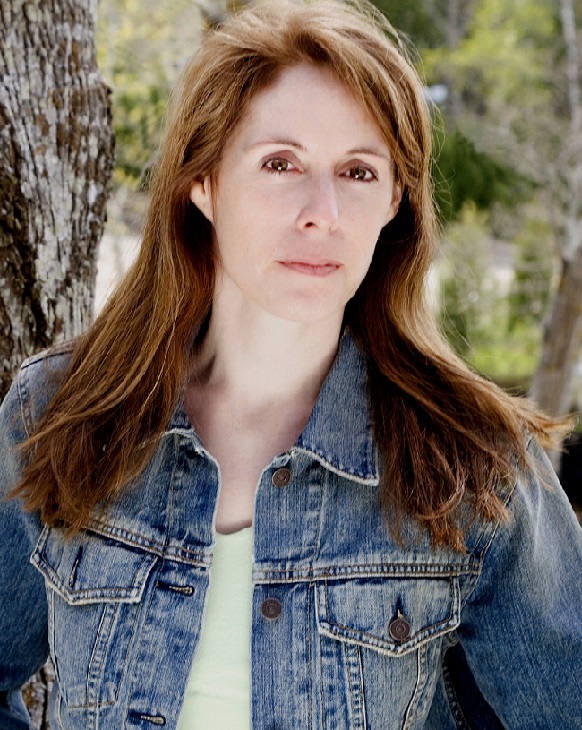
Laurie Halse Anderson
Speak is a story of rape, recovery, and confession.
After being raped at a party, the central character is ‘ostracized by her peers because she will not say why she called the police. Unable to verbalize what happened, she stops speaking and her voice is only heard through the art she produces in class. This eventually enables her to acknowledge the rape, face her abuser, recreate her identity and, through her art, she rediscovers her voice.’
What I’m writing today is my attempt to reclaim my voice.
I can hear those who know me well murmuring ‘what’s she talking about, she never shuts up’.
Well, she’s certainly been effectively gagged today. Read on if you wish to know how this miracle occurred.
WH Auden, in his longish poem September 1, 1939, wrote ‘All I have is a voice.’
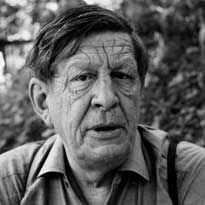
WH Auden
As you may recall – or will remember from your history classes – there was plenty going on in 1939 and voices were being heard, and stifled, all over the world. Not Auden’s, thank goodness, and in his poem he articulates his present and his hopes for a loving future.
Like Auden, ‘all I have is a voice, to undo the folded lie’ and, in my case, the ‘folded lie’ comes in the form of a fellow human being who has attempted to use his position to suppress my voice. He didn’t like the language I used even though the discourse was mine, the emotions were mine and I was simply expressing how I felt.
My voice is my voice and I don’t speak to make anyone else happy – particularly not when the aim is to stifle me, to water down my rhetoric, and all to ensure that a community organisation appear squeaky clean and above criticism or critical comment when a level of transparency and accountability is essential and healthy. I said what I said because that’s what I meant and I want what I say to be heard and understood. I don’t respond positively to bureaucratic bullying – which is what this was – and I call it when I see it.
Transgender people have been silent for far too long and, now that we are exercising this prerogative of an authentic voice, we need to be cautious that we are not subsumed as part of some tame PR machine for queer organisations or individuals.
Authenticity is more rigorous, and has a greater degree of integrity, than that.
This insidious overriding of the authentic voice isn’t unusual of course, it happens frequently and, more often than not, it happens within communities where the suppressing of voices can do the most damage.
The LGBTIQ community is one such community and, sadly, it happens to transgender people all the time. I will always advocate for the voice that speaks on transgender issues to be a transgender voice and, in recent times, there has been a positive change that has seen this voice honoured, heard and listened to so it came as somewhat of a surprise to find that the language I used to describe the emotional impact a private message had on me was somehow unacceptable as was the corollary, the unquestioned expectation that I would, without question, silence my voice.
I’m aware of the unspoken rule that states that, on social media, use of the ‘C’ word and the ‘N’ word are no-nos. I know about Godwin’s Law and the increasing acceptance of the use of the ‘F’ word but I seldom swear on my Facebook page anyway, or on my blog, or anywhere in print and I leave invoking the name of the moustachio’d chap Auden alludes to in September 1, 1939, to others.
I do speak my mind however, and I’m lead to believe that, because I do so within the bounds of linguistic civility, what I say is usually acceptable but, in this case, it clearly was not.
As TS Eliot reminds us in Four Quartets, my generation doesn’t have forever to complete what we need to do so I’m even more committed to living in the moment and ‘doing it now’. It’s hugely heartening to note that the next echelon of transgender – and the one after that – are lippy, intelligent, educated and smart. When they speak they deserve to be listened to because they are our leaders of the future and they are very fine indeed. Eliot prompts us to get our collective acts together because ‘last year’s words belong to last year’s language and next year’s words await another voice.’
I have to add at this point that only two people out of the 600 or so who might have read what I wrote have taken issue with me and far more have indicated that they support what I wrote. No one can disagree with what I said because I was recording how I felt and only I can know how that was. I stand by the language I used because it described EXACTLY how I felt at the time, and still feel.
I was touched by the following dialogue between a young adult and a child in Lauren Oliver’s wonderful book Before I Fall. Her theme is you have to live your life to the fullest without any regrets because you never know what’s going to happen next. Some truths are very simple, as most of us know. For Oliver, it is essential for us to know that our actions, no matter how insignificant, can have lasting consequences on ourselves and others.

Lauren Oliver
That’s almost exactly the theme of this entire post as well.
The dialogue that moved me is:
‘Do the other kids make fun of you? For how you talk?’
‘Sometimes.’
‘So why don’t you do something about it? You could learn to talk differently, you know.’
‘But this is my voice. How would you be able to tell when I was talking?’
Isn’t that delicious?
True too, as I’ve discovered over the past week or so.
If I were to change what I wrote – which has been insisted on in a particularly insidious way – then it’s not my voice and, for the sake of authenticity, I feel I have a right to use the language I choose to describe my own feelings without being semantically criticised on the grounds that what I said was somehow inappropriate. My one word ‘breach of etiquette’ was subsequently reported to an organisation I belong to with a view to bringing pressure to bear on me by means of a ‘formal complaint’ to be less authentic than I feel I have the right to be.
Did it work?
In a way it did as I removed the comment.
In a way it didn’t – because I decided to write this opinion piece instead.
Yes, it seems pathetic and, yes, I sound like Shakespeare’s ‘whining schoolboy’ but at the heart of this issue is the fundamental responsibility we all have to take the views of others, especially when expressed respectfully, on the chin. We don’t have to acquiesce or go and hide – quite the opposite – but should be free to respond appropriately and to be listened to. In this instance I spoke my feelings, I listened to the response, and replied that, no, I wouldn’t water down what I had said because what I said was what I meant.
So what did I say?
I said that the message I had received ‘made me feel like a paedophile’.
Anna Quindlen, the columnist whose New York Times column Public and Private won the Pulitzer Prize for Commentary in 1992, said in her 2008 Newsweek article about the demise of the Miss America contest and the influences of modern feminism that the organisers should simply ‘let it go’.
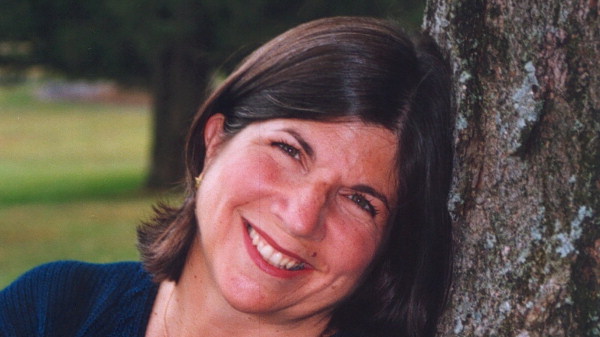
Anna Quindlen
In the same article she is quoted as saying ‘speech is the voice of the heart.’
I couldn’t agree more – on both counts.
The person who took umbrage at my use of the word ‘paedophile’ to describe how I felt should have ‘let it go’ when he realised – which he did because I told him so in no uncertain terms – that I spoke from ‘the voice in my heart.’
It would have ended then and there if he had accepted that I had a right to speak on my own behalf without interference from the semantics police, if he’d understood that I don’t exist simply to sugar-coat his organisation and that my right to a voice is enshrined in law.
Some back ground: I attempted to contact an organisation to pass on some information that I thought might interest its members. The response I received suggested in no short order that this wasn’t possible and the reason given related to the safety of the members and, by clear inference, that I may constitute a danger to them.
Nothing could be further from the truth.
This response made me feel awful, dirty, sordid and disgusting. I equated this to finding myself accused of paedophilia and said so. My self-esteem went through the floor and some very old feelings of worthlessness came flooding back.
This all took place in a secret, closed Facebook support group formed by a parent of a high profile, transgendered boy. I accepted an invitation to join the group because, in my view, there are serious issues surrounding the exploitation of trans kids in the media and this has the potential to be perceived as one of them. I don’t engage much in the group but I am interested and stay involved.
The trans communities are historically fragmented and fractious but there are a few of us who seem to have gained some traction. We have traction because, generally, we are trusted. It’s sixteen years since my transition and this seems to give me some gravitas and I endeavour to be seen as a person who can be relied on to be consistent, honest, straight forward and tireless. I work extremely hard on this. My journey includes about 5 years as an informal ‘adult’ adviser with a queer youth organisation where, for three of those years, I chaired their annual meeting. My history with the group is, I believe, 100% positive and not once did I feel like a pervert by being there.
2014 marks my 51st year in the classroom and I’m immensely privileged to have achieved such longevity.
During that time I have held the roles of Principal, Deputy Principal, Senior Teacher/Junior Classes, Senior Teacher in the primary service, Principal of a school for ’emotionally disturbed’ children in the special education service, Director of a performing arts academy and HOD Performing Arts in the secondary service and 17 years in the tertiary sector, the last 9 of which have been spent as an academic programme leader at AUT University where I have received a Vice Chancellor’s Excellence in Teaching Award, a Faculty of Culture and Society Excellence in Teaching Award and an AuSM Awesome Lecturer Award. These awards are only important to me because they were all achieved though nomination by students.
There’s a point to my mihi.
In the first instance, the role of male teachers is a precarious one.
I’m sure I don’t need to elaborate too much on that, suffice to say that extreme care needs to be exercised at all time to ensure accusations of inappropriate behaviour towards students are to be avoided.
For queer teachers it’s even worse and for trans teachers I can assure you it can be an absolute nightmare even at tertiary level. It doesn’t take much to feed the rumour mill and I’ve had my fair share of innuendo and abuse all of it unwarranted. Much of it is contextualised, generically in the public eye, as paedophilia. The fear of such accusations is particularly weighty for trans people because we are so often labelled as sexual freaks by the majority who simply don’t understand us and the label that sticks is ‘paedophile.’
We’ve all be subject to the scuttlebutt that equates being queer with being sexually deviant with children. It’s totally hateful and totally untrue but it does still have currency and is perpetuated largely by the religious right.
As a transgendered woman I have two choices: I can hide what I am, or I can stand up and be visible in an attempt to make a difference. I’ve chosen the latter because, compared to many, I am privileged.
It’s complex to say I’m ‘privileged’ when I actually identify as a member of that sector of society which is probably still the most marginalised. I get an extraordinary amount of abuse for standing up for what I believe is important – more than you might possibly imagine – and much of it is predicated on my being a danger to others which I most certainly am not. My family get this abuse too. We don’t complain about it because we know that, sadly, it goes with the territory but it does tend, at times, to colour our responses to our experience. There are times when it’s a real effort to get up and start the day because each of us knows that, at some point, our journey is going to be troubled simply because of what I am.
You see, ‘To Be Who I Am’ is a double-edged sword.
I think it’s exceptionally sad – but not that rare – when LGBTIQ organisations respond to situations in ways that mitigate against everything queer organisations should exist to protect and promote – self-esteem, personal self-worth, acceptance, having a voice – and, in this instance I simply wanted to go away and hide.
In a secret, closed space where I could, I am assured by court precedent, have a reasonable expectation of privacy, I relayed how this message had made me feel. In the same conversation I expressed my fears regarding our son Finn and the inability of any organisation to provide support services for the children of queer parents, an issue I have been promoting for many years.
Then came the statement that caused me the most serious concern.
While he accepted that what I’d said wasn’t as a representative of any organisation, or my employer, and that I was speaking exclusively as a parent and private citizen, he still felt that, ‘as a person in a position of influence in the community’ (his words) I should not have spoken as I did.
Still at issue was my statement that his reply ‘made me feel like a paedophile’.
The problem for me is that this was exactly how their reply had made me feel which is why I chose those words.
It seems shameful to me that anyone should think that, because of what I do in my community – the supposed ‘influence’ I have – I should be less able to speak my mind on issues that are of profound importance than he, or anyone else, could.
Surely the opposite should be the case.
Otherwise, why do it?
I should at least be allowed the same opportunity to speak my mind as anyone else is – and this is all I aspire to.
His complaint, after all, was made in his role as General Manager of his organisation and he felt free to make it on behalf of his board, his funders, his staff and his members.
Geese and ganders come to mind.
As John Osborne says in his seminal 1956 play Look Back in Anger ‘that voice that cries out doesn’t have to be a weakling’s does it?’
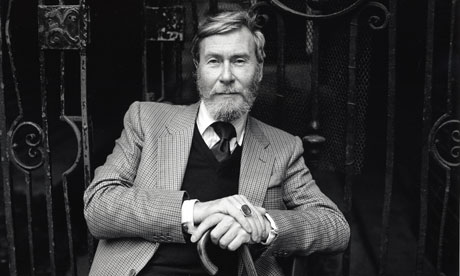
John Osborne
Osborne wouldn’t retreat from his voice and neither will I.
Osborne, ironically enough, was one of the first writers to ‘address Britain’s purpose in the post-imperial age’ and argued for the ‘cleansing wisdom of bad behaviour, bad taste, and combined an unsparing truthfulness with a devastating wit.’ His was the new post-WWII voice in British theatre and many tried to smother it, which, on a much smaller scale is what’s happened here – transgendered people have found a new and strident voice and the first response from an establishment organisation that should know better is to demand that the voice be silenced or at least ‘watered down’.
If I’d wanted to say ‘your reply has made me feel like having a hot chocolate’ that’s what I would have said. If the words in my head had been – as they are today – ‘I want to self-harm and put an end to my wretched existence’ then I’d have said that too.
My feelings, my rhetoric, end of story.
Euripedes had it right when he wrote in The Phoenician Women, that ‘this is slavery, not to speak one’s thought.’

Euripedes
He was right again when he wrote in Ion that ‘authority is never without hate’ and in Melanippe the Wise that ‘a bad beginning makes a bad ending.’
It’s as though Euripedes had been bugging my phone because this over-dramatised shennanigan sure as hell had a bad beginning, and the end wasn’t too flash either!
It’s worth noting I guess that I, as a transgender activist, put myself on the line every hour of every day and my courageous family does the same. We do it so that those wonderful young transgender actors and dancers who have astounded me over the past few weeks and the numberless students I work with and support every year can have a better life than we’ve had. No complaints, it’s the nature of the beast and we accept that, but wouldn’t it be nice if the organisations we support returned the favour? Wouldn’t it be nice if all the dramas took place on the stage and there were none in the boardrooms and offices of the groups who make up our communities?
In my view it’s all about behaving honourably.
In this regard I do my best.
It should simply have been accepted that if I say someone’s actions have made me feel bad then that’s how I feel and that the rhetoric surrounding it doesn’t matter. It’s not as though I was ranting on about making formal complaints because I don’t do that. I resolve issues with the tools of generosity and compassion and leaping the fence to the ‘formal complaint’ seldom crosses my mind.
Writing about it does – as you may have noticed.
What does matter is that an organisation which ostensibly exists to enable people has seriously, if briefly, disabled me. That matters – and the thought that they then tried to further damage me by laying a ‘formal complaint’ against me makes me sick to my stomach.
My first thought goes to the kaupapa of the organisation and the mockery it makes of that – and this breach is a minor tragedy over which we should all weep.
Community organisations should, in my opinion, be encouraging debate and supporting a strong transgender voice and not attempting, seemingly at every opportunity, to shut it down. If I was the type of chick to invoke Godwin’s Law now is exactly when I’d do it!
I accept that my 50+ years in the classroom may have made me hypersensitive to inferences of potentially inappropriate behaviour and that my being transgendered makes me appear to be a greater risk in some people’s eyes but isn’t that what we’re all fighting to eradicate?
Isn’t that why ‘pride’ and ‘hero’ matter so much to us as words? Isn’t this why being made to feel like a paedophile by an organisation whose sole function is empowerment needs to be stated even if the intent to hurt and damage wasn’t there? Isn’t this a flag that says ‘please be wary of going down this path?’
Coco Chanel put it in a nutshell when she said ‘the most courageous act is still to think for yourself. Aloud.’
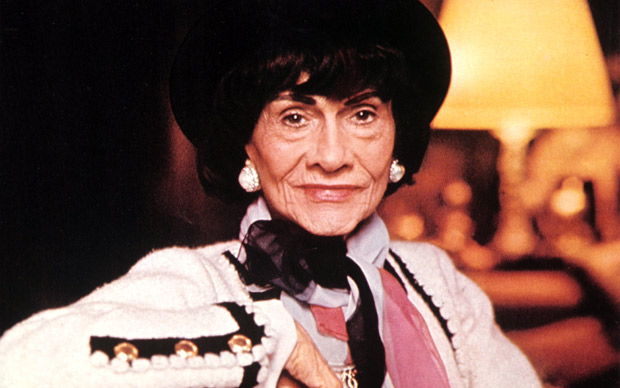
Coco Chanel
I’m certainly struggling not to feel diminished and lessened as a person by all this. Old feelings of worthlessness have surfaced as have some of the methods I have used in the past to combat those feelings – suicidal ideation and self-harm being but two of them.
Discomfort is rife.
In a way I feel that the 14 media interviews I’ve done over the last three weeks that have enabled transgender issues to be brought to the fore have been somewhat of a waste of time if the key organisations in our community don’t support and act on them. Much of society still considers us to be freaks. I’m a woman who doesn’t look or sound like a woman but who is prepared to be filmed and photographed and be heard on the radio to promote what she seriously believes in. I know that when I do this I am opening my family and myself up to ridicule but it needs to be done and I have the skills and experience to do it so I accept the derision and the loathing that I get for the small benefits that accrue for others.
It’s a shame, don’t you think, when it appears that the enemy is a much within as it is without.
In writing Le Livre de Promethea (The Book of Promethea), Hélène Cixous has a lot to say about having – and using – the innate voice each of us possesses. She sets out to bridge the inestimable gap between love and language – now isn’t that a task? The Book of Promethea speaks more eloquently than I ever could, and Cixous uses wonderful images and metaphors to speak about the importance of authenticity and how complex and how visceral this experiential process often is:
Everything she wanted to tell her, was unable to tell her, because she was afraid of hearing her own voice come out of her heart and be covered with blood, and then she poured all the blood into these syllables, and she offered it to her to drink like this: “You have it.”

Hélène Cixous
This experience has made me realise how very far we still have to go, how new and raw this transgender voice thing is, how we must still fight the conservatives, the gatekeepers and the drama queens in our own communities, and just how mightily important the support of those who do understand, who do ‘get it’, is. They’re the ones who feed the fire, stoke up the furnace and keep the whole thing rolling inexorably forward – and, thank goodness, there is a good number of such people and they are tireless too.
I’m a real fan of Felicia ‘Fee’ Johnson, author of Her.
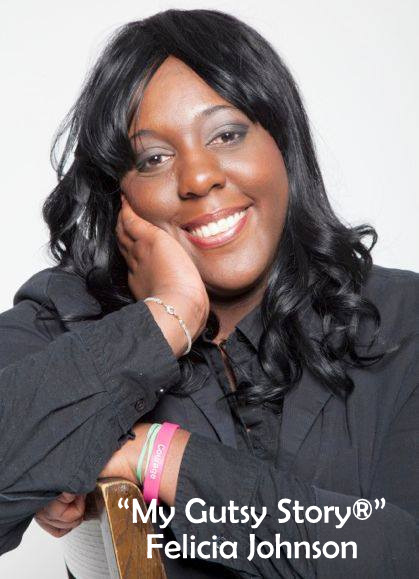
Felicia ‘Fee’ Johnson
Her is a book about survival. The main character is Kristen who deals with her life by self-harming and spending time in the company of Mr Sharp, an imaginary friend who ‘encourages her feelings of self-loathing.’ After a failed suicide attempt, Kristen is placed ‘in the Bent Creek mental hospital, where she is diagnosed with Borderline Personality Disorder’. Hers is a story of survival and recovery and is a narrative that is not uncommon in the transgender community though, in our world, recovery is more often fictionalised than real.
Johnson instructs us to ‘speak up and speak clearly.’ She says ‘I want to hear what you have to say because it matters. Let’s listen to each other and respect one another’s opinions. Although they may be different, wisdom allows us to be responsible for our own feelings and actions.’
The wisdom Johnson tells us about lives in all of us. We simply have to find it.
APPENDIX I:
I’ll speak in a monstrous little voice.
A Midsummer Night’s Dream, William Shakespeare.
APPENDIX II:
September 1, 1939
By W H Auden
I sit in one of the dives
On Fifty-second Street
Uncertain and afraid
As the clever hopes expire
Of a low dishonest decade:
Waves of anger and fear
Circulate over the bright
And darkened lands of the earth,
Obsessing our private lives;
The unmentionable odour of death
Offends the September night.
Accurate scholarship can
Unearth the whole offence
From Luther until now
That has driven a culture mad,
Find what occurred at Linz,
What huge imago made
A psychopathic god:
I and the public know
What all schoolchildren learn,
Those to whom evil is done
Do evil in return.
Exiled Thucydides knew
All that a speech can say
About Democracy,
And what dictators do,
The elderly rubbish they talk
To an apathetic grave;
Analysed all in his book,
The enlightenment driven away,
The habit-forming pain,
Mismanagement and grief:
We must suffer them all again.
Into this neutral air
Where blind skyscrapers use
Their full height to proclaim
The strength of Collective Man,
Each language pours its vain
Competitive excuse:
But who can live for long
In an euphoric dream;
Out of the mirror they stare,
Imperialism’s face
And the international wrong.
Faces along the bar
Cling to their average day:
The lights must never go out,
The music must always play,
All the conventions conspire
To make this fort assume
The furniture of home;
Lest we should see where we are,
Lost in a haunted wood,
Children afraid of the night
Who have never been happy or good.
The windiest militant trash
Important Persons shout
Is not so crude as our wish:
What mad Nijinsky wrote
About Diaghilev
Is true of the normal heart;
For the error bred in the bone
Of each woman and each man
Craves what it cannot have,
Not universal love
But to be loved alone.
From the conservative dark
Into the ethical life
The dense commuters come,
Repeating their morning vow;
“I will be true to the wife,
I’ll concentrate more on my work,”
And helpless governors wake
To resume their compulsory game:
Who can release them now,
Who can reach the deaf,
Who can speak for the dumb?
All I have is a voice
To undo the folded lie,
The romantic lie in the brain
Of the sensual man-in-the-street
And the lie of Authority
Whose buildings grope the sky:
There is no such thing as the State
And no one exists alone;
Hunger allows no choice
To the citizen or the police;
We must love one another or die.
Defenceless under the night
Our world in stupor lies;
Yet, dotted everywhere,
Ironic points of light
Flash out wherever the Just
Exchange their messages:
May I, composed like them
Of Eros and of dust,
Beleaguered by the same
Negation and despair,
Show an affirming flame.

 dykiegirl
Well said! And may this monstrous little voice resound throughout the world!
Hello! I could have sworn I’ve been to this
website before but after looking at many of the articles I realized it’s new to
me. Nonetheless, I’m certainly pleased I discovered it and I’ll be bookmarking it and checking back regularly!
Wow! Thank you for the wonderful review. Let us keep on seeking wisdom and use it to strengthen ourselves and others. — Felicia Johnson, Author