
‘salt’
Written & directed by Melissa Fergusson
Produced by Amanda Turner for Charlatan Clinic
Staged at The Williamson, 1 Williamson Avenue, Ponsonby
13 to 16 November, 2013 at 8.00pm
Published at http://www.theatreview.org.nz
#projectsalt
We’re a weird mob.
So pontificated Australian author John O’Grady through pseudonym and mouthpiece Nino Culotta, the primary persona in his iconic 1957 novel ‘They’re a Weird Mob’.
In it, Culotta, an Italian immigrant, is exposed to the eccentricities of Australian life and learns that, to become accepted, he needs to be able to communicate in Australian English and to allow himself to be assimilated into that ghastly male Ocker culture of the 1950’s.
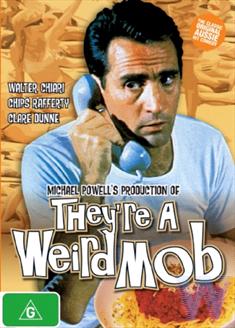
As a metaphor it applies equally to how we function as actors within a theatre work. We need to distinguish, learn and apply the idiom of the piece – physically, mentally and emotionally – and then perform these idiosyncrasies in an integrated way for whomsoever our audience might turn out to be. I have heard this described as living in the world of the play. It’s a nicely turned phrase. I would add living in the moment to the mix as well.
Like O’Grady, actors can walk away at the end of the process and become themselves again but, like O’Grady’s Culotta, actors leave a lasting resonance with their audiences even when the work is only half way good.
We’re a weird mob alright, we homo sapiens, always trying to make sense of stuff, always open to suspending disbelief, always prepared to being taken for a ride and all in the name of determining some sort of meaning in every experience.
Enter Melissa Fergusson and Charlatan Clinic with their new play ‘salt’.
The taut, one folded page programme doesn’t tell us much, it doesn’t need to. It sows seeds with ‘rated (M), ‘sexual references’, ‘coarse language’, ‘unrequited love’ and ‘mental health’. Henry, it says, is a loner and a stalker. Lilly, we are told, is his prey.
About Lilly herself, the programme tells us nothing.
We learn ‘salt’ is a hashtag event and there’s a brief description of what this means and how to participate. I try it when I get home. It works. It’s a novel idea and will catch on. Try it.
The Williamson is a compact venue, just the right size for a two hander and one that draws us inexorably into the action. It’s short of light and sound but high on intimacy, perfect for ‘salt’.

The Williamson
Fergusson has used the venue before and dresses it expertly. There is a larger acting space to the right with a longish white bench seat. To the left there is a raised rostrum with two, squishy cube seats. They’re backless allowing for total versatility of movement. There is also what looks like a stuffed ferret.
Above the stage at the back, and about a metre apart, hang two instantly recognisable images of Marilyn Monroe. They’re lifted/copied from the garishly coloured left side of Andy Warhol’s 50 image 1962 silkscreen painting ‘Marilyn Diptych’, named in 2004 by The Guardian newspaper as the third most influential of all modern works of art. They’re significant, the pictures, but we have no idea why.

A section of ‘Monroe Diptych (1962) by Andy Warhol
We, my spouse and our son, sit in the back row in the corner on the left, on high, bentwood stools and wait. The space fills up. There is an air of expectation. Behind the audience daylight filters in. It turns out to be a nice touch, a still-life watercolour.
The play opens with Henry (Coen Falke) seated on the bench. He’s casually dressed with an older style, brown leather school bag. We know he’s been secretly stalking Lilly for two years because the programme tells us so and this adds a frisson of excitement right from the start.

Coen Falke
Lilly (Jess Holly Bates), dressed in a black leather skirt and pretty white blouse, sits on the ground and busies herself with her phone and compact. Henry fabricates an opening by dropping his phone and she responds. She’s prickly, somewhat techy, he’s nosy, shy. There are brief, strained exchanges. She looks like Monroe, has all the mannerisms. They’re not forced but exquisitely natural, she even eats like Monroe. Warhol is discussed and great lines start to ping – ‘you really call the factory people actors?’ She asks what he does. He’s an amateur poet. They speak briefly of his favourites – Eliot, Dickinson, Frame – and the conversation dangles like a Paul Simon lyric when she asks to hear one. It turns out to be about her. It’s delicate, bittersweet.

Jess Holly Bates
They talk about sex. He’s asexual he says, prefers to look, not touch. He lives with his Mum and invites her around. She agrees to go. It’s a great set-up.
At this point I become acutely aware of the gigantic emotional leaps these characters are making, the nature of their already sprawling inner journeys, the power of the text, how credible the whole thing is and how wonderfully well Falke and Bates are working together. Comparisons are odious, I know – Dogberry would have it ‘odorous’ but what of that – but I seriously need to make some and they’re all complimentary. There is no sense of fear in Fergusson’s exquisite text and it’s like she has completely come of age as a writer. I’ve always been impressed by her courage and her scripts have always had impact but I suspect their effect hasn’t always been what she might have expected. She’s edgy, unafraid of her content, funny, and ‘salt’ is seriously the real deal. It’s complete, psychologically cohesive, ragged in a good way – and actor friendly, always actor friendly. Don’t get me wrong, this isn’t easy stuff, quite the opposite. It’s intense, exposing, and raw and it delves into spaces I’ve not seen anyone else prepared to venture into.

Melissa Fergusson
Again, there are lines that leap out of the already skin-tight dialogue – ‘I just look at pictures. They come alive and tell me things’. There are other voices – not influences, I can’t begin to know whether Fergusson has even read these plays – but Ed Graczyk (‘Come Back to the Five and Dime, Jimmy Dean, Jimmy Dean’) is lurking in the wings as is the great Arthur Miller (‘Some Kind of Love Story’, ‘The Archbishop’s Ceiling’), Monroe’s ex-husband, and that other incarnation of Monroe, Carla in Robert Patrick’s ‘Kennedy’s Children’.
As I said at the start we humans are desperate to make sense of everything so maybe I’m just echoing Sparger from Robert Patrick’s play and having ‘a memory haemorrhage’ but the echoes seem to be there, they’re a comfortable reverberation from a singularly fitting time and Fergusson finds herself, in my view, in pretty illustrious company.
We learn that Henry has history. He’s been sectioned in the past – and medicated. Lilly is impervious to the fact. She simply doesn’t seem to care.
There’s a delicious ‘I like you’, ‘I love you’ moment.
Lilly asks ‘have you ever loved so much you can’t breathe’ and the silence in The Williamson is testament to the fact that the entire room know exactly what she means.
If Bates embodies Monroe from the get-go then Falke grows increasingly Warholesque.

Coen Falke & Jess Holly Bates
He’s not supposed to drink. He does anyway.
There a thing with blindfolds and the room gets oddly hot.
Warhol is paraphrased and it hits home: ‘Fantasy love is much better than reality love. Never doing it is very exciting. The most exciting attractions are between two opposites that never meet.’ Henry to a tee. The passing of Lou Reed suddenly sticks in my throat. The factory is palpably extant.
It’s Fergusson, so sex is happily never far from the frame but in this case it’s strangely hooded, oblique. Lilly observes of Henry ‘I think you’re inexperienced’. He responds ‘Is that a good or bad thing? Her thrown-away reply ‘neither’ is just right.
The text eddies, flows, explodes, disappears, Alanis Morisette is channelled –
I’m high but I’m grounded
I’m sane but I’m overwhelmed
I’m lost but I’m hopeful baby
It’s sweetly sung and it fits.
Everything fits.

Coen Falke & Jess Holly Bates
Fergusson’s text is impressive. She isn’t afraid to have her characters ask the big questions – no surprises there – but what is satisfying is that the music of the text is symphonic and it’s absolutely, totally accurate that it should be. At times it’s heavy, that’s for sure – it’s Fergusson, after all – but leavened, it’s brazen but it’s also bittersweet and, perhaps best of all, Fergusson knows when to shut up and let the audience do the work. Henry asks ‘do you trust me Lilly’ and Lilly replies simply ‘sure’. No explanation, no names, no pack drill.
The acting is exceptional, the direction imperceptible, the teamwork unique. It’s a seamless production where absolutely everything works. It’s hard to believe that this isn’t an off-Broadway production and that the show isn’t utterly run in. It is, I am reminded, a café in Ponsonby and I am attending the opening night of a brand new play – and damn good it is, too.
I love how I feel when the play is finished and the actors have gone. There’s a gentle buzz in the auditorium and no-one is sticking around. It’s been a life-long 56 minute journey and I feel strangely as though I’ve never been to the theatre before. No rules have been broken but there is a feeling of liberation and excitement, a sense that this has been something really special and that feeling doesn’t come along that often. I ask myself how these two characters can possibly have travelled so far emotionally in under an hour? The only answer I can come up with is the courage and vision of Melissa Fergusson who has honed both her playwriting and directing craft in ways that leave me immensely impressed and, better still, enormously satisfied. She has compromised nothing in creating this extraordinary chamber piece and putting it in front of an audience and she, Jess Holly Bates, Coen Falke and their small team deserve every plaudit that comes their way.
I don’t often want to see a piece of theatre a second time but in this case I think I’ll make an exception.

 dykiegirl