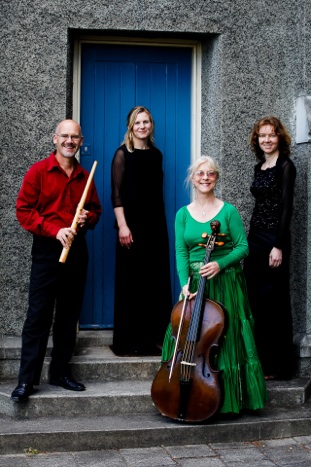
The Remarkable Diary of Samuel Pepys
Produced by Affetto for The Auckland Fringe Festival
Devised by Polly Sussex
Dramaturge Ben Henson
Performed at Ponsonby Baptist Church, Jervois Road, Auckland
01 and 02 March, 2013 at 7.30pm
Reviewed on Friday 01 March, 2013
Published at http://www.theatreview.org.nz
If he were alive today Samuel Pepys would definitely be one of my peeps.
He would love social media, the cult of the celebrity, gossip columns, pop culture and our deeply sexualised society. He’d be tweeting, facebooking, googling, pinning and linking-in with the best of them and we’d be hanging on his every word.
He did all this, of course, between 1660 and 1669 without the benefit of modern technology and his wonderfully detailed diaries, not published in full until the 19th century, remind us that Mr Pepys Esquire was often a very naughty boy, that, for a decade, his lips were most certainly not sealed and that we must be forever grateful for that.
The decade in question was one of the most fascinating in English history and Pepys was there actively taking it all in. He was sixteen when Cromwell co-signed the warrant to execute Charles I before establishing the short-lived Commonwealth of England in 1649, he was already penning his diaries when the Great Plague of London ravaged the city in 1665 only to be followed in 1666 by the Great Fire which devastated the innermost parts of the city that were contained within the old Roman wall, and he was still scribbling away when Charles II returned to England following the death of Oliver Cromwell and the monarchy was restored in 1660.
While his personalised accounts of these momentous events are without doubt important, it is his record of everyday life, of day-by-day relationships, behaviour, morality, marriage, politics, the theatre, art and the music of the period that make his the most significant primary record of life during the English Restoration.
Fortunately for us he went regularly to the theatre to hear plays and his observations are often tart and to the point. Of Shakespeare’s A Midsummer Night’s Dream, which he attended with his wife and her attractive maid, he observed he had never seen (the play) before, nor shall ever again, for it is the most insipid ridiculous play that ever I saw in my life. I saw, I confess, some good dancing and some handsome women, which was all my pleasure. (Pepys, 1668)
Handsome women it seems, including Sarah the maid, were always on his mind!
In defence of Shakespeare wonderful Dream what Pepys saw may have been a Restoration period adaptation of the Bard’s original.
Hamlet fared better in Pepys’ eyes and he felt that it was done with scenes very well, but above all, Betterton did the prince’s part beyond imagination. (Lee, 2006) Careful research tells us that none other than Sir William Davenant taught Betterton how to play Hamlet, instruction that was based on performances by Taylor of the Blackfriars company and that Taylor had been taught, in turn, by Shakespeare himself. (Adams, 1923)
Pepys, then, was surrounded by historical enormity but his personal contacts were significant also and, as can already be seen, even the cultural detritus of the Elizabethan and Jacobean periods was immediately available to him.
One diary entry, made on 27 February 1668, seems significant as it reflects his openness, though not a musician, to be influenced and affected by music. He writes that he went ‘to the King’s House to see [the play] “Virgin Martyr” … not that it is worth much but … that which did please me beyond anything in the whole world was the wind-musique when the Angel comes down, which is so sweet that it ravished me; and endeed, in a word, did wrap up my soul so that it made me really sick, just as I have formerly been when in love with my wife; that neither then, nor all the evening going home and at home, I was able to think of anything, but remained all night transported, so as I could not believe that ever any music hath the real command over the soul of a man as this did upon me; and makes me resolve to practise wind-music and to make my wife do the like. (Grey, 2002-2012)
That’s some of the why and wherefore, and now on to the what.
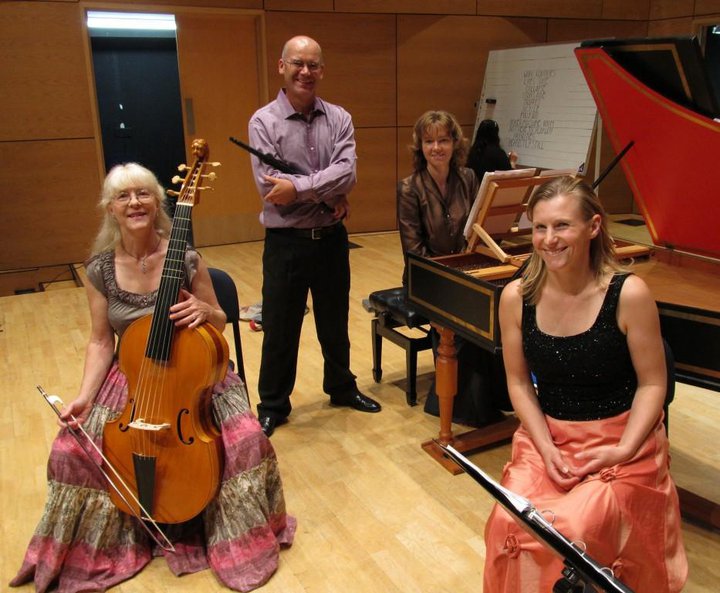
Affetto is an Italian word which loosely – as with many things Italian – means affection, warmth, love, liking or fondness. You may take your pick.
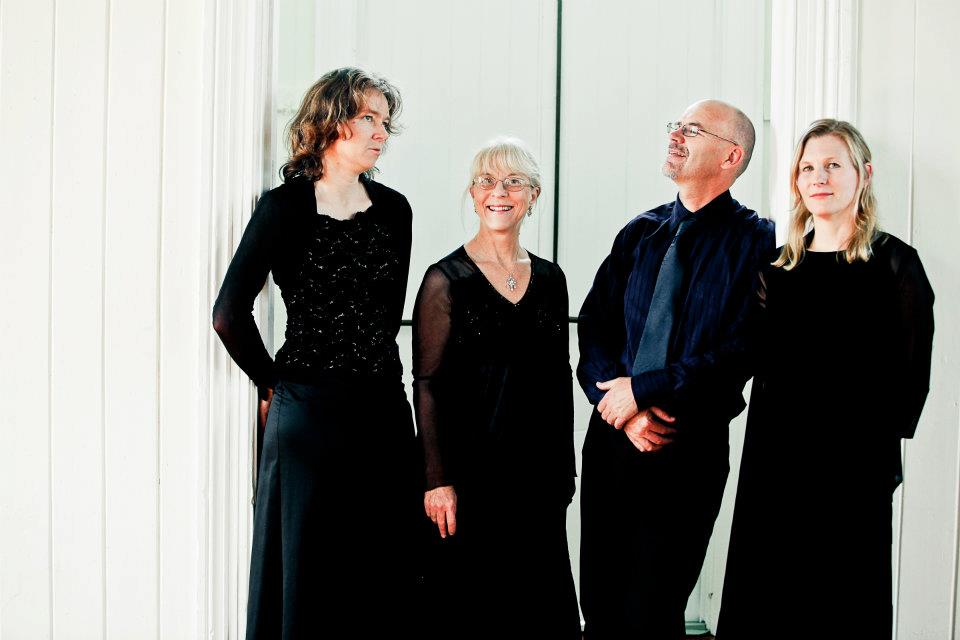
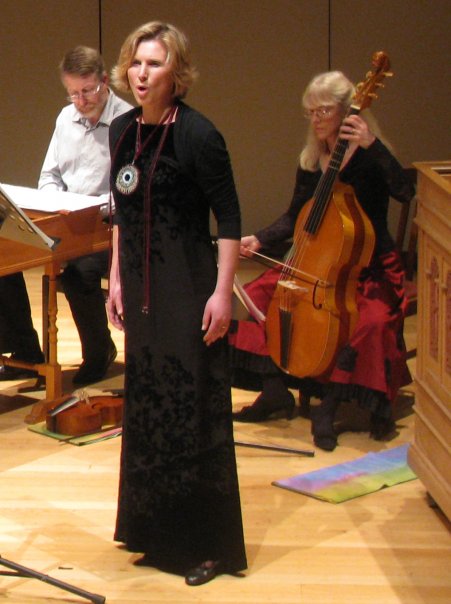
My pick is affection because the fine musicians who make up the core of Affetto – Dr Polly Sussex (Viola da Gamba and Baroque Cello), Dr Rachael Griffiths-Hughes (Harpsichord and Organ), Peter Reid (Cornetto and Baroque Trumpet) and Jayne Tankersley (Soprano) – along with their equally splendid guests – Simon Snape (Lute) and Andrew Dallaston (Actor) – perform with an expertise, a playfulness and joy that can only come from the deepest love of, and for, what they do.
Metro Magazine described them as ‘inspired programmers’ and their website informs the reader that they were ‘formed in 2010 to explore the lesser known chamber music of the Baroque and Renaissance. The four members of Affetto are all early music specialists, leaders in their respective fields, Kiwis, overseas trained, all playing authentic instruments & all hopelessly passionate about early music.’
All that is happily true.
This latest production uses the extraordinary diaries of bureaucrat Samuel Pepys as context for a wondrous journey through the mid to late 17th century and if you think this sounds terminally dull then you’d better think again. Like Pepys himself, who was a veritable Vicar of Bray, the ninety minute show is rich with ambiguity and, while it does have an historic flavour, it’s also intensely human, profoundly sensual and, at times, downright bawdy. Bawdy enough, in fact, to elicit gasps of delight and surprise from the folk behind me, each of whom was mature enough to have seen more than his or her fair share of life’s seamier side.
The use of non traditional performance venues is a wonderful feature of fringe festivals and the Ponsonby Baptist Church is certainly a wee beauty. Described in its own publicity as ‘committed at the core and open at the edges’ the church is perfect for events such as this and the fact that it’s also the home of the John Avery Organ, purchased by the church in 1898 for 98 pounds and bearing an inlaid plaque that reads ‘Johannes Avery Londini fecit 1779’, is an amazing bonus especially when a player of the quality of Rachael Griffiths-Hughes is in the house.
The setting is simple and tasteful. The stage is on three levels and upstage centre, raised five steps, is a large, leather buttoned, throne-like chair.
On the middle level and to the right are Griffiths-Hughes harpsichord and Polly Sussex’s viols, to the left Peter Reid’s music stand and cornetto and centre left the music and stand of guest lutenist Simon Snape.
The artists surprised the full house by entering, not from the nave as we might have expected, but processing from the entrance of the church and all singing with a beauty that set me on edge.
Now, I’m no musician but, in the late ‘70’s, a friend dragged me away from my Led Zeppelin records, my Fender Telecaster and my Rolling Stone magazines to a concert in St Mary’s by some chick called Emma Kirkby and my life changed forever. I had discovered early music and as my love for the period and the music grew and I began to realise just who Dame Emma actually was I also began to understand why this music made me feel so very good.
So, it was a bit of a song to get the team up the aisle, and then straight into the show.
Actor Andrew Dallaston bumped us straight into the tempestuous world of Roundhead versus Cavalier with a story about cannonballs bursting through church windows and bouncing harmlessly from pillar to post and we were there, tasting the gunpowder and smelling the acrid smoke of the Civil War.
Then it was ‘Samuel Pepys in Love’ and in love he certainly was. There’s no questioning his love for his Elizabeth who he married when she was only fourteen and remained with until her death but, like so many men do with their wives, he lead her a merry dance with his endless dalliances and lustful impishness, all of it recorded, some in code, in the diaries.
‘There in the garden of her Face’ and ‘Fire, Fire’, both by Thomas Campion, and ‘John Come Kiss Me Now’ by Thomas Baltzar are used to graphically illustrate Mr Pepys passionate peccadilloes and also serve to introduce us to the glorious voice of Jayne Tankersley. Tankersley’s teases ever sensual nuance from ‘Fire, Fire’, Campion’s anthem to repressed yearning, and, having built wonderfully through the lyric to ‘and if you cannot quench my fire, oh drown both me and my desire’ we knew exactly where she was coming from.
Tankersley was quite simply dazzling throughout the entire evening taking us on a journey from the deepest grief to expressions of the greatest joy and happiness.
The ‘Pepys in Love’ set concluded with ‘John Come Kiss Me Now’ which degenerated into the closest thing to a riotous early music jam session that you’re ever likely to experience and it almost worked!
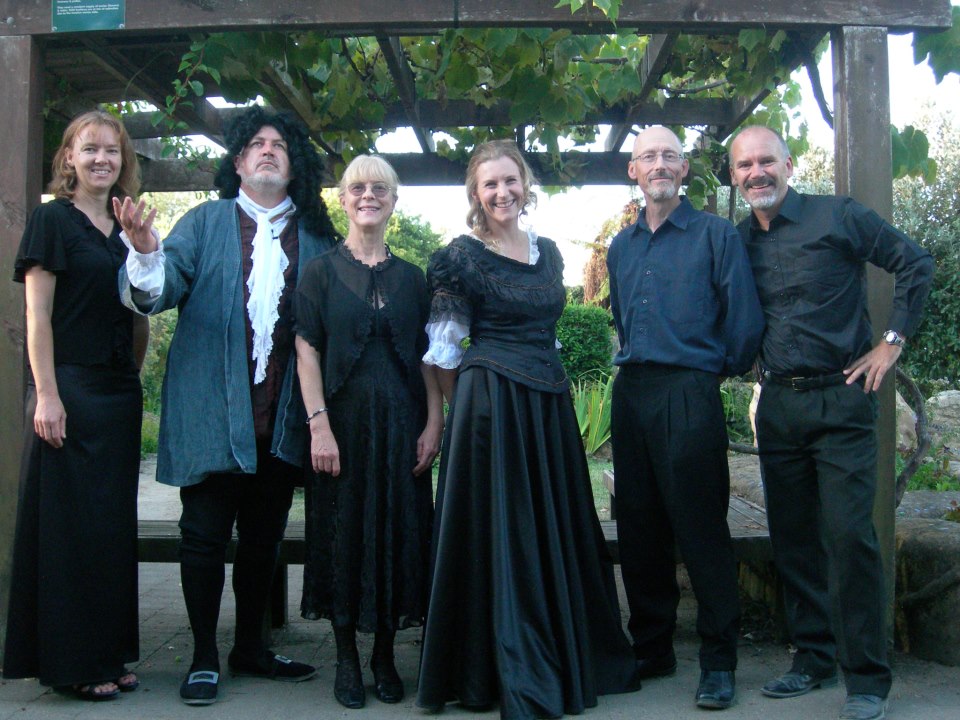
Then it was time to say goodbye to Charles I and Andrew Dallaston’s martyred king was splendid. The staging throughout the show was minimalist and nowhere did it work more effectively than at this point. There was a silence as Dallaston said ‘I shall go from a corruptible to an incorruptible Crown, where no disturbance can be’ that suggested this is very good work indeed. For myself, I was acutely aware of the irony surrounding the death of a king whose reign had been disrupted by endless religious conflict being played out in a church and I wondered how an act of such barbarism could be followed in a theatrical context but Tankersley put all my fears to bed with Purcell’s ‘Oh Let Me Weep’ accompanied wonderfully by viol, harpsichord, lute and cornetto.
There were moments – many of them – when the six performers found a synergy that was electrifying and this was one of them.
The plague and the great fire ended the first half with text used being an amalgam of Pepys and his contemporary chronicler John Evelyn. The two corresponded regularly and, while Pepys legacy has largely overshadowed Evelyn’s, both diarists are equally important. The half ended with Robert Jones ‘Come Sorrow, Come’ and the audience expressed their deep appreciation.
After the break it was party time and Mr Pepys was out for a drink – and what a drink it was! A rollicking version of ‘Wilsons (sometimes Wolsley’s) Wild’, a dirty little ditty where each gentleman’s mistress is likened, unflatteringly, to a shuttlecock, a tennis ball, a tinderbox, a nightingale and a virginal. No entendre was missed, no double meaning neglected and the audience were mildly hysterical by the time a tiddly Tankersley returned again to her bawdy side with a very erotic version of ‘The Maid’s Lesson’ which was oh so very Sam Pepys! This set ended with the traditional air ‘Lilliburlero’, a tune borrowed by almost everyone for almost any purpose, and it did to me what good theatre really should do: it dredged up resonances from decades ago and Raymond Hawthorne’s seminal ’70’s production of John Gay’s The Beggar’s Opera with the sublime John Givens as the sexiest MacHeath you can ever imagine singing ‘The Modes of the Court’, Gay’s own ‘Lilliburlero’ soundalike.
For a moment, an already inspirational evening took on a hint of the surreal as all good theatre should.
The restoration of the monarchy was enacted by means of two beautifully performed Purcell works, ‘Trumpet Tune’ and ‘Come Ye Sons of Art’.
Pomp and ceremony over, then came the high point of the evening for me. Dallaston as Pepys spoke touchingly of the passing of his nineteen year old daughter from the smallpox and Tankersley tore our hearts out with the only Dowland on the programme and what a choice it was: ‘I Saw My Lady Weep’. Simon Snape’s elegant lute supported Tankersley’s delectable voice and yet another of those jaw-droppingly special moments was achieved.
Then it was back to the diaries for the death of Charles II, this time exclusively John Evelyn as Pepys had stopped writing by then, and the harpsichord at its very best in Marin Marais ‘Tombeau pour Mr de St Colombe’.
The evening ended as only it could with a set entitled ‘The Value of Musick’ and featuring Peter Reid on baroque trumpet playing ‘Sound Fame, thy brazen trumpet’ followed by curtain calls and Tankersley’s reminder that, after the performance the artists did ‘show and tell’. The accompanying laughter, a residue from the earlier bawdiness, carried on into the night as the post show chat, centring around instruments, performances and who knew whose Aunty from Tauranga, carried on with no-one really wanting to go home. My ten year old son chatted about lutes and things with strings for quite some time with Simon Snape who was incredibly generous with his time which, to a large extent, summed up an evening of excellence, generosity and beautiful harmony.
The performers were uniformly wonderful.
Sussex was skilled and subtle and deserves full credit for devising such a splendid piece. While she is an unobtrusive performer her playing is ever-present and there is a sense that hers is a maturity of vision that provides an underpinning for the success of the group.
Griffiths-Hughes was a powerhouse. Her harpsichord playing was sublime and her biographical notes on the Affetto website leave the reader in no doubt that the harpsichord and organ are but two of her innumerable talents. On a personal note if Griffiths-Hughes ever decides to play an evening of Couperin I’ll be first in line!
Dallaston threaded it all together beautifully. He has an immediacy as an actor that is at once charming and disarming. At his best in the more moving moments he carries the prose sections well and engages with the musicians rather as an amiable older brother might.
Reid was magnificent. Blending the sounds of the baroque trumpet with the viols and lute must at times be a challenge but it’s a challenge Reid met with delicacy and wit.
Snape’s playing was, at times, truly magical and nowhere was this better shown than in his accompaniment of Tankersley in Dowland’s ‘I Saw My Lady Weep’. Like the Elizabethan’s before him, Dowland was preoccupied with the transmission of feelings through melancholy and in particular the seeming paradox that, when at her most vulnerable, a woman is also at her most beautiful, (Wells 1985) complex qualities that Tankersley and Snape, working in sublime accord, embodied utterly.
The whole thing is a glorious triumph of melancholic love over common sense and reason (Leech-Wilkinson 1991) and Tankersley and Snape maneuvered us slyly thorough this minefield and we went willingly along.
Tankersley was simply a star. What a voice. What an actress. What a delicious sense of wicked, wicked fun. All of her considerable experience provides a wonderful foundation for the confident, overtly charming and playful persona that makes her so accessible to us. She allows us ownership of what she does as all great performers do and in an instant she can makes us laugh and immediately tear our emotions to shreds. Hers is a wonderful talent and she’s a breathtaking artist who’s totally on top of her game.
There has been some discussion recently about what constitutes a fringe festival show. Frankly, I don’t care. When a show is as good as The Remarkable Diary of Samuel Pepys I simply don’t care what genre it gets labelled as.
All I hope is that they just keep the shows coming, keep marketing them well and that there’s always a ticket at the box with my name on it!
References
Adams, J. Q. (1923). A Life of William Shakespeare. Cambridge, Massachusetts: Riverside Press.
Grey, D. S. (2002-2012). Samuel Pepys Diary 1668 – extracts. Retrieved from http://www.pepys.info/1668/1668.html
Lee, S. (2006). Shakespeare and the Modern Stage
Leech-Wilkinson, D. (1991). My Lady’s Tears: A Pair of Songs by John Dowland. Early Music 19(2): 227, 229–33.
Pepys, S. (1668). The Diary of Samuel Pepys.
Wells, R. H. (1985). John Dowland and Elizabethan Melancholy. Early Music 13(4): 514–28.

 dykiegirl
You should be a part of a contest for one of
the highest quality sites on the internet.
I am going to highly recommend this website!